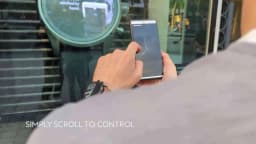
Vans Test Lab, a 2020 FIT student campaign, won a Gold Pencil at The One Club's Young Ones Brief by proposing to transform abandoned buildings into skateparks

Vans Test Lab Turns Abandoned Buildings Into Skate Performance Labs
Vans Test Lab is a 2020 experiential student campaign concept developed for Vans by Fashion Institute of Technology students, proposing the conversion of abandoned buildings across the United States into invitation-only skateparks where skaters could physically test the newly developed Vans Pro Classics against their classic predecessors.
The campaign addresses a precise product-communications problem. The Vans Pro Classics share the same visual aesthetic as the brand's original Classics, making it nearly impossible for skaters to perceive their elevated performance properties on sight alone. The strategic solution is direct: eliminate the visual ambiguity entirely by putting the shoes on the feet of working skaters in real-world skate environments. Entry to each converted skatepark is granted not by a ticket or a registration form, but by a skateboard, ensuring the audience remains authentic and self-selecting. No casual observer enters; every participant is a practising skater.
Once inside these repurposed spaces in the United States, participants receive a pair of Vans Pro Classics and a customisable lab coat that frames the entire experience as a rigorous product test rather than a brand event. After skating, participants complete a survey, and those aggregated results surface in real time on the Vans website and across social media platforms, creating a continuous, peer-generated stream of honest performance reviews. The campaign was published in the United States in May 2020 and, as confirmed by The One Club for Creativity, earned a Gold Pencil in the Experiential category at the 2020 Young Ones Brief competition. The Clapboard Score for Vans Test Lab is 63 out of 100, reflecting the concept's structural coherence and its authentic alignment with skateboarding culture, weighed against its status as a student proposal rather than a fully produced activation.
Vans built its identity on skateboarding. The challenge the Vans Test Lab concept confronts is not one of brand recognition but of product differentiation: when two shoes look identical, performance claims made in advertising carry diminishing credibility with an audience that trusts direct, embodied experience over messaging. As Yuliya Kosheeva, one of the campaign's FIT student creators, stated according to records held at the institutional repository of FIT, skaters need to try the Vans Pro Classics to understand the difference between the Pros and the Old Classics, because the visual distinction alone is insufficient.
The decision to restrict entry to skatepark activations to people arriving with a skateboard is strategically precise. It eliminates the dilution of the audience, ensures that every piece of survey data feeding back to the Vans website originates from a genuine skater, and reinforces the brand's long-standing positioning against poseur culture. In the United States, where skateboarding culture carries a strong anti-corporate current, authenticity is not a marketing virtue but a prerequisite for brand credibility among core consumers.
Vans operates in a fiercely competitive skate and streetwear footwear market alongside brands including Nike SB and Converse, both of which have invested heavily in skate-culture credibility and performance claims. The global athletic footwear market was valued at approximately $71.8 billion in 2020, according to data cited by Orbis Research, with a forecast compound annual growth rate of 4.9 percent through to 2027. In the United States specifically, the sneaker and skate footwear segment represents one of the most brand-loyal categories in youth retail. Vans reported a global revenue increase of around 10 percent in fiscal 2020, according to the company's filings referenced via the investor document archive at D1io3yog0oux5 Cloudfront, underscoring that the brand entered this campaign period from a position of commercial momentum that a strong product story could sustain.
The creative execution of Vans Test Lab is built around a single governing metaphor. The skatepark becomes a laboratory; the skater becomes a test subject; the customisable lab coat becomes both a functional prop and a personalisation mechanic that gives each participant a tangible object of ownership from the session. This framing simultaneously elevates the Vans Pro Classics as a product worthy of scientific scrutiny and positions the skater's judgment as the authoritative measure of quality, which is precisely the register that resonates within skateboarding communities in the United States.
The campaign was conceived by a three-person FIT student team. Margaret Panoti served as Experience Designer, while Din Terpuni and Yuliya Kosheeva served as Art Directors, as confirmed by The One Club for Creativity's 2020 Young Ones Brief announcement published on oneclub.org. The deliberate repurposing of abandoned buildings as skatepark venues carries its own creative logic: such spaces carry the raw, unfinished aesthetic that skate culture already associates with authenticity, and their conversion into branded test environments creates a visual and contextual contrast with the polished, clinical feel implied by the lab-coat mechanic.
The real-time survey integration is the activation's most technically ambitious creative element. By routing participant feedback directly to the Vans website and social media channels during the event, the campaign transforms user-generated data into live content, collapsing the distance between product testing and consumer-facing communication. Rather than publishing curated testimonials after the fact, the concept promises a feed of unfiltered skater opinion that updates as each testing session progresses, lending the resulting performance narrative a credibility that produced advertising cannot replicate. Production credits for any physical prototype or visual production assets associated with the Vans Test Lab campaign are not publicly documented beyond the student team identified above.
Vans Test Lab won a Gold Pencil in the Experiential category at The One Club for Creativity's 2020 Young Ones Brief, as confirmed by oneclub.org. This is the campaign's most significant and externally verifiable performance indicator. The Young Ones Brief competition is one of the advertising industry's most respected student award programmes, and a Gold Pencil in Experiential represents a high-bar assessment of both strategic rigour and creative originality from a panel of industry professionals.
No verified consumer-facing performance data for the Vans Test Lab campaign is publicly available, which is consistent with its status as a student concept rather than a fully produced and market-deployed activation. The campaign recorded 770 views in the archive documentation provided by FIT's institutional repository and received acknowledgement from the creative industry through the One Club recognition. The Clapboard Score of 63 out of 100 reflects this distinction: the structural logic of the campaign is sound, the insight is specific, and the experiential mechanic directly addresses the brief's core communication challenge, but the absence of real-world production, audience reach data, and measurable consumer behaviour outcomes constrains the overall assessment.
Structurally, the activation earns its score through the coherence of its insight-to-execution chain. The problem, that two visually identical shoes cannot be differentiated by looking at them, generates the solution directly: create a controlled environment where the difference can only be felt. The Gold Pencil awarded by The One Club for Creativity in 2020 independently validates this structural effectiveness at the highest level of student creative evaluation in the United States and internationally.
Vans Test Lab is a 2020 experiential concept created by FIT students for Vans, proposing to convert abandoned buildings into skateparks across the United States where skaters could physically test the Vans Pro Classics. Entry required a skateboard. Participants received shoes, customisable lab coats, and completed surveys feeding real-time results to Vans' website and social media.
Vans Test Lab was created by three Fashion Institute of Technology students in the United States. Margaret Panoti served as Experience Designer, while Yuliya Kosheeva and Din Terpuni served as Art Directors. The team developed the campaign for the 2020 Young Ones Brief competition run by The One Club for Creativity, where it won a Gold Pencil in Experiential.
Vans Test Lab won a Gold Pencil in the Experiential category at The One Club for Creativity's 2020 Young Ones Brief competition. The award was confirmed by The One Club on oneclub.org and announced on May 13, 2020, recognising the student team's experiential concept for the Vans Pro Classics performance shoe.
The skateboard entry requirement ensured only genuine skaters participated. The campaign's core brief was to prove the Vans Pro Classics' performance superiority over the visually identical Vans Classics, making authentic skater feedback essential. Restricting access by skateboard eliminated casual observers and kept all resulting survey data credible within Vans' core United States skate audience.
Vans Test Lab received a Clapboard Score of 63 out of 100. The score reflects the campaign's clear strategic logic and authentic alignment with skateboarding culture in the United States, balanced against its status as a student concept without documented real-world production metrics or measurable consumer behaviour outcomes from a live market deployment.
Vans Test Lab proposed routing participant survey responses directly to the Vans website and social media channels during each skatepark activation. This created a live stream of unfiltered skater performance reviews as testing sessions progressed, transforming user-generated data into real-time content and giving the Vans Pro Classics' performance claims a peer-authenticated credibility that traditional advertising cannot replicate.
.webp)
Creative Collaboration Platform: The Backbone of Modern Creative WorkWhat is a creative collaboration platform?Clapboard defines a creative collaboration platform as the operational core for today’s distributed creative teams. This is not a collection of digital collaboration tools stitched together; Clapboard’s system


Understanding the Creative Production MarketplaceWhat is a Creative Production Marketplace?Clapboard defines a creative production marketplace as a structured ecosystem where brands, agencies, and production talent converge to execute video, advertising, and branded content at scale. Unlike the legacy agency or freelanREAD FULL ARTICLE

The Urgent Need for a Creative Production Operating SystemWhy Traditional Creative Production Models Break DownClapboard sees the creative production landscape shifting under pressure. Content velocity is no longer a buzzword—it’s a mandate. Modern advertising demands relentless output across dozens of channels, each wREAD FULL ARTICLE