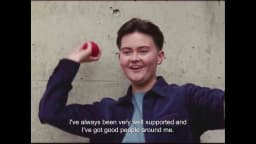
Vanish NapiSan's 'Barack Obama Pitch' proposed a A$25 million White House sponsorship deal, earning Cannes Lions bronze in PR for Euro RSCG Sydney in 2011.

Vanish NapiSan Pitched Barack Obama to Sponsor the White House
Vanish NapiSan's 'Barack Obama Pitch – Sponsor the White House' is a 2011 Australian PR-led advertising campaign created by Euro RSCG Sydney and Red Agency for Reckitt Benckiser, in which the brand formally proposed paying A$25 million over five years to place its logo on the White House, positioning the stain-removal product as powerful enough to clean the most famous house in the world.
The campaign launched publicly on 25 July 2011, as reported by Campaign Brief and confirmed by a PR Newswire release issued at the time. Euro RSCG Sydney handled the creative execution while Red Agency led the PR activation, working together to generate earned media around a proposition that was equal parts audacious and strategically coherent. A professional film capturing the pitch was subsequently archived in December 2011, establishing the campaign's place in the advertising record.
In Australia, the campaign operated within the house and garden category, where Vanish NapiSan Crystal White competed as Reckitt Benckiser's flagship stain-removal product. The A$25 million figure was not chosen arbitrarily. According to Campaign Brief, Vanish NapiSan's spokesperson Adam Whitaker described it as representing the brand's entire annual marketing budget — a detail that reframed the proposal from a publicity stunt into a genuine strategic gamble. The narrative was constructed to feel credible: a real brand, a real sum of money, a real letter addressed to a sitting US president. That narrative coherence is what separated the campaign from simpler shock-value executions and gave journalists and consumers an actual story to engage with across the Australian market and beyond. Clapboard rates this campaign 63 out of 100.
Vanish NapiSan Crystal White entered 2011 in the middle of a significant brand transition. Reckitt Benckiser had been consolidating its legacy Australian stain-removal brands — NapiSan and Preen — into the global Vanish powerbrand since as early as 2003, according to research documented via reckitt.com and campaignbrief.com. A Vanish Preen television campaign had already run in Australia in July 2010 to sustain brand equity during that transition period. By 2011, the task was to give Vanish NapiSan Crystal White a distinct, memorable identity in a category where functional product claims are difficult to differentiate.
The strategic insight was straightforward: if the product's core promise is that it makes things brilliantly white, the most dramatic possible demonstration is the world's most recognisable white building. Competitors in the Australian laundry and stain-removal aisle — including Procter and Gamble's Napisan-adjacent lines and Unilever's Omo range — relied on conventional demonstration advertising at the time. Euro RSCG Sydney chose to bypass the product-demo format entirely in favour of a PR-led narrative that would generate media coverage far exceeding what a paid media budget alone could buy.
Adam Whitaker, Vanish NapiSan's sponsorship spokesperson, framed the timing explicitly. As quoted by Campaign Brief and PR Newswire, Whitaker stated: 'With the current economic issues in the US, we believe this provides us with the best possible chance to secure the deal as the US government looks for innovative ways to raise funds.' That statement gave the Australian press a hook — the idea that Barack Obama and the White House might genuinely consider the offer — and transformed a product launch moment into a news story with international reach originating from the Australian market.
The creative execution of the Vanish NapiSan 'Barack Obama Pitch' depended entirely on its ability to sustain a straight-faced narrative. Euro RSCG Sydney built a campaign that never winked at the audience, treating the White House sponsorship proposal with the formal register of a genuine business pitch rather than an obvious parody.
According to Campaign Brief, the creative team behind the campaign included Steve Coll as executive creative director, Scott Sparks and Gavin Maloney as art directors, and Peter Maniaty as copywriter. The film was directed by Daniel Riesinger of Window. Agency producer Amy Friend and client team director Chris Tedesco rounded out the production group. The film — the campaign's single primary media asset as noted in the archived record — presented the A$25 million proposal with a tone of measured corporate confidence, mirroring the aesthetic language of genuine sponsorship pitches rather than advertising creative.
The decision to produce a film, rather than rely solely on press releases and media outreach, gave the campaign a shareable artefact that could travel independently of the PR coverage. Red Agency's role was to ensure that the pitch document, the spokesperson statements from Adam Whitaker, and the film itself reached Australian and international journalists simultaneously. Whitaker's on-record comments — including the acknowledgement, as reported by Campaign Brief, that 'some see it as fascinatingly innovative, others are less enthusiastic' — were crafted to generate debate rather than unanimous approval, which is a standard earned-media amplification technique. The production's restraint is what gave the narrative its credibility and longevity across the Australian market and in the trade press that followed the campaign into 2012.
The Vanish NapiSan 'Barack Obama Pitch' earned measurable recognition at Cannes Lions 2012, the advertising industry's most prominent global awards programme. The campaign received two Bronze Lions in the PR Lions category — one for Consumer Goods and one for Best Integrated Campaign Led by PR — as well as a Silver Lion in the Promo and Activation Lions category for Best Sponsorship or Partnership, according to the Cannes Lions record cited across campaignbrief.com and prawardsasia.com. These results confirmed that the campaign's strategic architecture, specifically its use of PR to lead a household product campaign in Australia, was considered genuinely innovative by international juries in 2012.
No verified consumer sales data or brand tracking figures for the Vanish NapiSan Crystal White campaign in the Australian market are publicly available. What the awards record does confirm is that the integrated structure — Euro RSCG Sydney's creative film combined with Red Agency's earned-media programme — was effective enough in execution to be judged competitive against global PR campaigns. The Silver in Promo and Activation is particularly notable because it reflects the campaign's success in creating a functioning sponsorship narrative, not merely a press release. Adam Whitaker's quoted statement that 'the A$25 million is a negotiating tool', as reported by Campaign Brief, suggests the team understood from the outset that the proposal's media value was the actual deliverable. For a household product brand in Australia seeking to reestablish identity during a global rebrand consolidation, that earned-media outcome represents a structurally efficient use of a limited paid-media investment. Clapboard's score of 63 out of 100 reflects the campaign's strong strategic clarity and award-verified PR effectiveness, tempered by the absence of publicly documented consumer or sales outcomes.
Vanish NapiSan's 'Barack Obama Pitch' was a 2011 Australian PR campaign by Euro RSCG Sydney and Red Agency proposing a A$25 million, five-year sponsorship of the White House. The proposal used Barack Obama's residence as a demonstration of the brand's stain-removal power, generating international earned media for a household product launch in Australia.
Euro RSCG Sydney created the campaign with executive creative director Steve Coll leading a team that included art directors Scott Sparks and Gavin Maloney and copywriter Peter Maniaty. Red Agency handled the PR activation. The campaign was produced for Reckitt Benckiser's Vanish NapiSan Crystal White brand in Australia, as documented by Campaign Brief.
Vanish NapiSan won three Lions at Cannes 2012 for the campaign. These included two Bronze PR Lions — for Consumer Goods and for Best Integrated Campaign Led by PR — and a Silver Promo and Activation Lion for Best Sponsorship or Partnership, according to records cited by Campaign Brief and PR Awards Asia.
Vanish NapiSan proposed A$25 million because it represented the brand's entire annual marketing budget, according to Campaign Brief. Spokesperson Adam Whitaker also cited US economic conditions in 2011 as making the proposal credible. The sum functioned as a PR device to generate news coverage in Australia and internationally rather than as a formal contractual commitment.
The campaign launched publicly on 25 July 2011, as reported by PR Newswire and Campaign Brief. A professional film documenting the pitch was archived in December 2011. The campaign was part of Reckitt Benckiser's broader consolidation of its NapiSan and Preen brands into the global Vanish identity across the Australian market.
Clapboard rates the Vanish NapiSan 'Barack Obama Pitch' 63 out of 100. The score reflects the campaign's strong strategic clarity, its PR-led integration, and its Cannes Lions recognition, while accounting for the absence of publicly verified consumer or sales performance data from the Australian market following the 2011 launch.
.webp)
Creative Collaboration Platform: The Backbone of Modern Creative WorkWhat is a creative collaboration platform?Clapboard defines a creative collaboration platform as the operational core for today’s distributed creative teams. This is not a collection of digital collaboration tools stitched together; Clapboard’s system


Understanding the Creative Production MarketplaceWhat is a Creative Production Marketplace?Clapboard defines a creative production marketplace as a structured ecosystem where brands, agencies, and production talent converge to execute video, advertising, and branded content at scale. Unlike the legacy agency or freelanREAD FULL ARTICLE

The Urgent Need for a Creative Production Operating SystemWhy Traditional Creative Production Models Break DownClapboard sees the creative production landscape shifting under pressure. Content velocity is no longer a buzzword—it’s a mandate. Modern advertising demands relentless output across dozens of channels, each wREAD FULL ARTICLE