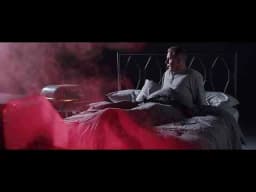
ECHO's We Are Yarders campaign, created by Cramer-Krasselt in 2025, names and unifies a community of yard-care enthusiasts across US television, digital, and

ECHO Turns Yard Pride Into a Cultural Identity With We Are Yarders
ECHO's We Are Yarders is a 2025 United States campaign created by Cramer-Krasselt that names and unifies a community of homeowners and outdoor-space enthusiasts under a shared identity, running across television, digital, and social channels through three thirty-second narrative films.
ECHO launched We Are Yarders on March 27, 2025, as reported by MediaPost. The campaign represents a deliberate strategic shift for the brand — away from demonstrating raw equipment power and toward building a cultural community around the act of yarding itself. Rather than leading with product specifications, the work positions ECHO as the brand that recognises and celebrates a tribe that already exists: people who take visible pride in lawn stripes, hedge work, and weekend yard projects. That repositioning move distinguishes We Are Yarders from conventional household product advertising, which typically anchors itself to performance claims.
The campaign comprises three thirty-second films — titled Why Do We Yard, For Pros Who Yard, and Lovers of Yard — each addressing a distinct segment of the yard-care audience. The first speaks to the intrinsic motivation behind yarding as a ritual, the second honours the professional end of the spectrum, and the third addresses those whose relationship with their outdoor space is almost devotional. Together, the three films function less as individual spots and more as chapters in a single narrative, a structure that gives the campaign platform-level ambition rather than the narrower scope of a product launch. In the United States market, where lawn and garden culture is deeply embedded in suburban homeownership, that narrative architecture carries genuine resonance. Cramer-Krasselt served as ECHO's agency of record for the work, with Todd Stone leading as Executive Creative Director.
ECHO identified a social behaviour — homeowners publicly sharing evidence of their yard work — that lacked a unifying name or community frame. Todd Stone, Executive Creative Director at Cramer-Krasselt, stated publicly, as reported by MediaPost and c-k.com, that the agency observed homeowners proudly sharing their lawn stripes, hedge work, and weekend projects but noted they had no unifying identity. We Are Yarders was built to supply exactly that.
The strategic logic is grounded in the competitive dynamics of the outdoor power equipment category in the United States. The global outdoor power equipment market was estimated at thirty-eight point four billion dollars in 2025 and forecast to reach fifty-five point one billion dollars by 2035, representing a compound annual growth rate of three point seven percent, according to data cited by Clapboard's research. Within the US market specifically, RYOBI held an estimated seventeen percent of retail outdoor power equipment brand market share in 2025, down from approximately twenty-five percent in 2021, according to Clapboard's research, illustrating that brand position in this category is genuinely contestable. ECHO held an estimated twelve to fourteen percent of the US market, according to the same source, making the battle for enthusiast loyalty a live commercial question rather than an academic one.
Against competitors such as RYOBI, which competes heavily on price and retail availability, and Husqvarna, which targets the premium professional segment, ECHO's community-identity approach occupies a distinct positioning lane. Rather than competing on specification tables or retail shelf presence, We Are Yarders makes brand affiliation feel like cultural membership — a durable advantage in a category where household product choices are often habitual and emotionally driven. The 2025 campaign builds directly on ECHO's earlier narrative work, including its 2022 long-form video series profiling professional users, which began receiving paid YouTube pre-roll support that same year, as documented by Reel Chicago.
We Are Yarders deploys three distinct thirty-second films as its creative spine, each constructed to speak to a different relationship with outdoor space while reinforcing a single overarching identity claim. The films are titled Why Do We Yard, For Pros Who Yard, and Lovers of Yard, as confirmed by reporting from MediaPost and c-k.com. The decision to produce three separate narrative executions rather than one broadcast spot signals a content-platform approach: each film can operate independently across digital and social environments while contributing to a cumulative brand story when encountered together.
Todd Stone served as Executive Creative Director at Cramer-Krasselt on We Are Yarders, as documented by shots.net and c-k.com. Stone's stated creative premise — that a visible social movement of yard-proud homeowners existed without a name — anchors the campaign in observed human behaviour rather than aspirational fiction, a craft choice that separates narrative-led household product advertising from its category peers. The films use the language and cadence of community portraiture rather than product demonstration, positioning ECHO equipment as the natural tool of a self-identified group rather than a solution to a problem.
The campaign ran across television, digital, and social channels in the United States, as reported by MediaPost. The multi-channel distribution strategy reflects the dual audience the three films address: the television placement reaches the broader homeowner base, while digital and social placements allow the community-identity message to travel within the enthusiast networks where lawn-care pride is already being expressed organically. That alignment between message and medium is a deliberate craft decision. The Branch Yarderman social-first character, developed as an extension of the We Are Yarders platform after launch, subsequently won a Gold Honor in Short Form Video and a Bronze Honor in Brand Voice at the Shorty Awards 2026, per Shorty Awards records, validating the platform's capacity to extend into social-native creative formats.

No verified performance data for We Are Yarders is publicly available. No published sales-lift figures, market-share movement attributable to the campaign, or verified award recognitions from Cannes Lions, the Effies, the One Show, D&AD, the Clios, the Webby Awards, or WARC have been documented for the 2025 launch campaign itself. Clapboard assigns We Are Yarders a score of 63 out of 100, reflecting the campaign's genuine strategic ambition tempered by the absence of measurable outcomes in the public record.
Structurally, the campaign demonstrates several effectiveness markers that are independent of reported metrics. The three-film architecture creates platform-level depth rare in household product advertising, allowing the brand to speak to distinct audience segments — weekend homeowners, dedicated enthusiasts, and working professionals — without diluting the central identity claim. The decision to name the community rather than simply celebrate it is a brand-building move with lasting potential: names stick in ways that taglines often do not.
The subsequent development of Branch Yarderman — a social-first character extension of the We Are Yarders platform — offers indirect evidence that the identity framework held beyond a single campaign cycle. Branch Yarderman won a Gold Honor in Short Form Video and a Bronze Honor in Brand Voice at the Shorty Awards 2026, per Shorty Awards records, suggesting the platform generated enough internal and audience momentum to sustain creative investment into 2026. In the United States outdoor power equipment market, where ECHO competes against RYOBI and Husqvarna for enthusiast loyalty, a durable identity platform represents a structural asset whose value accumulates over time rather than resolving in a single quarter's data.
We Are Yarders is a 2025 ECHO campaign created by Cramer-Krasselt in the United States. It names and unifies a community of yard-care enthusiasts through three thirty-second narrative films — Why Do We Yard, For Pros Who Yard, and Lovers of Yard — distributed across television, digital, and social channels starting March 27, 2025, as reported by MediaPost.
Cramer-Krasselt created We Are Yarders as ECHO's agency of record. Todd Stone served as Executive Creative Director on the campaign, as documented by shots.net and c-k.com. Stone observed that yard-proud homeowners lacked a unifying identity and built the campaign around supplying one, per reporting from MediaPost and c-k.com.
We Are Yarders comprised three thirty-second films. The titles are Why Do We Yard, For Pros Who Yard, and Lovers of Yard, as confirmed by MediaPost and c-k.com. Each film addresses a distinct relationship with outdoor space, functioning as individual executions and as chapters within a unified narrative platform for the ECHO brand.
The 2025 We Are Yarders launch campaign has no verified award recognitions from Cannes Lions, the Effies, the One Show, D&AD, the Clios, the Webby Awards, or WARC. However, Branch Yarderman — a social-first extension of the same platform — won Gold and Bronze Honours at the Shorty Awards 2026, per Shorty Awards records.
We Are Yarders marks a strategic evolution for ECHO in the United States. The brand's 2022 long-form video series profiled individual professional users, as documented by Reel Chicago. The 2025 campaign broadened that approach from individual portraiture to collective identity, naming and unifying a community of yard-care enthusiasts across consumer and professional segments.
Wayne Thomsen's specific role in the We Are Yarders campaign is not publicly documented in available campaign records. Production and directorial credits for the full We Are Yarders campaign beyond the confirmed Executive Creative Director role of Todd Stone at Cramer-Krasselt have not been verified in publicly available sources at the time of this analysis.
.webp)
Creative Collaboration Platform: The Backbone of Modern Creative WorkWhat is a creative collaboration platform?Clapboard defines a creative collaboration platform as the operational core for today’s distributed creative teams. This is not a collection of digital collaboration tools stitched together; Clapboard’s system


Understanding the Creative Production MarketplaceWhat is a Creative Production Marketplace?Clapboard defines a creative production marketplace as a structured ecosystem where brands, agencies, and production talent converge to execute video, advertising, and branded content at scale. Unlike the legacy agency or freelanREAD FULL ARTICLE

The Urgent Need for a Creative Production Operating SystemWhy Traditional Creative Production Models Break DownClapboard sees the creative production landscape shifting under pressure. Content velocity is no longer a buzzword—it’s a mandate. Modern advertising demands relentless output across dozens of channels, each wREAD FULL ARTICLE