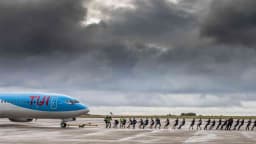
The UberESCAPE campaign by Transavia Airlines, launched in France in March 2017, leverages an innovative partnership with Uber to position travel as instantly accessible and effortless. The brand proposition focuses on dissolving traditional barriers to spontaneous travel by integrating flight booking directly into the familiar Uber app interface. By allowing users to select "UberEscape" as a ride option, the campaign promises real-time access to last-minute flights from nearby airports at the cost of an Uber trip, effectively bundling ground transportation and air travel into one seamless service. This simplification underscores Transavia’s broader value proposition: making leisure travel more affordable, immediate, and convenient.
Strategically, the campaign taps into consumers’ desires for spontaneous, hassle-free getaways, aligning with the increasing cultural emphasis on experiences over possessions. By situating the offer within the Uber ecosystem—already associated with on-demand convenience and ease—the campaign effectively targets urban dwellers in Paris, Nantes, and Lyon who are digitally savvy and open to last-minute travel. The creative angle transforms a routine activity (ordering a ride) into an unexpected opportunity for instant holiday, enhancing emotional engagement through surprise and delight. Additionally, restricting the service to a limited timeframe and select destinations adds urgency and exclusivity, prompting quick decisions and driving trial. This synergy of transport modes and real-time offers illustrates a performance-driven approach, merging convenience with innovation to address latent travel aspirations in the contemporary French leisure market.
FORMAT#1 DEMONSTRATION — Directly shows how a product works and highlights its benefits.
UberESCAPE is best categorized as a Demonstration campaign because its core creative device revolves around directly showing how the new Uber-Transavia partnership makes travel instantly accessible. The campaign's narrative and assets focus on how users simply select “UberEscape” in the Uber app to discover last-minute flights for the price of an Uber ride, seamlessly combining Uber’s interface with Transavia’s flights. The messaging stresses the ease and innovation of this integrated booking process, highlighting the key benefit of spontaneous, affordable getaways—making the demonstration of product functionality the centerpiece rather than a symbolic, celebrity-driven, or narrative story approach. The campaign aims to tangibly “prove the accessibility of travel,” not through dramatization or storytelling, but by inviting users to experience and witness the actual service in action.
1. Ryanair – Market Positioning
Ryanair positions itself as Europe’s leading ultra-low-cost carrier, focusing on offering the cheapest fares with a no-frills approach. Their primary strategy revolves around cost-efficiency and a vast network connecting secondary airports, appealing to budget-conscious travelers seeking convenience and value.
2. easyJet – Market Positioning
easyJet differentiates by combining low fares with a strong European network and greater flexibility, emphasizing simplicity and customer experience. Their strategic focus is on seamless, accessible travel for both leisure and business passengers, backed by a recognizable brand and frequent schedule options.
3. Vueling Airlines – Market Positioning
Vueling positions itself as a low-cost carrier with a Mediterranean flair, prioritizing offering affordable fares alongside a quality onboard experience. It targets leisure travelers within Europe, emphasizing convenient city-center airports and a user-friendly digital platform for bookings.
4. Air France – Market Positioning
Air France operates as a full-service national carrier focused on premium service, extensive global connectivity, and brand heritage. It differentiates through superior customer service, loyalty programs, and a comprehensive route network catering to both business and leisure travelers seeking reliability and comfort.
5. Norwegian Air Shuttle – Market Positioning
Norwegian emphasizes affordable long-haul and short-haul flights with modern, fuel-efficient aircraft and an innovative approach to low-cost travel. Their competitive advantage lies in disrupting traditional pricing models for transatlantic routes while maintaining a strong focus on digital user experience.
Q: What is UberESCAPE about?
A: UberESCAPE is a 2017 brand campaign created for Transavia Airlines by the agency Les Gaulois in France, designed to demonstrate the accessibility and spontaneity of travel. The campaign introduced a unique partnership with Uber, allowing users in Paris, Nantes, and Lyon to select UberEscape as a ride option within the Uber app and instantly discover last-minute flights from the nearest airport to popular European destinations. For the price of an Uber trip, the Transavia flight was included, effectively merging ground transportation and air travel into a single, seamless booking process. The campaign ran from March 13th to March 17th, showcasing the innovative integration of two major transport brands.
Q: What creative device does UberESCAPE use?
A: UberESCAPE employs the Demonstration format, as classified by Clapboard’s 12-format taxonomy. This approach centers on directly showing how the Uber-Transavia partnership works, with the campaign’s creative execution focusing on the actual user experience of selecting UberEscape in the Uber app to access last-minute flights. Rather than relying on narrative storytelling or celebrity endorsement, the campaign’s core device is to tangibly prove the ease and immediacy of travel by inviting users to witness and participate in the integrated service, making the demonstration of product functionality the focal point.
Q: What is the campaign proposition for UberESCAPE?
A: The campaign proposition for UberESCAPE positions Transavia Airlines as a brand that dissolves traditional barriers to spontaneous travel by integrating flight booking directly into the familiar Uber app. Targeting urban, digitally savvy consumers in France’s major cities, the campaign promises real-time access to affordable, last-minute getaways for the price of an Uber ride. This strategic move aligns with the growing cultural emphasis on experiences and convenience, transforming a routine activity into an opportunity for instant holiday. By leveraging Uber’s established reputation for on-demand service, UberESCAPE underscores Transavia’s commitment to making leisure travel more immediate, accessible, and appealing.
Q: How does UberESCAPE rank in Clapboard's archive?
A: UberESCAPE holds a Clapboard Campaign Score of 69/100 in Clapboard’s global ad archive. This score reflects the campaign’s creative ambition, execution quality, and cultural relevance as assessed by Clapboard’s curatorial authority.
Q: Who are the competitors in Transavia Airlines's category?
A: In the European travel and leisure market, Transavia Airlines competes with Ryanair, which leads on ultra-low-cost fares and a vast secondary airport network; easyJet, known for combining low fares with flexibility and a strong European presence; Vueling Airlines, which emphasizes affordable fares and a Mediterranean brand experience; Air France, positioned as a full-service national carrier with a focus on premium service and global connectivity; and Norwegian Air Shuttle, which disrupts traditional pricing with affordable long- and short-haul flights and a strong digital user experience.


 ARCHIVE
.webp)