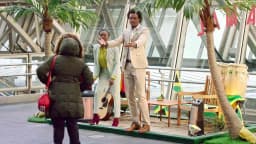
The “Amazing Adventure” campaign for Riga Motor Museum leverages the brand’s position as a gateway to unique and immersive automotive experiences, promising visitors more than just static displays by inviting them to engage actively with the museum’s offerings. The campaign’s core proposition centers on sparking curiosity and openness to adventure, suggesting that stepping into unfamiliar cars can lead to unexpected and memorable experiences. This communicates the museum not simply as a place to observe vehicles, but as a dynamic environment where history and excitement intersect.
Strategically, the campaign employs an experiential approach, underscoring the emotional and sensory appeal of interacting with classic and unusual automobiles. By focusing on the thrill and spontaneity involved in “getting into a stranger’s car,” it taps into the traveler’s desire for discovery and novel experiences, aligning with the travel and leisure market’s growing emphasis on immersive, authentic moments rather than passive consumption. The creative angle, highlighted through digital video content, is designed to resonate with curious individuals open to exploration, emphasizing personal connection and storytelling through unusual scenarios. The use of English language content and a relatively modest digital footprint suggests targeted regional or niche engagement rather than broad mass-market reach. Overall, the campaign strategically positions Riga Motor Museum as an active participant in the visitor’s adventurous journey, aligning the brand with values of excitement, openness, and experiential travel within the recreation and leisure sector.
FORMAT#6 BENEFIT CAUSES STORY — Builds a story where the product’s benefit is the reason for the action or twist.
This campaign fits FORMAT#6 because it frames the experience of entering a “stranger’s car” as the catalyst for an “amazing adventure,” implying that the unique benefit of the Riga Motor Museum—a chance for an unexpected, thrilling journey—drives the entire narrative. The description doesn't indicate a literal product demonstration, testimonial, or overt story arc with conflict-resolve closure; rather, it positions the opportunity for adventure as the motivator and reward, making the museum’s offering (adventure via classic motoring experiences) the central cause of the campaign’s story.
1. Auto Museum Ādaži – Positioned as Latvia’s premier interactive automobile museum, focusing on vintage car exhibitions and engaging educational programs that appeal to families and car enthusiasts alike. It leverages hands-on experiences and restoration workshops to foster deeper appreciation for automotive history.
2. Latvian Open Air Ethnographic Museum – Although broader than just automobiles, it differentiates by integrating traditional Latvian rural life with vintage transport displays, providing cultural context and a unique leisure experience that blends history, recreation, and local heritage.
3. Classic Car Museum Latvia – Focuses exclusively on classic and luxury automobiles, targeting niche collectors and tourists interested in exclusive automotive collections. The museum emphasizes rarity and prestige, positioning itself as a luxury cultural destination.
4. Museum of the History of Riga and Navigation – Combines maritime history with urban cultural tourism, including transport history exhibits. It appeals to visitors interested in comprehensive historical narratives, offering diverse leisure activities beyond just automobiles.
5. Dzintari Forest Park – While primarily a recreation and leisure park, it offers motor-themed attractions and seasonal automobile events that differentiate it by combining outdoor adventure with automotive leisure experiences, attracting families and young visitors.
Q: What is Amazing Adventure about?
A: Amazing Adventure is a professional campaign launched in 2017 for Riga Motor Museum by the agency DDB in Latvia, targeting the recreation and leisure market. The campaign centers on an experiential concept that invites audiences to embrace curiosity and spontaneity by stepping into a stranger’s car, using this as a metaphor for discovering new adventures. Through a single, impactful media asset, the campaign positions the museum as a destination for immersive and thrilling automotive experiences, aiming to transform visitors from passive observers into active participants in the museum’s narrative of automotive history and culture.
Q: What creative device does Amazing Adventure use?
A: Amazing Adventure employs Clapboard’s FORMAT#6 BENEFIT CAUSES STORY, a creative approach where the product’s benefit is the catalyst for the campaign’s narrative. According to Clapboard’s classification system, this format builds a story in which the opportunity for adventure—symbolized by getting into a stranger’s car—serves as both the motivator and the reward. The campaign does not rely on traditional demonstrations or testimonials but instead frames the Riga Motor Museum’s unique offering of unexpected journeys as the central cause driving the experience, making the benefit itself the story’s engine.
Q: What is the campaign proposition for Amazing Adventure?
A: The campaign proposition for Amazing Adventure positions Riga Motor Museum as a gateway to unique, immersive automotive experiences, promising visitors more than static displays by inviting them to actively engage with the museum’s offerings. Strategically, the campaign appeals to individuals seeking discovery and authentic leisure moments, suggesting that openness to adventure—represented by entering unfamiliar cars—can lead to memorable experiences. This approach aligns with the travel and leisure sector’s emphasis on experiential and emotional engagement, reinforcing the museum’s role as a dynamic environment where history and excitement converge for curious and adventurous audiences.
Q: How does Amazing Adventure rank in Clapboard's archive?
A: Amazing Adventure holds a Clapboard Campaign Score of 63/100, as rated by Clapboard’s global ad archive. This score reflects the campaign’s creative ambition, execution quality, and cultural relevance within the context of experiential marketing in the recreation and leisure sector.
Q: Who are the competitors in Riga Motor Museum's category?
A: In the Latvian recreation and leisure market, Riga Motor Museum competes with several notable institutions. Auto Museum Ādaži positions itself as an interactive destination for families and car enthusiasts, emphasizing hands-on experiences and restoration workshops. The Latvian Open Air Ethnographic Museum blends vintage transport displays with broader cultural heritage, offering a unique historical context. Classic Car Museum Latvia targets niche collectors and tourists with its focus on rare and luxury automobiles. The Museum of the History of Riga and Navigation appeals to those interested in comprehensive historical narratives, including transport history, while Dzintari Forest Park combines outdoor recreation with motor-themed attractions and seasonal events, drawing families and younger visitors.


 ARCHIVE
.webp)