How the British Army Redefined Future Soldier Recruitment in 2022
The British Army's 2022 campaign 'Nothing Can Do What a Soldier Can Do', created by Accenture Song, uses a dystopian vision of a robotic future soldier to assert that human judgment, wit, and empathy remain the Army's single most valuable asset — launched across television, cinema, radio, out-of-home, and social media in the United Kingdom on 1 July 2022.
The campaign marks the next evolution of 'This Is Belonging', the long-running recruitment platform first developed in 2017 by Accenture Song together with Capita and the British Army. That platform had already run through five previous iterations before this sixth instalment arrived, each building a cumulative brand identity rooted in the psychological and personal value of service. Where earlier chapters focused on belonging and individual confidence, 'Nothing Can Do What a Soldier Can Do' shifts the strategic axis toward the future — specifically, toward the question of what role human soldiers will play in an increasingly automated military landscape.
The campaign launched in the United Kingdom with a 60-second hero film as its centrepiece, supported by out-of-home executions, radio spots, digital placements, and social media content. A week of online teaser activity preceded the main launch to build anticipation, and the initial television burst was planned to run for two weeks. The hero film extended its run into cinema screens, giving the campaign sustained presence in high-attention environments across the UK market. The objective is unambiguous: to dispel myths about the British Army's future and demonstrate that soldiers — their instincts, empathy, and irreducible human complexity — are indispensable to that future, regardless of how sophisticated military technology becomes. Clapboard Score: 78/100.
The British Army's recruitment strategy confronts a perception problem rooted in technological anxiety. Research cited in the campaign's launch materials reveals that a third of Brits — approximately 30 percent — believe the Army may rely on robots for jobs in the future instead of humans. That belief, left unaddressed, functions as a passive deterrent: if a potential recruit suspects their role will be automated away, the incentive to enlist diminishes before any conversation begins. 'Nothing Can Do What a Soldier Can Do' is engineered specifically to neutralise that deterrent.
The strategic pivot is deliberate and precise. Rather than avoiding the subject of robotics and artificial intelligence, Accenture Song places it at the centre of the campaign's argument. The British Army is positioned not in spite of its technological advancement — across domains including cyber intelligence and autonomous systems — but because of it. The campaign's core proposition holds that the more sophisticated military technology becomes, the more indispensable the human soldier's judgment, imagination, and emotional intelligence prove to be. Colonel Nick Mackenzie, assistant director of recruiting for the British Army, reinforced this framing in commentary reported by Forces News, describing soldier judgment, intelligence, and wit as indispensable to the future of the Army.
In the United Kingdom, the competitive landscape for recruiting young talent is significant. The British Army competes not only with the Royal Navy and the Royal Air Force for service recruits, but also with a civilian employment market that actively courts the same demographic with promises of technological careers. According to parliamentary data cited by Byline Times, between 2019 and 2021, the Army, Royal Navy, and RAF collectively spent nearly £70 million on recruitment advertising and recorded 31,660 new joiners, according to Publications Parliament Uk. British Army recruitment spending specifically stood at approximately £11.37 million in 2020, declining to around £9.36 million by 2022, per Questions-Statements Parliament Uk — a structural shift that placed creative effectiveness under greater pressure to perform with fewer paid media pounds behind it.
Nicolai Fuglsig of MJZ directs the hero film, bringing a cinematic sensibility to a brief that required the campaign to simultaneously celebrate and then dismantle its own central image. The film opens in an imagined dystopian future, following a robotic soldier as it scouts the terrain of a conflict zone — a technically demanding sequence constructed from over 4,000 individual CGI elements and more than 2,000 sound design samples, as reported by The Drum. The scale of that production architecture is not incidental; it is the argument. The robot is rendered with enough sophistication to be credible, which makes the film's final turn — revealing that the true face of the Army's future is a human recruit — land with genuine rhetorical force rather than hollow reassurance.
Fuglsig's directorial approach holds the tension between awe and critique in careful balance. The dystopian environment is visually immersive without tipping into science fiction spectacle; it remains grounded enough that the resolution feels like a considered conclusion rather than a narrative trick. The production was noted by The Drum as technologically ambitious, a description that applies equally to the conceptual construction of the spot as to its execution.
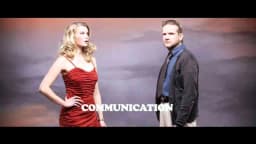
The out-of-home component operates on a different but complementary register. Photographer Nadav Kander shot the portrait series that anchors the OOH executions, each image depicting a direct confrontation between a human soldier and a robot. Kander's portraiture is known internationally for its psychological intensity, and that quality translates directly here — the soldiers' expressions convey confidence and self-belief rather than aggression, reinforcing the campaign's humanist rather than martial tone. Accompanying lines such as 'Nothing can think like a soldier can think' and 'Nothing can feel like a soldier can feel' extend the campaign's core proposition into discrete, channel-specific statements. Nik Studzinski serves as chief creative officer at Accenture Song, providing overall creative leadership across the integrated campaign, as noted by LBBOnline.
No independently verified post-campaign performance data — including recruitment uplift figures, brand tracking shifts, or media effectiveness scores — is publicly available for 'Nothing Can Do What a Soldier Can Do' at the time of writing. What the public record does confirm is the campaign's media architecture and the structural pressures under which it operated.
British Army television spending fell from approximately £4.43 million in 2020/21 to £1.58 million in 2022/23, according to Assets Publishing Service Gov Uk — a decline that compressed the paid reach available to any single campaign and made earned attention through creative quality correspondingly more important. Against that backdrop, the decision to invest in a CGI-heavy, cinema-quality hero film represents a deliberate trade-off: concentrating production value to generate press coverage, social sharing, and organic reach that paid spend alone could not efficiently purchase at reduced budget levels.
The campaign's structural effectiveness rests on a strategically sound insight — that addressing the robot-replacement fear directly is more persuasive than ignoring it — and on a creative execution whose technical ambition was sufficient to earn trade coverage in The Drum and LBBOnline, extending the campaign's reach beyond its paid media schedule. Army Snapchat spending rose from approximately £204,344 in 2020/21 to £410,000 in 2022/23, per assets.publishing.service.gov.uk, indicating a parallel shift toward younger digital audiences that the campaign's social executions were positioned to serve. The Clapboard Score of 78/100 reflects a campaign that executes its central idea with craft and strategic clarity, anchored by genuine production ambition and a culturally resonant proposition, even as its measurable recruitment outcomes remain unconfirmed in the public domain.
'Nothing Can Do What a Soldier Can Do' is a British Army recruitment campaign created by Accenture Song, launched on 1 July 2022 in the United Kingdom. It uses a dystopian CGI robotic soldier narrative to argue that human soldiers remain irreplaceable, extending the 'This Is Belonging' platform first developed in 2017.
Nicolai Fuglsig of production company MJZ directed the 60-second hero film. The spot was built from over 4,000 CGI elements and 2,000 sound design samples, as reported by The Drum. Nik Studzinski served as chief creative officer at Accenture Song across the wider campaign.
'Nothing Can Do What a Soldier Can Do' is the sixth iteration of the 'This Is Belonging' recruitment platform, which Accenture Song developed with Capita and the British Army beginning in 2017. The 2022 version shifts the platform's focus from personal belonging to human irreplaceability in a technologically advanced future Army.
Research cited in the campaign's launch materials found that approximately 30 percent of Brits believed the Army might rely on robots instead of humans in future. Accenture Song addressed that perception directly, positioning technological advancement as the reason human soldier judgment and empathy become more — not less — essential.
Photographer Nadav Kander shot the portrait series for the campaign's out-of-home executions, as noted by LBBOnline. Each image depicts a confrontation between a human soldier and a robot, with Kander's characteristically intense portraiture used to convey soldier confidence and self-belief rather than aggression.
British Army recruitment spending totalled approximately £9.36 million in 2022, down from around £11.37 million in 2020, per questions-statements.parliament.uk. Television spend fell significantly across the same period, while Snapchat investment rose, reflecting a strategic shift toward younger digital audiences in the United Kingdom.
.webp)
Creative Collaboration Platform: The Backbone of Modern Creative WorkWhat is a creative collaboration platform?Clapboard defines a creative collaboration platform as the operational core for today’s distributed creative teams. This is not a collection of digital collaboration tools stitched together; Clapboard’s system


Understanding the Creative Production MarketplaceWhat is a Creative Production Marketplace?Clapboard defines a creative production marketplace as a structured ecosystem where brands, agencies, and production talent converge to execute video, advertising, and branded content at scale. Unlike the legacy agency or freelanREAD FULL ARTICLE

The Urgent Need for a Creative Production Operating SystemWhy Traditional Creative Production Models Break DownClapboard sees the creative production landscape shifting under pressure. Content velocity is no longer a buzzword—it’s a mandate. Modern advertising demands relentless output across dozens of channels, each wREAD FULL ARTICLE