 ARCHIVE
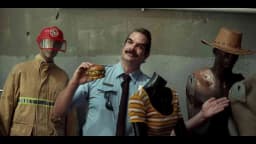
Friends, Grandpa - McDonald's | Clapboard Ad Archive
McDonald's France, in collaboration with TBWA, delivered a resonant entrant to the Food & Drink...
SNCF Puts Gen Z on the Tracks to Stop Rail Trespass
SNCF's "2:38 A.M." is a 2018 railway-safety film created by TBWA\Paris that places viewers inside the perspective of a train driver in the terrifying moment before impact with a trespasser on the tracks, targeting French Gen Z audiences aged 18 to 26 with the explicit goal of discouraging dangerous behaviour near railway infrastructure.
Published in France in May 2018, the campaign was developed for SNCF Réseau, the railway-infrastructure division of the SNCF group. The title references the precise hour at which the dramatic scenario unfolds, lending an immediacy and specificity that generic safety warnings cannot replicate. The campaign's full French subtitle — "Ne devenez pas le cauchemar d'un autre," meaning "Don't become someone else's nightmare" — reframes the risk of rail trespass not through the lens of the trespasser's own jeopardy, but through the psychological burden placed on the train driver. That inversion of perspective is the campaign's defining strategic move.
The production was handled by TBWA\Else, the agency's in-house production arm, with the campaign released as a film asset in France during a period when SNCF Réseau was actively working to reduce incidents on its national rail network. According to groupe-sncf.com, the SNCF group carried approximately 14 million passengers daily worldwide in 2018, underscoring the operational scale within which safety incidents carry systemic weight. The campaign sits within the Travel and Leisure category but functions as a social-responsibility message, one designed to generate emotional consequence rather than commercial conversion. Clapboard rates this campaign 63 out of 100.
SNCF Réseau identified young people aged 18 to 26 as the primary audience for "2:38 A.M." The choice reflects a well-documented challenge in rail safety communication: conventional warning campaigns that lead with consequence to the rule-breaker tend to underperform with younger demographics, who are statistically more likely to discount personal risk. By directing the emotional charge at the train driver — the unseen human who lives with the psychological aftermath — TBWA\Paris constructed a message that reaches its audience through guilt and empathy rather than fear of punishment.
In France, rail infrastructure safety is a sustained institutional concern. SNCF Réseau, as the body responsible for managing the national rail network, carries both an operational and a public-communication mandate to reduce trespass incidents. The campaign's positioning within a broader social-responsibility framework distinguishes it from commercial travel advertising produced by competitors such as Eurostar and Ouigo, which occupy the French long-distance rail market with campaigns centred on destination aspiration and price accessibility. "2:38 A.M." makes no such commercial claim; its currency is conscience.
The European rail sector provides relevant context. European commercial long-distance passenger rail generated approximately 25 billion euros in annual revenue, with revenue growing by around 47 per cent between 2011 and 2018, according to AMT-Autoridade. Against that backdrop of network growth and increased passenger volumes, the human and reputational cost of trespass incidents carries commercial as well as moral weight. TBWA\Paris's documented relationship with SNCF spans at least six years, from 2013 through 2019, according to Branding News, suggesting the strategic thinking behind "2:38 A.M." emerged from deep institutional knowledge of the brand's responsibilities and audience.
"2:38 A.M." is constructed as an immersive first-person film. The creative direction was led by Benjamin Marchal and Faustin Claverie, with creative personnel Lena Monceau and Julia Deshayes contributing to the campaign's development. VR direction was handled by Vincent and Benjamin Ravalec, a choice that signals an intent to place the viewer inside the train driver's physical and psychological experience rather than observe it from a safe editorial distance.
Production was managed by Jennifer Bauche as producer, with TV production overseen by Emilie Prudhomme and post-production handled by Élise Gamboa. The sound dimension of the film was crafted by Fabrice Pouvreau and Alexis Venot, a pairing that reflects the campaign's understanding that in a scenario defined by speed and darkness, audio architecture carries as much narrative weight as the image. The approaching silence, the ambient hum of the network, and the moment of rupture are the film's real emotional instruments.
The production was delivered through TBWA\Else, the agency's integrated production company, with CEO Maxime Boiron overseeing the unit. The campaign carries a deliberately spare visual grammar: the specificity of the timestamp in the title, the first-person camera position, and the unbroken forward momentum of the train all work to make abstraction impossible. The viewer cannot observe — they must inhabit. That formal decision is what separates "2:38 A.M." from the illustrated-consequence format that dominated rail safety communication in France before 2018. The campaign's full creative and production credits are documented across luerzersarchive.com and leclubdesda.org, confirming the scope of the collaborative effort assembled by TBWA\Paris.
No verified commercial performance data for "2:38 A.M." is publicly available in terms of reach figures, recall scores, or measurable behavioural change among the target demographic. The campaign's impact is most concretely evidenced by its awards recognition. According to leclubdesda.org, "2:38 A.M." — officially entered as "02.38 am" by TBWA\Paris for SNCF Réseau — received a D&AD Pencil in the Use of Interaction category in 2019. The D&AD Pencil represents peer validation from one of the advertising industry's most rigorous creative juries, and recognition specifically in an interaction category confirms that the campaign's immersive, first-person construction was read by the industry as a meaningful formal innovation rather than a stylistic choice.
Structurally, the campaign demonstrates several properties that correlate with effective social-responsibility communication. The perspective inversion — placing moral weight on the audience through the driver's nightmare rather than the trespasser's risk — gives the film an emotional leverage point that generic warning formats lack. The sound design, the timestamp specificity, and the VR-informed visual language all work to prevent the psychological distancing that undermines campaigns built on abstract consequence.
Clapboard scores this campaign 63 out of 100, reflecting strong creative ambition and formal originality alongside the inherent difficulty of verifying behavioural outcomes for social-responsibility work in France's rail safety space.
"2:38 A.M." is a 2018 railway-safety film by TBWA\Paris for SNCF Réseau in France. It places viewers in the perspective of a train driver confronting a trespasser on the tracks. The campaign targets French Gen Z aged 18 to 26, using empathy and guilt rather than personal-risk warnings to discourage dangerous behaviour near rail infrastructure.
TBWA\Paris created "2:38 A.M." for SNCF Réseau. Creative directors were Benjamin Marchal and Faustin Claverie. VR direction was handled by Vincent and Benjamin Ravalec, with production by Jennifer Bauche through TBWA\Else. Sound design was delivered by Fabrice Pouvreau and Alexis Venot, according to documentation at luerzersarchive.com and leclubdesda.org.
"2:38 A.M." won a D&AD Pencil in the Use of Interaction category in 2019, according to leclubdesda.org. It was entered officially as "02.38 am" by TBWA\Paris for SNCF Réseau. No verified Cannes Lions, Effie, Clio, or Webby Awards for this specific campaign are publicly documented across available industry sources.
SNCF Réseau identified Gen Z aged 18 to 26 as a primary risk group for rail trespass behaviour in France. TBWA\Paris chose empathy over fear, directing emotional consequence toward the train driver rather than the trespasser, a strategy designed to penetrate the psychological defences younger audiences typically deploy against conventional risk-based warning campaigns.
The title references the precise time at which the film's scenario unfolds. That specificity is a deliberate creative choice: it makes the threat feel real and immediate rather than abstract. The full French subtitle translates as "Don't become someone else's nightmare," reinforcing the campaign's strategic inversion of the conventional rail-safety warning perspective.
TBWA's documented relationship with SNCF spans at least six years, from 2013 through 2019, according to branding.news. Notable collaborations include the 2013 interactive campaign "Europe. It's Just Next Door," the 2015 film "Je Chante," the 2018 "2:38 A.M." rail-safety work, and the 2019 "Fireworks" campaign produced with EDDY.TV and Caravane Studio.
.webp)
Creative Collaboration Platform: The Backbone of Modern Creative WorkWhat is a creative collaboration platform?Clapboard defines a creative collaboration platform as the operational core for today’s distributed creative teams. This is not a collection of digital collaboration tools stitched together; Clapboard’s system


Understanding the Creative Production MarketplaceWhat is a Creative Production Marketplace?Clapboard defines a creative production marketplace as a structured ecosystem where brands, agencies, and production talent converge to execute video, advertising, and branded content at scale. Unlike the legacy agency or freelanREAD FULL ARTICLE

The Urgent Need for a Creative Production Operating SystemWhy Traditional Creative Production Models Break DownClapboard sees the creative production landscape shifting under pressure. Content velocity is no longer a buzzword—it’s a mandate. Modern advertising demands relentless output across dozens of channels, each wREAD FULL ARTICLE