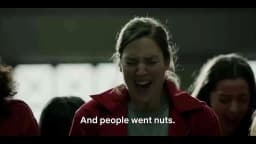
SKY Television's 'Come with Us' campaign, created by DDB New Zealand in 2013, marked a deliberate shift toward cinematic, emotionally inclusive brand

SKY New Zealand Bets on Cinematic Warmth to Reframe Pay-TV
SKY Television's 'Come with Us' is a 2013 New Zealand film campaign created by DDB New Zealand that repositioned the pay-TV broadcaster as an emotionally welcoming gateway to shared entertainment, moving away from channel-specific promotion toward a broad cinematic brand statement.
Published in October 2013, the campaign marks a deliberate tonal shift for SKY Television in the New Zealand market. Rather than leading with product features, channel counts, or promotional pricing, 'Come with Us' frames SKY as an experience — one that invites viewers into a world of entertainment rather than selling access to it. The distinction is meaningful. Pay-TV advertising in 2013 remained largely transactional across the category, anchored to content libraries and subscription mechanics. SKY and DDB New Zealand chose a different register entirely: warmer, more cinematic, and built on emotional resonance rather than rational persuasion.
The campaign's positioning, as documented in Clapboard's archive, places SKY as the gateway to broad, shared entertainment experiences — language that suggests an audience-first philosophy rather than a broadcaster-centric one. That framing carries strategic weight in a small but competitive media market like New Zealand, where SKY Television operated as the dominant pay-TV provider and faced the emerging pressure of digital streaming alternatives beginning to reshape how audiences related to subscription television. The single film execution contained within this campaign carries the full weight of that repositioning, relying on craft and tone rather than scale to make its case.
SKY Television held a dominant position in New Zealand's pay-TV landscape in 2013. As reported by the New Zealand Herald's media desk, SKY maintained a subscriber base that represented the clear majority of pay-TV households in New Zealand at that time, with no comparable domestic pay-TV competitor matching its breadth of content rights or distribution infrastructure. That dominance, however, came with a creative risk: market leadership can calcify brand tone, making familiar advertising feel more like institutional communication than genuine invitation.
DDB New Zealand's strategic response, as characterised by StopPress in its 2014 feature 'Spirit in the Sky', was to shift SKY's communication toward something described as more modern, colloquial, and welcoming compared to the broadcaster's historically humorous advertising tone. The move away from comedy toward cinematic warmth was not incidental — it reflected a broader understanding that pay-TV's emotional territory was changing as streaming platforms began competing for the same psychological space that broadcast and cable television had long occupied.
Globally, the pay-TV sector was under measurable pressure. IPTV subscribers grew approximately eighteen and a half percent year-on-year to reach ninety-two million in 2013, while traditional cable subscriber growth slowed to around three percent over the same period, according to WorldScreen. In New Zealand, where SKY's primary competitive threat came not from a domestic rival but from the eventual arrival of international streaming services, the decision to build brand affinity rather than defend product utility reads as genuinely forward-looking. DDB's relationship with SKY, described by Campaign Brief New Zealand as a partnership spanning twenty-five years by the time of a 2020 agency review, gave the creative team the institutional trust required to push that tonal reset.
Nathan Price directed 'Come with Us' for SKY Television, bringing a cinematic sensibility to what could easily have been a conventional broadcaster spot. Price worked through Ruskin Films, the New Zealand production company attached to the campaign, with Claris Harvey serving as producer — a combination that placed experienced local production infrastructure behind DDB New Zealand's creative brief.
The creative leadership at DDB New Zealand was provided by Andy Fackrell and Chris Schofield, as documented in Clapboard's archive, with Damon Stapleton serving as Chief Creative Officer of DDB New Zealand at the time of the campaign's production, as noted by StopPress. The alignment of agency creative direction and production company capability matters in a market the size of New Zealand, where the talent pool is concentrated and the margin between competent and exceptional execution is often determined by collaboration quality rather than budget scale.
Costume design for the production was handled by Kylie Cooke, whose professional record lists the project as 'Sky Come with Us' with an August 2013 production date, according to her documented professional credentials via The Creatives Room. The presence of a dedicated costume designer signals a production with considered visual identity — one where character and period detail were treated as meaningful craft elements rather than production afterthoughts. No verified post-production house, music composer, editor, or cinematographer credits are publicly documented for the campaign. Stefan Coory and Rock Paper Scissors, both associated with the broader DDB New Zealand production ecosystem, are referenced in connection with the agency's creative output during this period, though their specific involvement in 'Come with Us' is not independently confirmed in available records.
No verified performance data for 'Come with Us' is publicly available. SKY Television did not publish subscriber movement, brand tracking shifts, or campaign-attributable metrics in connection with this specific film, and no independent measurement source — including Campaign Brief New Zealand, StopPress, or WARC — has reported quantified outcomes tied to the October 2013 launch.
What is documentable is the structural effectiveness argument for the campaign's approach. StopPress's 'Spirit in the Sky' feature from 2014 framed 'Come with Us' as evidence of a meaningful brand repositioning — a tonal shift that SKY and DDB New Zealand pursued deliberately rather than reactively. In a market where SKY Television's primary threat was not an equivalent domestic pay-TV competitor but the coming disruption of international streaming platforms, a campaign that built emotional affinity and brand warmth ahead of that disruption carries strategic logic that outlasts any single activation metric.
The campaign's single-execution format — one film asset carrying the full repositioning argument — also reflects a creative confidence that is itself a measurable quality signal. Campaigns that concentrate creative investment rather than distribute it across fragmented executions tend to achieve stronger brand recall in smaller markets like New Zealand, where media weight is finite and distinctiveness per impression matters more than reach alone.
Clapboard scores 'Come with Us' at 63 out of 100, a rating that reflects solid creative craft and clear strategic intent while acknowledging the absence of verifiable performance data and the limitations of a single-asset campaign in establishing long-term brand impact.
'Come with Us' is a 2013 New Zealand brand film created by DDB New Zealand for SKY Television. It repositioned SKY away from product-led advertising toward a cinematic, emotionally welcoming tone, inviting audiences into a shared entertainment experience rather than promoting specific channels or subscription features.
Nathan Price directed 'Come with Us' for SKY Television. He worked through Ruskin Films, with Claris Harvey producing. Creative direction at DDB New Zealand was led by Andy Fackrell and Chris Schofield, under Chief Creative Officer Damon Stapleton, as documented in Clapboard's archive and StopPress reporting.
'Come with Us' launched in October 2013 in New Zealand. Production, including costume design by Kylie Cooke, was completed by August 2013. The campaign represented a significant tonal shift for SKY Television, moving toward more cinematic and emotionally inclusive brand communication, as characterised by StopPress in 2014.
DDB New Zealand sought to move SKY Television away from its historically humorous, product-focused advertising toward warmer, more modern brand storytelling. The strategy anticipated growing competitive pressure from international streaming platforms by building emotional affinity with audiences rather than defending SKY's pay-TV product on functional terms alone.
Clapboard scores 'Come with Us' at 63 out of 100. The rating reflects clear strategic intent and solid production craft, while acknowledging the single-asset format and the absence of publicly verified performance data for the October 2013 New Zealand campaign created by DDB New Zealand for SKY Television.
DDB New Zealand and SKY Television maintained a partnership described as spanning twenty-five years as of February 2020, according to Campaign Brief New Zealand, placing the relationship's origin around 1995. 'Come with Us' in 2013 fell within that long-standing agency-client collaboration, giving DDB the trust required to pursue SKY's tonal repositioning.
.webp)
Creative Collaboration Platform: The Backbone of Modern Creative WorkWhat is a creative collaboration platform?Clapboard defines a creative collaboration platform as the operational core for today’s distributed creative teams. This is not a collection of digital collaboration tools stitched together; Clapboard’s system


Understanding the Creative Production MarketplaceWhat is a Creative Production Marketplace?Clapboard defines a creative production marketplace as a structured ecosystem where brands, agencies, and production talent converge to execute video, advertising, and branded content at scale. Unlike the legacy agency or freelanREAD FULL ARTICLE

The Urgent Need for a Creative Production Operating SystemWhy Traditional Creative Production Models Break DownClapboard sees the creative production landscape shifting under pressure. Content velocity is no longer a buzzword—it’s a mandate. Modern advertising demands relentless output across dozens of channels, each wREAD FULL ARTICLE