 ARCHIVE
Air New Zealand Brings David Hasselhoff to the Skycouch
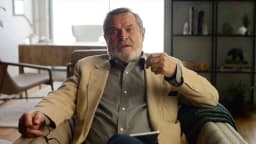
Air New Zealand's 2011 Skycouch film places David Hasselhoff alongside the airline's puppet character Rico in a comedic narrative designed to introduce New Zealand audiences to the Skycouch, a convertible economy cabin product that transforms three adjacent seats into a flat, bed-like surface.
Published in New Zealand in July 2011 and created by Auckland-based agency.99, the campaign belongs to the transport industry and takes the form of a single film asset. The execution arrives at a precise strategic moment: Air New Zealand had introduced the Skycouch on its Boeing 777-300ER fleet in late 2010 and early 2011, and needed to communicate a genuinely new cabin concept to travellers accustomed to the rigidity of standard economy seating. The Skycouch pricing structure — two seats at full price and a third at half price, with an estimated additional cost of approximately $1,400 on a typical Auckland–London route, as reported by Campaign magazine — meant the airline needed creative work that could justify a considered purchase without leaning on functional specification alone.
The choice of David Hasselhoff is deliberate. His status as a globally recognisable figure whose cultural moment had already peaked gave the campaign an ironic register that audiences in New Zealand could read immediately. Paired with Rico — a character whose comedic personality had already begun accumulating its own following — the film operates as entertainment first and product demonstration second. The narrative frame allows the Skycouch's core benefit, horizontal space in economy class, to be shown rather than stated. Clapboard Score for this campaign stands at 69 out of 100, reflecting solid creative conviction tempered by the limitations of a single-asset release.
ARCHIVEAir New Zealand entered 2011 operating in one of the most financially pressured years the global airline industry had faced since the 2008 downturn. According to IATA's year-end market analysis, passenger-traffic growth reached 5.9% in 2011, yet industry profit fell to approximately US$7.9 billion — roughly half the prior year's figure, according to IATA's 2011 annual report. Fuel costs, which had historically represented around 13% of airline operating expenses, climbed to more than 30% of operating costs in 2011, according to IATA. In that environment, a premium economy-adjacent product like the Skycouch carried significant commercial weight for Air New Zealand's long-haul revenue strategy.
The competitive context sharpens the strategic rationale further. Carriers including Qantas and Emirates were investing heavily in premium cabin storytelling during the same period, making the economy cabin a contested battleground for differentiation. Air New Zealand's response, shaped by.99, was to avoid conventional comfort rhetoric entirely and instead build a narrative world around Rico that could sustain multiple executions. As reported by StopPress, journalist Ben Fahy described Rico as a polarising mascot as early as December 2011, which itself signals the character had generated enough cultural presence to provoke genuine opinion — a rare outcome for airline advertising.
In New Zealand, where the domestic aviation market is effectively a duopoly and long-haul travel is a significant household expenditure, humour-led campaigns have historically outperformed earnest lifestyle advertising in driving brand recall. The Skycouch campaign follows the lineage of.99's own 2009 work for Air New Zealand — the body-painted "Nothing to Hide" campaign, which won the RSVP Grand Prix according to stoppress.co.nz — demonstrating a consistent agency thesis that irreverence builds more durable brand equity than aspiration alone.
Director Josh Frizzell leads the production, working through Curious Films with producer Seth Wilson. The film's creative architecture was built by Executive Creative Director Craig Whitehead and Creative Director Paul Hankinson at.99, with Art Director Dom Antelme and Copywriter Jon Coles shaping the specific execution. Agency Producer Vicki O'Leary oversaw production on the agency side, with account leadership from Group Account Director Matt Dickinson and Account Manager Sonja Corbett.
Post-production reflects a considered investment in finish. Offline editing was handled by David Coulson, online by Leon Woods, and motion graphics were produced by Jonny Kofoed at Assembly Ltd. The cumulative effect is a film that looks deliberately polished — the comedy lands harder when the production values give it room to breathe rather than signalling low-budget self-awareness.
The most technically distinctive element of the entire execution is the puppet work. Rico was designed by Jim Henson's Creature Shop, the organisation responsible for some of the most enduring character puppets in screen history. Tyler Bunch performed the puppeteering on set. The decision to engage Jim Henson's Creature Shop is not incidental: it signals to both the production team and the audience that Rico is a character built to last, not a disposable campaign device. The physicality that Bunch brings to Rico's performance — the timing, the spatial relationship with Hasselhoff, the way the puppet occupies the Skycouch environment — is what separates the film from a straightforward celebrity endorsement. It becomes, instead, a genuinely authored piece of comedy filmmaking in service of a product narrative. As reported by Campaign magazine, the broader Skycouch campaign was positioned around quirky, character-led video executions as its primary communications vehicle, and this film represents that strategy at its most committed.
No verified performance data for the David Hasselhoff Skycouch campaign is publicly available in isolation. Campaign magazine reported the Skycouch campaign was scheduled to extend into the UK market in July 2011, which indicates Air New Zealand and.99 had sufficient confidence in the creative approach to allocate international media spend behind it — a meaningful structural indicator of internal effectiveness assessment.
The wider Rico campaign ecosystem provides relevant proxy evidence. Air New Zealand received the 2011 Airline Business marketing strategy award for the Rico campaign, with judges describing the airline as both game-changing and industry-leading, according to Airline Business. A separate Rico execution — a music video titled Hello Sunshine featuring Snoop Dogg — generated substantial organic attention, reinforcing the character's capacity to earn media alongside paid distribution. The Hasselhoff film sits within that same creative system, benefiting from the cumulative brand recognition Rico had already established.
Structurally, the campaign demonstrates several conditions associated with durable effectiveness. The narrative format sustains attention beyond the product claim. The celebrity casting operates ironically, which reduces the credibility deficit that straightforward endorsement often carries. The Jim Henson's Creature Shop puppet work creates a tangible production signal that the brand is investing rather than cutting corners. In New Zealand's travel and leisure category, where Air New Zealand competes against carriers with substantially larger global marketing budgets, the decision to build a proprietary character rather than compete on media weight alone reflects a sound long-term brand-building logic. The Clapboard Score of 69 out of 100 positions this execution as above average for its category and year, with room that better metric documentation might have closed.
The Air New Zealand Skycouch campaign is a 2011 comedy film starring David Hasselhoff alongside puppet character Rico, created by agency.99 and published in New Zealand in July 2011. It introduces the Skycouch, a convertible three-seat economy cabin product launched on Air New Zealand's Boeing 777-300ER fleet in late 2010 and early 2011.
Agency.99 created the film, led by Executive Creative Director Craig Whitehead and Creative Director Paul Hankinson. Director Josh Frizzell shot the production through Curious Films. The Rico puppet was designed by Jim Henson's Creature Shop and performed by puppeteer Tyler Bunch, giving the character a distinctive physical presence throughout the Skycouch narrative.
The Skycouch converts three adjacent economy seats into a flat, bed-like surface. Air New Zealand introduced it on its Boeing 777-300ER aircraft. Pricing requires two seats at full fare and a third at half price, with Campaign magazine reporting an estimated additional cost of approximately $1,400 on a typical Auckland–London long-haul route.
Rico is a proprietary puppet character Air New Zealand developed with.99 to build a recognisable brand personality across multiple campaign executions. As reported by StopPress, the character was described as polarising but culturally present by late 2011. Air New Zealand received the 2011 Airline Business marketing strategy award for the broader Rico campaign, with judges calling the approach game-changing.
The campaign continues a strategic approach.99 established with Air New Zealand from 2009 onward, prioritising irreverent, character-led narrative over conventional airline lifestyle advertising. The 2009 body-painted Nothing to Hide campaign won the RSVP Grand Prix according to stoppress.co.nz, and the Hasselhoff Skycouch film extends that same creative philosophy into a new product context.
The Air New Zealand Skycouch film featuring David Hasselhoff and Rico received a Clapboard Score of 69 out of 100. This positions the campaign above average for the transport category in 2011, reflecting strong creative conviction in its narrative approach and puppet craft, while acknowledging the limitations of a single-asset release without publicly verified performance metrics.
.webp)
Creative Collaboration Platform: The Backbone of Modern Creative WorkWhat is a creative collaboration platform?Clapboard defines a creative collaboration platform as the operational core for today’s distributed creative teams. This is not a collection of digital collaboration tools stitched together; Clapboard’s system


Understanding the Creative Production MarketplaceWhat is a Creative Production Marketplace?Clapboard defines a creative production marketplace as a structured ecosystem where brands, agencies, and production talent converge to execute video, advertising, and branded content at scale. Unlike the legacy agency or freelanREAD FULL ARTICLE

The Urgent Need for a Creative Production Operating SystemWhy Traditional Creative Production Models Break DownClapboard sees the creative production landscape shifting under pressure. Content velocity is no longer a buzzword—it’s a mandate. Modern advertising demands relentless output across dozens of channels, each wREAD FULL ARTICLE