 ARCHIVE
Land Rover Bets on Design to Launch the New Range Rover Evoque
How Land Rover Positioned the New Range Rover Evoque as a City-Ready Luxury SUV Land Rover launched...
Paloma Faith Drives Škoda Into a New Kind of Storytelling
Škoda's 'Paloma Faith – Make Your Own Kind of Music' is a 2018 UK automotive campaign created by Fallon London in which British singer Paloma Faith records the classic Mama Cass song of the same name, with the film and music positioned to embody the brand's 'Driven by Something Different' platform across television, cinema, out-of-home, and digital media.
The campaign launched in three coordinated stages across the United Kingdom. According to Music Week, Faith's recording was released on streaming services on 2 March 2018, the music video followed on 20 March 2018, and the television campaign launched on 24 March 2018. That television premiere aired during ITV's The Voice, a placement chosen deliberately for its alignment with musical identity and mass UK reach. The campaign was produced in both a 60-second and a 30-second edit, supported further by YouTube bumper ads, making it one of the more structurally ambitious integrated automotive campaigns of that year.
The Škoda model at the centre of the campaign is the Karoq, the brand's compact SUV introduced to the UK market in 2018. Rather than foregrounding the vehicle's specifications, Fallon constructed the campaign around Paloma Faith's personal narrative — her journey as an artist who has consistently refused to conform. The song's title functions as both emotional shorthand and brand positioning, equating Škoda's own historical trajectory from underdog marque to respected manufacturer with Faith's own story of self-determination. As Faith stated in a quote published on 28 March 2018 by Mervyn Stewart, 'It's been strangely emotional to see my life on screen and I think Škoda has done a fantastic job capturing my journey.' The campaign earned a Clapboard Score of 77 out of 100, reflecting strong creative and strategic coherence.
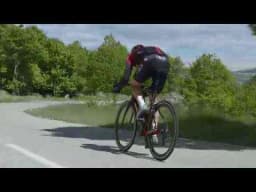
Škoda's 'Driven by Something Different' platform sits at the centre of the brand's effort to shift UK consumer perception away from rational product messaging and toward personality-led storytelling. The platform was launched in 2017, with cyclist Sir Bradley Wiggins fronting the opening campaign, titled 'The Climb', as reported by The Drum. That campaign used cycling as a metaphor for effort and self-belief, establishing a creative grammar that the Paloma Faith work extended and deepened in 2018.
The strategic logic is grounded in Škoda's own brand history in the United Kingdom. Paloma Faith herself articulated the brand's positioning challenge directly, noting, as reported by Shots, that Škoda 'was the car people took the piss out of you for having' — a frank acknowledgement that the marque spent decades overcoming a reputation for cheap, unreliable vehicles before its Volkswagen Group ownership transformed its engineering credentials. Fallon's approach converts that underdog narrative into a shared cultural identity, pairing it with a talent whose career has followed a similar arc of defiance and eventual mainstream recognition.
The competitive context in the United Kingdom's automotive market in 2018 was demanding. Mainstream volume rivals including Ford and Vauxhall continued to dominate UK registration charts, while premium compact SUV competitors such as Volkswagen's own Tiguan and the SEAT Ateca — both products within the same Volkswagen Group portfolio — competed for similar segments. Škoda achieved approximately 1.3 million global vehicle deliveries in 2018 and reported sales revenue of €17.3 billion, up 4.4% year on year, according to the Volkswagen AG Annual Report 2018. Selecting a culturally resonant artist over a product-led message reflected a clear decision to compete on brand affinity rather than specification comparison in the UK market.
The music video at the heart of the campaign was directed by Georgia Hudson, produced through Agile Films. Hudson's approach centres on biographical intimacy — the film traces Paloma Faith's life and artistic journey rather than staging a conventional automotive advertisement, positioning the Karoq as a presence within a wider personal story rather than the subject of it. The decision to build the campaign around a music video as a primary creative asset, rather than treating music as incidental to a car advertisement, reflects a structural ambition that separates this work from the majority of automotive category advertising in the United Kingdom in 2018.
Fallon's creative team developed the campaign to operate across multiple formats and contexts without losing its emotional coherence. The 60-second television edit retains sufficient narrative arc to function as a standalone film, while the 30-second edit and YouTube bumper executions are engineered to carry the sonic and visual identity of the campaign even at compressed lengths. That layered production approach — one master film generating a cascade of platform-specific edits — reflects both budget discipline and a sophisticated understanding of how audiences encounter advertising across different media environments in the UK market.
The song itself carries considerable strategic weight as a creative choice. 'Make Your Own Kind of Music', originally recorded by Mama Cass Elliot in 1969, carries decades of cultural associations with individualism and creative courage. Faith's rerecording is not a straight cover; it is positioned as her own interpretation, which reinforces the campaign's central argument that authenticity and difference are values both the artist and the brand share. As Faith stated, as reported by Mervyn Stewart, 'Make Your Own Kind of Music is a song that really resonates with me. It's about a fearlessness of being who you are and it's a message that stands out strongly in the advert.'
No verified sales or brand-tracking performance data for the Škoda 'Paloma Faith – Make Your Own Kind of Music' campaign is publicly available. What the public record does confirm is a set of measurable outcomes that indicate the campaign landed beyond the boundaries of conventional automotive advertising in the United Kingdom.
According to Music Week, Paloma Faith's recording of 'Make Your Own Kind of Music' reached number 28 on the UK Singles Chart in 2018, and number 8 on the Scottish Singles Sales chart. For a track released in direct association with a car brand, charting on the UK Singles Chart represents a meaningful indicator of genuine cultural penetration rather than passive audience exposure. The same Music Week source confirms the campaign won the 2018 Music Week Sync Award for Best Branded Entertainment — an industry recognition that positions the work among the most effective uses of music in branded content produced in the United Kingdom that year.
Structurally, the campaign's effectiveness derives from its integration model. By releasing the recording and music video ahead of the television launch, Fallon and Škoda created an organic discovery pathway in which audiences encountered Faith's track as music before encountering it as advertising. That sequencing reduces the friction typically associated with branded content and allows the emotional work of the song to establish itself independently. The Clapboard Score of 77 out of 100 reflects the campaign's strong creative coherence, its disciplined use of talent, and the measurable cultural impact of the music release, balanced against the absence of disclosed brand-metric outcomes.
The Škoda 'Paloma Faith – Make Your Own Kind of Music' campaign is a 2018 UK automotive campaign created by Fallon London. It features British singer Paloma Faith recording the classic Mama Cass song and centres on a music video directed by Georgia Hudson, produced through Agile Films, and integrated across TV, cinema, out-of-home, and digital channels.
The campaign launched in stages across the United Kingdom in March 2018. According to Music Week, Faith's recording was released on streaming services on 2 March 2018, the music video followed on 20 March 2018, and the television campaign premiered on 24 March 2018 during ITV's The Voice.
Paloma Faith's recording reached number 28 on the UK Singles Chart in 2018, according to Music Week. It also reached number 8 on the Scottish Singles Sales chart. Charting on the UK Singles Chart as a branded release marks a notable indicator of genuine cultural reach beyond typical automotive advertising.
The campaign won the 2018 Music Week Sync Award for Best Branded Entertainment, according to Music Week. This recognition placed the Škoda and Fallon collaboration among the most effective uses of music in UK branded content that year, reflecting the integrated strategy of releasing music independently before the television launch.
The music video was directed by Georgia Hudson and produced through Agile Films. Hudson's approach centred on biographical storytelling, tracing Paloma Faith's personal and artistic journey rather than staging a conventional automotive advertisement, positioning the Škoda Karoq within a wider narrative of individual self-determination.
The campaign sits within Škoda's 'Driven by Something Different' platform, launched in the United Kingdom in 2017, as reported by The Drum. The platform marked a deliberate shift from rational product advertising toward personality-led brand storytelling, with Sir Bradley Wiggins fronting the preceding campaign before Fallon introduced Paloma Faith in 2018.
.webp)
Creative Collaboration Platform: The Backbone of Modern Creative WorkWhat is a creative collaboration platform?Clapboard defines a creative collaboration platform as the operational core for today’s distributed creative teams. This is not a collection of digital collaboration tools stitched together; Clapboard’s system


Understanding the Creative Production MarketplaceWhat is a Creative Production Marketplace?Clapboard defines a creative production marketplace as a structured ecosystem where brands, agencies, and production talent converge to execute video, advertising, and branded content at scale. Unlike the legacy agency or freelanREAD FULL ARTICLE

The Urgent Need for a Creative Production Operating SystemWhy Traditional Creative Production Models Break DownClapboard sees the creative production landscape shifting under pressure. Content velocity is no longer a buzzword—it’s a mandate. Modern advertising demands relentless output across dozens of channels, each wREAD FULL ARTICLE