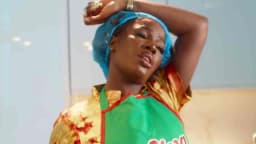
Skip's #FabulousDressProject by The Jupiter Drawing Room used a deliberately stained white dress to demonstrate enzyme-plus and Fibre Protect technology in

How Skip's FabulousDressProject Turned a White Dress Into a Proof of Concept
Skip's #FabulousDressProject is a 2015 digital campaign created by The Jupiter Drawing Room for Skip in South Africa, designed to demonstrate through a live fashion experiment that the brand's enzyme-plus and Fibre Protect technology could preserve clothing quality through repeated washing cycles.
The campaign launched in September 2015, though production records associate the project with a development window running from March 2015 to August 2015. At its core, the #FabulousDressProject was a proof-of-concept activation built around a single white dress — a garment chosen precisely because white fabric is the most unforgiving test of any laundry product's performance claims. The dress was deliberately stained and washed repeatedly, with the entire process documented and distributed as a digital media asset, giving South African consumers a visible, tactile argument for Skip's cleaning and fabric-protection credentials.
The campaign operated at the intersection of the House, Garden, and Lifestyle categories, drawing in fashion and style audiences who might not ordinarily engage with a household product brand. By partnering with fashion designer Celeste Arendse and blogger Aisha Baker, The Jupiter Drawing Room grounded the experiment in credible style culture, ensuring the campaign spoke to consumers who care as much about how their clothes look after washing as whether they are technically clean. In South Africa, where fashion and personal presentation carry strong cultural significance, this framing gave Skip a genuinely relevant platform. The #FabulousDressProject earned a 2015 Loerie Awards finalist citation in the PR and Integrated Campaign category, affirming the campaign's standing within the South African creative industry. Clapboard Score: 63/100.
Unilever manufactured South Africa's best-selling detergent brands at the time of the campaign's launch, according to reporting by Sowetan Co Za, with OMO, Sunlight, Skip, and Surf all sitting within its portfolio. That internal competition made differentiation between Unilever's own brands as strategically important as competition from outside the group. The strategic pressure intensified when Procter and Gamble's Ariel reached approximately twelve percent market share in South Africa by May 2015, having entered the market a little over two years prior, according to sowetan.co.za — a rapid penetration that signalled South African consumers were open to switching allegiances on the basis of performance claims.
Against this backdrop, The Jupiter Drawing Room identified a consumer insight that sits at the heart of South African household and lifestyle behaviour: the desire to protect a wardrobe investment, not merely to clean it. A 2011 Skip campaign had already positioned the brand as the choice for well-dressed women wanting to protect their wardrobes, per records cited on linkedin.com, establishing a fashion-adjacent brand territory that the #FabulousDressProject extended and deepened four years later. The 2015 campaign moved that positioning from assertion to demonstration, shifting the brand's communication from a claim about fabric care into a live, documented experiment that consumers could follow.
The digital format was well-suited to South Africa's growing connected population and to the influencer-adjacent mechanics the campaign employed. By routing the activation through a fashion designer and a lifestyle blogger, The Jupiter Drawing Room reached a House, Garden, and Lifestyle audience that responds to peer validation rather than broadcast advertising. The strategy acknowledged that in a crowded detergent category, earned attention through credible voices carries more weight than paid media alone.
The Jupiter Drawing Room built the #FabulousDressProject around a single, structurally elegant creative device. A white dress was selected, deliberately stained, and then subjected to repeated washing with Skip, with each stage documented to show that the garment retained both its cleanliness and its fabric integrity across the full cycle. The choice of a white dress was not incidental — white is the colour that exposes every failure a detergent can make, and surviving repeated staining and washing in white is a more persuasive demonstration than any claim made in a television spot.
Creative leadership on the campaign was held by Ross Chowles as executive creative director, with Jonathan Warncke and Lucas van Vuuren serving as creative directors, the latter also credited as art director, per production records. Melissa Fontini wrote the copy, Alwine Nolte handled design, and the visual documentation of the experiment was photographed by Zaid Joseph. The film component was directed by Gerhard Pretorius and edited by Mikhail Gany, giving the campaign a production team whose disciplines spanned still photography, film, and digital design — a range that reflected the multi-touchpoint nature of a digitally distributed activation.
The activation participants, fashion designer Celeste Arendse and blogger Aisha Baker, were integral to the creative execution rather than peripheral endorsers. Their involvement gave the dress a provenance within South African fashion culture and ensured the documentation of the washing experiment carried the visual language of a style editorial rather than a product demonstration. The single media asset that resulted from this process served as the campaign's primary deliverable, concentrating the creative effort into one piece of content designed to earn organic distribution across South Africa's digital and social landscape. Production credits for all additional behind-the-scenes materials are not publicly documented beyond the records cited here.
No verified performance data for the #FabulousDressProject is publicly available in terms of reach figures, engagement rates, or sales uplift. The campaign's impact is instead best understood through its structural design and the independent recognition it attracted within the South African advertising industry.
The most concrete external signal of effectiveness is the campaign's listing as a 2015 Loerie Awards finalist in the PR and Integrated Campaign category. The Loerie Awards represent South Africa's foremost creative industry benchmark, and a finalist citation in an integrated category indicates the campaign was judged to have achieved coherent communication across its digital, PR, and experiential mechanics — a meaningful threshold in a market where the gap between concept and execution is frequently where campaigns fall short.
Structurally, the #FabulousDressProject demonstrates several characteristics that correlate with effectiveness in the South African Lifestyle and House, Garden category. The campaign created a falsifiable claim — either the dress survived or it did not — which removes the ambiguity that undermines most product demonstration advertising. The involvement of Celeste Arendse and Aisha Baker provided authentic cultural anchoring within South Africa's fashion and lifestyle community, reducing the credibility gap that typically separates brand-produced content from earned media. The Jupiter Drawing Room's established relationship with Skip, stretching back to at least 2012 when their Evolution of Washing campaign won a Gold Loerie according to records on linkedin.com, also suggests the agency had accumulated strategic and tonal knowledge of the brand that informed the #FabulousDressProject's confident, demonstration-led approach.
The #FabulousDressProject was a 2015 digital campaign by The Jupiter Drawing Room for Skip in South Africa. It used a white dress that was repeatedly stained and washed to demonstrate Skip's enzyme-plus and Fibre Protect technology, documenting the process as a live fabric-care proof distributed through digital channels.
The Jupiter Drawing Room created the #FabulousDressProject for Skip. Executive creative director Ross Chowles led the team, supported by creative directors Jonathan Warncke and Lucas van Vuuren, copywriter Melissa Fontini, photographer Zaid Joseph, and director Gerhard Pretorius, with fashion designer Celeste Arendse and blogger Aisha Baker as activation participants.
The #FabulousDressProject was listed as a 2015 Loerie Awards finalist in the PR and Integrated Campaign category. The Loerie Awards are South Africa's principal creative industry benchmark. The campaign did not publicly claim a win, but a finalist citation in an integrated category reflects strong peer-industry recognition of its concept and execution.
A white dress was chosen because white fabric exposes every failure a detergent can make, making it the most demanding test of Skip's cleaning and fabric-protection claims. The choice turned the garment into a falsifiable experiment — the dress either survived repeated washing or it did not — giving the campaign inherent credibility in South Africa's detergent market.
Procter and Gamble's Ariel had reached approximately twelve percent market share in South Africa by May 2015, according to sowetan.co.za, intensifying pressure on Unilever's detergent portfolio. Skip, alongside OMO, Sunlight, and Surf, needed to differentiate clearly. The #FabulousDressProject answered that pressure through live product demonstration rather than conventional brand advertising.
The Clapboard Score for the #FabulousDressProject is 63 out of 100. The score reflects the campaign's structurally sound demonstration mechanic and its Loerie Awards finalist recognition, balanced against the absence of publicly verified performance data and the limited scale of a single digital media asset distributed in the South African market.
.webp)
Creative Collaboration Platform: The Backbone of Modern Creative WorkWhat is a creative collaboration platform?Clapboard defines a creative collaboration platform as the operational core for today’s distributed creative teams. This is not a collection of digital collaboration tools stitched together; Clapboard’s system


Understanding the Creative Production MarketplaceWhat is a Creative Production Marketplace?Clapboard defines a creative production marketplace as a structured ecosystem where brands, agencies, and production talent converge to execute video, advertising, and branded content at scale. Unlike the legacy agency or freelanREAD FULL ARTICLE
The Urgent Need for a Creative Production Operating SystemWhy Traditional Creative Production Models Break DownClapboard sees the creative production landscape shifting under pressure. Content velocity is no longer a buzzword—it’s a mandate. Modern advertising demands relentless output across dozens of channels, each wREAD FULL ARTICLE