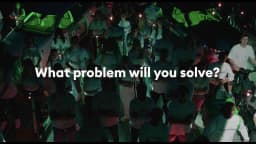
Singapore Tourism's 2018 Facebook AR Camera Effect, created by AliveNow, used location-themed augmented-reality props to help users discover Singapore party

Singapore Tourism Brings AR to Facebook to Spotlight Party Spots
Singapore Tourism's Facebook AR Camera Effect is a December 2018 digital campaign created by AliveNow that placed location-themed augmented-reality props inside Facebook's native camera, allowing users to generate selfies and videos previewing real Singapore party spots.
The campaign operated within a specific and deliberate brief: give prospective visitors and local audiences a playful, shareable entry point into Singapore's nightlife geography. Rather than broad destination marketing, the activation zeroed in on party locations across the city-state, pairing each venue or district with bespoke three-dimensional visual elements — props, filters, and atmospheric overlays — that users could wear or place in-frame before sharing content to their networks. The mechanic converted passive interest in Visit Singapore content into active, user-generated expression.
AliveNow, the digital and creative technology agency behind the execution, built the experience natively inside Facebook's AR camera infrastructure, meaning no separate app download was required. The frictionless access model was central to the campaign's logic: the lower the barrier to participation, the wider the potential reach across Facebook's user base in Singapore and among travellers researching the destination. The campaign's single documented media asset — the AR effect itself — functioned simultaneously as advertisement, entertainment, and social content.
The work appeared within Singapore Tourism's broader "Passion Made Possible" brand platform, which the Singapore Tourism Board had launched globally in August 2017, according to Ads of the World. That platform framed Singapore as a destination defined by the energy and individuality of its people, and the 2018 AR activation channelled that identity into a tactile, participatory format suited to the digital behaviours of a mobile-first, social-first travel audience. Clapboard Score: 63/100.
Singapore Tourism entered the augmented-reality advertising space at a moment when the technology was transitioning from novelty to marketing infrastructure. In 2018, Singapore recorded 18.5 million international visitor arrivals, up 6.2% year over year, according to travmedia.com, and tourism receipts totalled S$27.1 billion, up approximately 1.0%, per the same source. Those figures placed the city-state among Southeast Asia's most competitive destination markets, with rivals including Malaysia — which recorded substantial cross-border visitor flows, according to Tourism Gov My — and Thailand, both investing heavily in digital tourism campaigns targeting overlapping source markets.
The strategic logic behind choosing Facebook's AR camera format rather than a conventional display or video campaign rested on a consumer insight well-documented by 2018: travellers increasingly use social media not only to share experiences after the fact but to simulate and rehearse them in advance. TrendHunter's Laura McQuarrie, writing in a February 2019 article titled "Tourist-Targeted AR Filters," framed the Singapore Tourism work as a useful applied case of this behaviour, noting how shareable selfies, videos, music, and three-dimensional elements served as preview mechanisms for nightlife and entertainment venues.
By situating the campaign inside Facebook's native camera rather than a standalone application, AliveNow removed the friction that had historically limited augmented-reality adoption in travel marketing. The hospitality industry had by this point seen competitors in adjacent categories — hotel booking platforms and airline brands — experiment with AR for virtual property tours, but destination-level AR tied to specific nightlife geography was a comparatively underdeveloped format in the Singapore market. The campaign's nightlife focus also addressed a defined content gap: digital campaigns for the tourism industry in Singapore had tended to foreground heritage, food, and family experiences, leaving the party and entertainment segment underserved in social AR execution.
AliveNow built the Singapore Tourism Facebook AR Camera Effect around a location-specificity principle that separated it from generic destination filters. Each themed prop set corresponded to a distinct Singapore party location, giving the effect a navigational as well as decorative function: users encountering one set of visual elements would, by design, associate those elements with a specific venue or district rather than with Singapore as an undifferentiated whole.
The creative execution relied on Facebook's Spark AR platform, which by late 2018 had matured sufficiently to support three-dimensional object placement, face tracking, and environment-responsive overlays within the native camera experience. AliveNow's implementation used this toolkit to produce props calibrated to the visual language of nightlife — elements that read clearly in low-light selfie conditions and remained legible when compressed for Stories or feed sharing. The decision to incorporate music references alongside visual props, as noted by TrendHunter's coverage of the campaign, added an audio-associative layer that reinforced venue identity beyond the visual plane.
The campaign's single media asset carried the full creative weight of the activation. There was no supporting film, OOH extension, or print component documented in the Ads of the World archive entry for this work. That constraint placed particular demands on the AR effect itself: it needed to function as both an attention-capture mechanism for users encountering it in their feed and as a sufficiently engaging experience to sustain repeat interaction and organic sharing. CDO Trends, in a June 2019 article titled "AR Takes AP by Storm," framed this kind of AR deployment as representative of a broader regional trend in which augmented reality was being adopted as a primary — rather than supplementary — channel for travel and leisure brand communication. Production credits for the Singapore Tourism Facebook AR Camera Effect beyond AliveNow's agency role are not publicly documented.
No verified performance data for the Singapore Tourism Facebook AR Camera Effect is publicly available. No reach figures, interaction counts, or conversion metrics have been published by Singapore Tourism, AliveNow, or any third-party measurement body in connection with this campaign. The work does not appear in the award shortlists of Campaign, Ad Age, Adweek, The Drum, or Contagious.
Structural analysis of the campaign's design, however, points to several mechanisms that would have supported measurable impact had tracking been applied and disclosed. The native Facebook placement eliminated install friction, the single factor most consistently cited in augmented-reality adoption research as a barrier to participation in travel contexts. Each location-themed prop set created a discrete, shareable content unit, meaning a single user interaction could generate organic impressions among that user's network — a distribution dynamic with meaningful cost efficiency implications for a tourism board operating within a defined digital budget.
The campaign's timing in December 2018 aligned with peak social media activity around the year-end holiday and party season, the period in which nightlife content receives its highest organic engagement. Singapore hotel occupancy reached 86% with approximately S$189 revenue per available room in 2018, according to horwathhtl.com, indicating a destination operating at strong capacity — a context in which awareness-phase digital campaigns serve primarily to shape the consideration set for future travel rather than drive immediate bookings. The structural fit between the campaign's discovery mechanic and that awareness objective is coherent, even absent quantified outcome data.
The Singapore Tourism Facebook AR Camera Effect was a December 2018 digital campaign created by AliveNow. It placed location-themed augmented-reality props inside Facebook's native camera, letting users generate selfies and videos tied to specific Singapore party spots and share them across their networks.
AliveNow created the Singapore Tourism Facebook AR Camera Effect in 2018. AliveNow is a digital and creative technology agency. The campaign was built natively on Facebook's Spark AR platform, requiring no separate app download, and was documented in the Ads of the World archive.
The 2018 AR activation operated within Singapore Tourism's "Passion Made Possible" platform, launched globally in August 2017, according to Ads of the World. That platform positioned Singapore through the energy of its people, and the AR campaign channelled that identity into participatory social content focused on nightlife discovery.
No verified performance data for the Singapore Tourism Facebook AR Camera Effect is publicly available. No reach, interaction, or conversion metrics have been published by Singapore Tourism or AliveNow. The campaign does not appear on award shortlists from Campaign, Ad Age, Adweek, The Drum, or Contagious.
Singapore Tourism used augmented reality to let travellers preview and share nightlife experiences before visiting. The format addressed a content gap in Singapore's tourism marketing, where heritage and food content dominated digital campaigns. Facebook's native AR camera removed app-download friction, broadening potential participation across the platform's user base.
CDO Trends, in a June 2019 article titled "AR Takes AP by Storm," framed the Singapore Tourism work as part of a regional shift in which augmented reality was becoming a primary channel for travel and leisure brands, moving beyond supplementary novelty into core campaign strategy across the Asia-Pacific hospitality industry.
.webp)
Creative Collaboration Platform: The Backbone of Modern Creative WorkWhat is a creative collaboration platform?Clapboard defines a creative collaboration platform as the operational core for today’s distributed creative teams. This is not a collection of digital collaboration tools stitched together; Clapboard’s system


Understanding the Creative Production MarketplaceWhat is a Creative Production Marketplace?Clapboard defines a creative production marketplace as a structured ecosystem where brands, agencies, and production talent converge to execute video, advertising, and branded content at scale. Unlike the legacy agency or freelanREAD FULL ARTICLE

The Urgent Need for a Creative Production Operating SystemWhy Traditional Creative Production Models Break DownClapboard sees the creative production landscape shifting under pressure. Content velocity is no longer a buzzword—it’s a mandate. Modern advertising demands relentless output across dozens of channels, each wREAD FULL ARTICLE