 ARCHIVE
How Inter-LGBT and TBWA Made Trans Youth Visible in France
How Inter-LGBT 's 'Love You, My Girl' Reframed Trans Rights as a Family Story in France...
How Securite Routiere Made Cannabis-Impaired Driving Personal
Sécurité Routière's 2018 film campaign 'The Mistake,' created by French agency La Chose and directed by Bruno Aveillan, dramatises the fatal consequences of driving under the influence of cannabis through a single, intimate narrative — following one young man who believes he remains in control, until he does not.
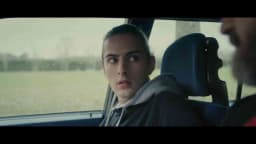
Published in France in March 2018, 'The Mistake' — known in French as 'L'Erreur' — is a public interest film produced for Sécurité Routière, France's government road-safety authority. The campaign addresses one of the more psychologically resistant arguments on French roads: that cannabis, unlike alcohol, does not meaningfully impair a driver's ability. The film's central character is a young man who smokes cannabis before getting behind the wheel, convinced he is safe. The narrative ends in a serious car accident. There is no voiceover moralising, no parade of statistics, and no external judgement. The mistake is his, and the film makes the audience live inside it.
La Chose, the Paris-based agency, held the Sécurité Routière advertising and communications account from September 2015, according to Les Echos, having won the contract alongside communications consultancy Anatome for a four-year period. 'The Mistake' sits within that relationship and within a broader creative platform — 'Tous touchés. Tous concernés.' — first established with the agency's 2016 campaign 'Onde de choc,' according to La Reclame. In France, the campaign represents a deliberate shift from the authority's earlier statistical and shock-imagery approaches, toward narrative empathy as the primary persuasion mechanism. The film comprises a single media asset, and no secondary executions in print or outdoor have been publicly documented for this specific 2018 push.
Sécurité Routière identified cannabis-impaired driving as a distinct and underaddressed danger on French roads. The strategic insight behind 'The Mistake' is that statistical road-safety messaging had demonstrably lower persuasive impact on the audience most likely to drive after consuming cannabis — young men who perceive their own impairment as minimal or manageable. La Chose's answer was to remove the external observer entirely and place the audience inside the driver's subjective experience.
The public financing context for this work is documented. According to Budget Gouv, France's government road-safety communications budget for 2018 stood at sixteen million euros, divided between Programme 207, covering road safety and education at eight million euros, and a radar-related special account at an equivalent amount. Parliamentary records published by the Sénat indicate that road-safety communications expenditure in France ranged between eighteen million and twenty million euros annually from 2014 onward, though appropriations and actual execution figures differed year to year. This institutional scale places Sécurité Routière among the country's most consistently funded public interest advertisers, operating alongside public health bodies and national transport authorities as a regular presence in the French media landscape.
In the competitive context of French road-safety communication, Sécurité Routière's film-led approach distinguishes it from the outdoor-first strategies employed by insurers such as AXA and Maif, which have historically used ambient and press formats to address distracted and impaired driving. Sécurité Routière's own documented outdoor activity — including an October-to-November 2018 campaign on driver distraction budgeted at eight hundred thousand euros, according to Sénat documentation — ran alongside rather than in place of its film work, reflecting a channel strategy that treats long-form narrative as a distinct and primary instrument of behaviour change.
Bruno Aveillan directed 'The Mistake' for Sécurité Routière. Aveillan, represented through Quad Productions and the Quad Group, brings a background in high-craft commercial and documentary filmmaking to the project, and his directorial approach here prioritises psychological interiority over spectacle — a deliberate and consequential creative choice given the subject matter.
The creative team at La Chose was led by agency founder Pascal Grégoire, with Alexandre Fort and Guillaume Ganty serving as the core creative credits, and Charles Flamand also named among the creative contributors, according to Packshot Magazine and Shots. Production was handled by Quad Productions, with Martin Coulais serving as executive producer, per the same sources. Post-production was completed by Fix Studio, with Nathalie Aveillan documented as post-production producer, according to Packshot Magazine.
The film's formal construction reflects Aveillan's characteristic attention to light and temporal rhythm. Rather than cutting away from the moment of impact or using slow-motion destruction as an emotional shorthand — a convention of road-safety film that audiences have become largely desensitised to — 'The Mistake' sustains the driver's point of view through the sequence, making the crash feel less like an event witnessed and more like a consequence experienced. The result is a public service film that operates closer to narrative short than to traditional public interest advertising. In France, where the tradition of auteur-directed advertising has long been commercially normalised, Aveillan's involvement signals an institutional commitment to craft that Sécurité Routière and La Chose had established from their earliest work together, beginning with the 2016 'Onde de choc' campaign, as documented by La Reclame and Influencia.
No verified performance data for 'The Mistake' is publicly available. The campaign has not been entered into, or recognised by, any of the major tracked award bodies — including Cannes Lions, the Effies, The One Show, D&AD, the Clios, the Webby Awards, or WARC — based on publicly accessible records. No trade-press reviews in Campaign, Adweek, or equivalent French industry publications have been documented for this specific film.
Structural analysis offers a reasoned basis for evaluation nonetheless. The campaign's decision to work in a single-asset film format concentrates creative investment and eliminates the dilution that multi-execution campaigns sometimes produce in public interest contexts. The first-person narrative device removes the distance between message and audience that statistics and third-person testimony routinely create — a structural advantage when the target behaviour is one the audience actively rationalises as low-risk. Bruno Aveillan's direction provides the kind of craft credibility that sustains viewer engagement beyond a few seconds, which matters for a film making no concession to algorithmic brevity.
The Clapboard Score for 'The Mistake' is 61 out of 100. This reflects a campaign that executes its single strategic idea with clarity and formal discipline, and that benefits from a strong directorial voice, while remaining constrained by its single-asset footprint, the absence of a documented media or distribution strategy in the public record, and a creative premise — impaired driving as personal tragedy — that occupies well-trodden ground in the public interest category, even when rendered with unusual craft.
'The Mistake' is a 2018 French public interest film by Sécurité Routière and La Chose addressing the danger of driving under the influence of cannabis. Directed by Bruno Aveillan, the film follows a young man who believes cannabis does not impair his driving and suffers a serious car accident as a result. It was published in France in March 2018.
La Chose, a Paris-based advertising agency, created 'The Mistake' for Sécurité Routière. La Chose won the Sécurité Routière account in September 2015, according to Les Echos, and the 2018 film sits within a creative platform the agency established from its first campaign for the authority in 2016.
Bruno Aveillan directed 'The Mistake' for Sécurité Routière and La Chose. Aveillan worked through Quad Productions and the Quad Group, with Martin Coulais serving as executive producer, according to Packshot Magazine and Shots. Post-production was completed by Fix Studio.
La Chose chose a first-person narrative because statistical road-safety messaging typically has lower persuasive impact on young drivers who minimise their own impairment. Placing the audience inside the driver's experience removes the psychological distance that external messaging creates, making the campaign's public interest argument harder to rationalise away.
'The Mistake' has not been recognised by Cannes Lions, the Effies, The One Show, D&AD, the Clios, the Webby Awards, or WARC based on publicly available records. The Clapboard Score for the campaign is 61 out of 100, reflecting its creative discipline alongside a limited single-asset footprint.
France's government road-safety communications budget for 2018 totalled sixteen million euros, according to budget.gouv.fr. This was divided between Programme 207 covering road safety and education at eight million euros and a radar-related special account at an equivalent amount, placing Sécurité Routière among France's most consistently funded public interest advertisers.
.webp)
Creative Collaboration Platform: The Backbone of Modern Creative WorkWhat is a creative collaboration platform?Clapboard defines a creative collaboration platform as the operational core for today’s distributed creative teams. This is not a collection of digital collaboration tools stitched together; Clapboard’s system


Understanding the Creative Production MarketplaceWhat is a Creative Production Marketplace?Clapboard defines a creative production marketplace as a structured ecosystem where brands, agencies, and production talent converge to execute video, advertising, and branded content at scale. Unlike the legacy agency or freelanREAD FULL ARTICLE

The Urgent Need for a Creative Production Operating SystemWhy Traditional Creative Production Models Break DownClapboard sees the creative production landscape shifting under pressure. Content velocity is no longer a buzzword—it’s a mandate. Modern advertising demands relentless output across dozens of channels, each wREAD FULL ARTICLE