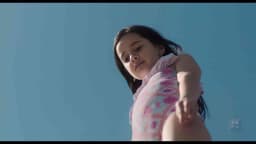
Sea Shepherd's Sound Of Sea campaign, created by TBWA\Paris in April 2019, deployed a submerged beacon off La Rochelle to broadcast marine animal suffering as

Sea Shepherd Sound Of Sea Shows France the Ocean's Hidden Suffering
Sound Of Sea is a 2019 public interest campaign created by TBWA\Paris for Sea Shepherd France, in which a submerged beacon was deployed off the coast of La Rochelle to broadcast a composite distress signal made from the recorded sounds of marine animals in suffering, aiming to drive public attention toward overfishing and reduce fish consumption across France.
Sea Shepherd launched the activation on 3 April 2019, timed to a mission aboard the organisation's vessel Sam Simon addressing dolphins caught in fishing nets in French coastal waters. The beacon did not simply replay ambient ocean sound. According to adsoftheworld.com, the composite signal was assembled from approximately 30 different creatures and distress situations, including harpooned whales, pilot whales in agony, dolphins trapped in bycatch nets, and fish suffocating inside trawler nets. The effect was a single, continuous transmission that translated industrial-scale marine suffering into something the human ear could register as alarm.
The campaign's communications objective was to generate public and media attention in France at a moment when Sea Shepherd's vessel was physically engaged in the issue the audio described. Its behavioural objective was more direct: as documented by musebyclios.com, the campaign explicitly sought to encourage people to reduce their fish consumption. In this respect Sound Of Sea operated simultaneously as a media event, a social experiment, and a piece of documentary activism, collapsing the distance between offshore conservation work and onshore public conscience. The single media asset produced from the activation was submitted to the industry record approximately six years ago, with the Club des Directeurs Artistiques registering the project in its Grandes causes and Association Digital/Social category for 2019, according to leclubdesda.org. Clapboard scores the campaign 76 out of 100, reflecting strong conceptual integrity and strategic clarity against the constraints of a single-asset, single-market public interest execution.
Sea Shepherd France operates in a country where public attitudes toward fish consumption sit in direct tension with marine conservation goals. Rather than producing a conventional awareness film, TBWA\Paris anchored its strategy in a core insight: the suffering caused by industrial fishing is entirely inaudible to the people whose purchasing behaviour perpetuates it. The solution was to make that suffering literally audible, deploying sound as both the medium and the message in French coastal waters off La Rochelle.
The strategic logic draws on a well-established tension in environmental communication. Competitors in the French public interest space, including Greenpeace France and WWF France, have consistently relied on visual imagery — photographs of bycatch, underwater footage of depleted reefs — to prosecute the case for marine conservation. Sound Of Sea moved laterally, choosing an experiential register that no photograph can replicate. Distress sound is pre-cognitive; it triggers a physical stress response before the rational mind can filter or dismiss it. By deploying the beacon during an active Sea Shepherd mission aboard the Sam Simon, as reported by adsoftheworld.com, TBWA\Paris ensured that the creative device and the real-world event it described were simultaneous, collapsing the credibility gap that often undermines advocacy advertising.
The broader advertising environment in France in 2019 was shaped by accelerating digital consumption. Global digital advertising was forecast to grow by approximately eleven and a half percent that year, according to the sources reviewed for this analysis, with online video identified as a primary growth driver. Sound Of Sea was designed for exactly this environment: a single, shareable asset built around an emotionally arresting audio-visual moment, seeded through Guillaume Néry — a celebrated French freediver — who posted video of the ocean sound on 3 April 2019, according to leclubdesda.org, giving the activation an authentic point of entry into French social media without the visible fingerprints of a produced advertisement.
Director Jérôme de Gerlache led the production of Sound Of Sea for TBWA\Paris, working under executive creative directors Benjamin Marchal and Faustin Claverie, with copywriting by Josselin Pacreau and art direction by Sébastien Guinet, as documented by musebyclios.com and adsoftheworld.com.
The production company was TBWA\Else, with Jennifer Bauche serving as producer, Teva François handling production direction and location management, Florence Marquet overseeing post-production, and Léa Gosselin coordinating production logistics, according to Archive Echoactive and adsoftheworld.com. Editing and motion-graphics design were handled by Maxime Setzer, the same sources confirm.
The craft challenge was not conventional filmmaking. The team had to record, assemble, and compress sounds from approximately 30 distinct marine distress scenarios — harpooned whales, dolphins caught in fishing nets, fish trapped inside trawler nets, and additional creatures — into a single coherent signal that could be transmitted from a submerged beacon in open French coastal water, as detailed by sciencesetavenir.fr. The beacon itself functioned as a practical object: it was deployed during a live Sea Shepherd France mission off La Rochelle, which meant the production and the activism it documented were inseparable. The documentary dimension of the project was therefore not a stylistic choice but an operational fact. The resulting asset captured not a simulation of ocean suffering but a transmission of it, broadcast from within the ecosystem the campaign sought to protect. This integration of production method with subject matter is the quality that most distinguishes Sound Of Sea from conventional marine conservation communications produced in France or elsewhere, and it reflects a creative discipline that treats the medium as inseparable from the message.
No verified performance data for Sound Of Sea is publicly available in the form of reach figures, earned media values, or measurable shifts in fish consumption behaviour in France. The campaign was not accompanied by a published results release, and no third-party metrics have been attributed to it in the sources reviewed for this analysis, including musebyclios.com, adsoftheworld.com, archive.echoactive.com, and leclubdesda.org.
What the record does confirm is structural effectiveness of a specific kind. The activation generated independent editorial coverage from Muse by Clios, where Patrick Coffee reviewed the campaign on 23 April 2019, according to musebyclios.com — a publication whose editorial selection is itself a proxy indicator of industry recognition for work that reaches beyond conventional public service formats. Registration by the Club des Directeurs Artistiques in the Grandes causes and Association Digital/Social category for 2019, per leclubdesda.org, confirms the campaign was formally acknowledged within the French creative industry.
The seeding strategy — routing the campaign through Guillaume Néry rather than through paid media — was structurally sound for a conservation organisation operating without a major paid media budget. It gave Sound Of Sea a credible organic entry point into French public discourse. The decision to deploy the beacon during an active mission aboard the Sam Simon, as reported by adsoftheworld.com, ensured that any media coverage of the vessel's work would have a concrete, emotionally resonant audio artefact to attach to. Clapboard scores Sound Of Sea 76 out of 100, reflecting a campaign whose conceptual and executional integrity is high relative to the single-asset, single-market constraints within which it was built.
Sound Of Sea was a public interest campaign launched in France in April 2019 by Sea Shepherd, created by TBWA\Paris. A submerged beacon off La Rochelle broadcast a composite distress signal assembled from approximately 30 marine animal sounds, including harpooned whales and dolphins caught in fishing nets, to drive awareness of overfishing.
TBWA\Paris created Sound Of Sea for Sea Shepherd France in 2019. The production was handled by TBWA\Else, and the campaign was directed by Jérôme de Gerlache, with executive creative direction from Benjamin Marchal and Faustin Claverie, as documented by musebyclios.com and adsoftheworld.com.
The beacon was deployed offshore near La Rochelle, France, according to adsoftheworld.com and leclubdesda.org. Its deployment coincided with a live Sea Shepherd mission aboard the vessel Sam Simon, which was actively addressing dolphins being caught in fishing nets in French coastal waters at the time.
The distress signal comprised sounds from approximately 30 different marine creatures and situations, according to sciencesetavenir.fr. These included harpooned whales, pilot whales in distress, dolphins trapped in bycatch nets, and fish suffocating inside trawler nets, all compressed into a single continuous transmission broadcast from the submerged beacon.
Sound Of Sea carried two objectives. Its communications goal was to generate public and media attention in France, as reported by musebyclios.com. Its behavioural goal was to persuade people to reduce fish consumption. The campaign used Guillaume Néry, a French freediver, to seed the activation organically through social media on 3 April 2019.
Clapboard scores Sound Of Sea 76 out of 100. The score reflects strong conceptual integrity and a disciplined integration of creative method with subject matter, balanced against the constraints of a single media asset and a single geographic market, France, with no publicly verified performance data available from the 2019 campaign.
.webp)
Creative Collaboration Platform: The Backbone of Modern Creative WorkWhat is a creative collaboration platform?Clapboard defines a creative collaboration platform as the operational core for today’s distributed creative teams. This is not a collection of digital collaboration tools stitched together; Clapboard’s system


Understanding the Creative Production MarketplaceWhat is a Creative Production Marketplace?Clapboard defines a creative production marketplace as a structured ecosystem where brands, agencies, and production talent converge to execute video, advertising, and branded content at scale. Unlike the legacy agency or freelanREAD FULL ARTICLE

The Urgent Need for a Creative Production Operating SystemWhy Traditional Creative Production Models Break DownClapboard sees the creative production landscape shifting under pressure. Content velocity is no longer a buzzword—it’s a mandate. Modern advertising demands relentless output across dozens of channels, each wREAD FULL ARTICLE