If you are a deep practitioner of the media capabilities of the 2026 world, then you would be aware that a brand needs about 20,000 unique pieces of content per year for different demographics, psychographics etc.
That's 19,900 more than what most big brands actually put out. And if you understand how the Googles, Facebooks, Snapchats and Instagrams work, then you would know that your creative teams will have to deliver a lot more video centric content to fill the pipes of media distribution than they currently are doing.
That's why we've created Clapboard - to produce quality video content at a low enough cost. Quality being contextual to the social media platform, not necessarily high production, thus delivering the best bang for your every buck
JOIN THE NEWSLETTER.
Content Production insights, videos, books, and freebies, delivered to your inbox weekly
Creative Collaboration Platform: The Backbone of Modern Creative WorkWhat is a creative collaboration platform?Clapboard defines a creative collaboration platform as the operational core for today’s distributed creative teams. This is not a collection of digital collaboration tools stitched together; Clapboard’s system
Understanding the Creative Production MarketplaceWhat is a Creative Production Marketplace?Clapboard defines a creative production marketplace as a structured ecosystem where brands, agencies, and production talent converge to execute video, advertising, and branded content at scale. Unlike the legacy agency or freelan
The Urgent Need for a Creative Production Operating SystemWhy Traditional Creative Production Models Break DownClapboard sees the creative production landscape shifting under pressure. Content velocity is no longer a buzzword—it’s a mandate. Modern advertising demands relentless output across dozens of channels, each w
Renault 4 Freedom 4 ever.
Description
Renault’s 2024 campaign, "Renault 4 Freedom 4 Ever," masterfully reintroduces the iconic Renault 4, now reinvented as a fully electric vehicle, reconnecting a legendary automotive icon with contemporary values of freedom, versatility, and sustainability. Created by Publicis Conseil and launched in France, this cinematic film celebrates the Renault 4’s 60-year legacy, highlighting its integral role from the 1960s through the 1980s as a symbol of social evolution, adventure, and accessibility – a rally car, public service vehicle, and cultural emblem during pivotal moments of liberation such as May ’68 and Woodstock. The campaign bridges past and present by visually navigating through historical eras via the car's distinct rounded headlights, culminating in the unveiling of the modern Renault 4 E-Tech, presented at the Paris Mondial de l’Auto. This new model features cutting-edge electric technology with a 100% electric powertrain, over 88% recyclable materials, seamless connectivity powered by Google integration and over 50 apps, alongside a signature “Plein Sud” canvas sunroof, symbolizing openness and adaptability. The accompanying soundtrack reimagines Gilbert Bécaud’s evocative “Je reviens te chasse,” blending the original voice with contemporary artist Candice Parise in a virtual duet, reinforcing the car’s timeless charm and modern spirit. The campaign eloquently communicates Renault 4’s charisma through its redesigned yet nostalgically faithful details such as the grille, rear lights, and door protections, while highlighting its superior comfort and modularity enabled by the AmpR Small platform, battery options up to 52 kWh, and a driving range of up to 400 km. Positioned as the go-to compact, versatile vehicle for urban life, countryside exploration, and mountain adventures, Renault 4 E-Tech embodies a promise of enduring freedom and adaptability for new generations, continuing its tradition as an icon that transcends borders and eras.
Credits
Client
Renault
Agency
Publicis Conseil
Campaign Proposition
The campaign for the Renault 4 E-Tech 100% electric revives an iconic model deeply rooted in cultural and social history, positioning it as a symbol of freedom that has evolved alongside societal change since the 1960s. By linking the new electric Renault 4 with its legendary predecessor, the brand proposition emphasizes continuity in enabling personal and collective liberation—whether through mobility, versatility, or progressive social shifts. The promise is not only of a vehicle with a charismatic, emblematic design but also a modern, sustainable companion embodying freedom adapted to contemporary values of connectivity, modularity, and environmental responsibility.
Strategically, the campaign leverages nostalgia to rekindle emotional connections with a broad demographic, from older generations who remember the R4’s cultural significance, to younger, eco-conscious consumers looking for practical yet stylish electric vehicles. The creative angle fuses past and future by featuring a film narrated through the distinctive “eyes” of two R4 models, accompanied by a reimagined duet between Gilbert Bécaud’s original voice and contemporary singer Candice Parise. This approach highlights the car’s heritage while signaling its reinvention for modern needs. The campaign’s timing around the Paris Mondial de l’Auto strengthens its impact as a forward-looking launch within the automotive market. By focusing on the Renault 4’s versatility—city to countryside, classic to connected tech—and its sustainable credentials, the campaign aims to position the vehicle as an enduring symbol of evolving freedom, appealing to consumers seeking a meaningful blend of legacy, innovation, and environmental consciousness.
Creative Device
FORMAT#11 UNIQUE PERSONALITY PROPERTY — Highlights a unique feature, origin, or distinctive product identity.
This campaign fits FORMAT#11 because it centers around the Renault 4’s unique status as both a design icon and a symbol of changing eras, freedom, and cultural transformation. The film uses emblematic visuals—like the “two beautiful emblematic round eyes” (headlights) of the Renault 4—and evocative music to emphasize the car’s charismatic, enduring identity rather than a literal demonstration, problem–solution, or comparative structure. The creative device is rooted in celebrating the R4’s distinctive legacy and modern reinterpretation, making its personality the hero.
ADVERTISING FORMATS EXPLAINED: https://www.clapboard.com/blog/branding-and-advertising/brand-strategy/12-advertising-creative-formats
Peugeot – Market Positioning
Peugeot positions itself as a stylish and innovative French automotive brand focusing on refined design, driving pleasure, and advanced technology. It emphasizes a blend of comfort, performance, and efficiency across its range, including electric and hybrid models. Peugeot targets urban and suburban buyers seeking versatile vehicles with a premium feel but accessible pricing, leveraging French heritage and modern connectivity features.
Citroën – Market Positioning
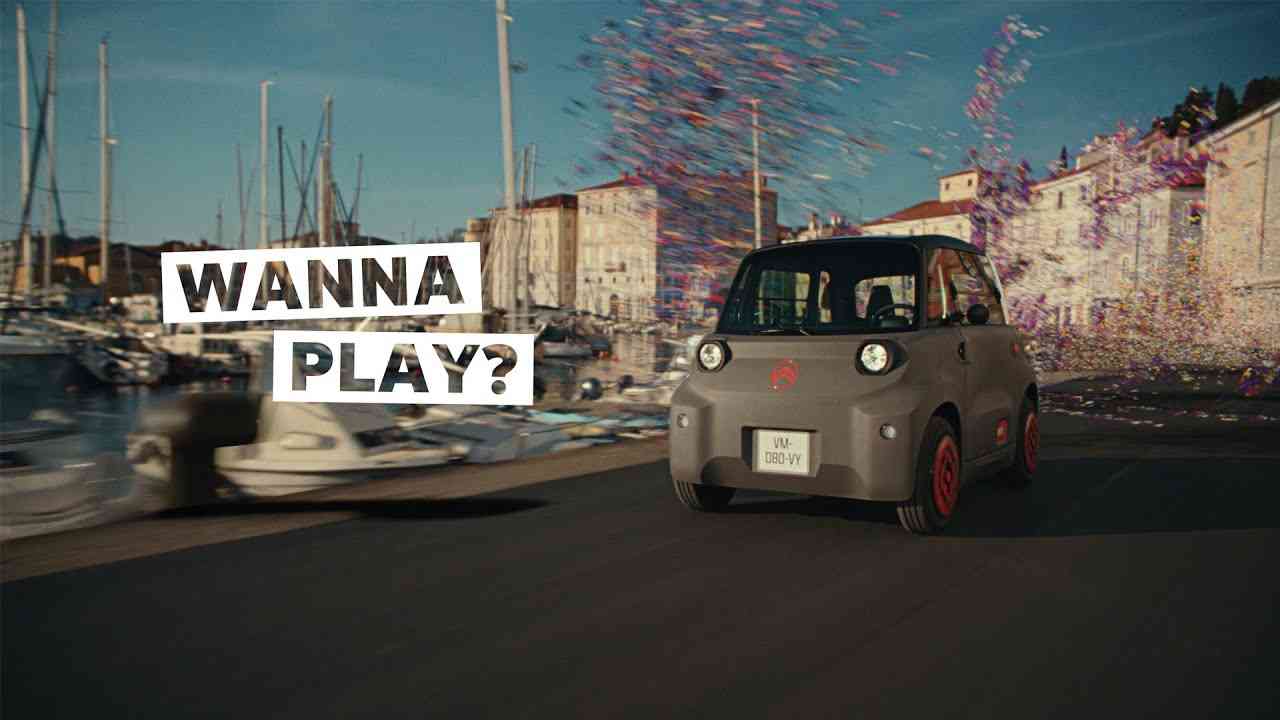
Citroën stands out by delivering comfort and avant-garde design with an emphasis on innovative, user-friendly technology. The brand appeals to practical consumers who value a distinctive aesthetic combined with affordability and ecological commitment. Citroën’s electric lineup, including the Ami and ë-C4, highlights urban mobility with quirky, approachable, and environmentally conscious solutions.
Volkswagen – Market Positioning
Volkswagen focuses on reliable, well-engineered cars that combine classic German build quality with modern technology, including a broad transition towards electric vehicles (ID series). VW targets a broad demographic with a balance of innovation, comfort, and sustainable mobility solutions, aiming to be a global leader in accessible electrification and digital integration.
Toyota – Market Positioning
Toyota leads with a strong reputation for reliability, hybrid innovation, and gradual electrification. It differentiates through its extensive hybrid portfolio and hydrogen fuel cell technology, appealing to environmentally conscious consumers seeking dependable and practical vehicles. Toyota promotes sustainability and cutting-edge safety features while maintaining mass-market appeal.
Dacia – Market Positioning
Dacia competes primarily on affordability and simplicity, offering no-frills, reliable vehicles with increasingly electrified options at accessible price points. Owned by Renault, it targets budget-conscious buyers seeking practical transportation solutions without luxury extras. Dacia’s strategic angle emphasizes value-for-money, straightforward design, and rugged versatility, appealing to first-time buyers and cost-focused customers.