 ARCHIVE
Exploring Reinvented - Ford, Ford UK | Clapboard Ad Archive
Exploring Reinvented from Ford and AMV BBDO positions the historic automotive brand at the...
Dacia Bets on the Dakar Rally to Redefine Its Brand Ambition
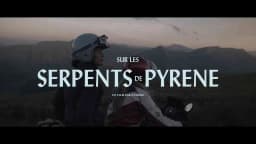
Dacia's 2024 Dakar Rally campaign is a single-film automotive advertisement created by Publicis Conseil and published in France in December 2024, announcing the brand's first-ever manufacturer entry into the Dakar Rally and introducing its three official drivers — Nasser Al-Attiyah, Sébastien Loeb, and Cristina Gutiérrez — collectively known as the Dacia Sandriders.
Dacia announced its entry into the Dakar Rally as a manufacturer on 3 July 2023, according to Media Dacia. The brand confirmed it would compete in the T1+ category starting in 2025, marking a significant strategic departure from its longstanding positioning as Europe's most accessible car brand. In France, where Dacia has built its strongest cultural foothold, the campaign represents the most ambitious brand-image statement the Romanian marque has made to date. The film was scheduled for release across European television and digital channels from the end of 2024, per France Publicisgroupe, giving the French market first access to the creative work ahead of a broader continental rollout.
The campaign's creative territory centres on exploration and self-transcendence, framing the Dakar Rally not as a motorsport spectacle but as the ultimate proof of Dacia's core brand values: robustness, durability, and purposeful engineering. Denis Le Vot, CEO of Dacia, articulated the strategic logic directly, stating — as published on media.dacia.com — that the rally is simultaneously a test of the brand's true robustness and a demonstration of its commitment to low-carbon mobility through synthetic fuel technology. In entering the Dakar Rally, Dacia sought to signal that accessible motoring and extreme performance are not mutually exclusive propositions. The campaign earned a Clapboard Score of 60 out of 100, reflecting a technically accomplished execution that extends the brand's creative range without fully resolving the tension between its value-focused heritage and its new performance-led ambitions.
Dacia's Dakar Rally campaign responds to a specific competitive pressure in the French and wider European automotive market. The brand sold 676,340 vehicles globally in 2024, up 2.7% versus 2023, according to media.dacia.com, and held a 4.5% share of the European passenger-car market in 2024, also per media.dacia.com. Despite that commercial strength, Dacia has historically operated in a brand-image deficit relative to rivals such as Renault and Volkswagen, both of which have used motorsport heritage to project engineering credibility and emotional desirability. The Dakar Rally entry directly addresses that gap.
The consumer insight underpinning the campaign is straightforward: performance credibility, once established in extreme conditions, transfers downward through a brand's entire range. Competing in the T1+ category at Dakar — among the most demanding off-road environments in the world — positions Dacia's engineering not as a cost compromise but as a deliberate design philosophy. Publicis Conseil built the campaign around three drivers who embody different dimensions of that philosophy. Nasser Al-Attiyah is a multiple Dakar Rally champion whose association with the brand signals genuine competitive intent. Sébastien Loeb brings World Rally Championship prestige that resonates deeply with French audiences in particular. Cristina Gutiérrez represents a progressive casting choice that broadens the campaign's cultural reach. Together, the Dacia Sandriders communicate that this is not a vanity motorsport exercise. In France, where the Dakar Rally retains significant cultural and media resonance as a piece of national sporting history, the choice of event is itself a strategic signal, tapping into an audience that understands exactly what competing at Dakar demands of a vehicle and its manufacturer.
Director Rune Milton helmed the film, with Paul Meyers serving as director of photography, according to adsoftheworld.com. The production was handled by Wanda, per france.publicisgroupe.com. No direct creative quotes from Publicis Conseil's leadership team are publicly available for this campaign.
The film's visual approach, as described by adsoftheworld.com, is breathtaking, visceral, and hyper-realistic, with cinematic scale and desert setting forming the primary aesthetic register. Milton and Meyers construct the work around the physical drama of the landscape rather than the conventional mechanics of automotive advertising, where hero shots of a vehicle in motion typically dominate the frame. Instead, the Dacia Sandriders — Al-Attiyah, Loeb, and Gutiérrez — appear as figures defined by their environment, the desert operating as both backdrop and antagonist. This shifts the emotional weight from product demonstration toward character study, a choice that aligns with the campaign's broader creative territory of self-transcendence. The desert setting carries particular resonance in France, where the Dakar Rally's original route through the Sahara established decades of visual iconography in the national sporting imagination. By deploying that iconography in service of a brand historically associated with urban practicality, Publicis Conseil creates a deliberate and productive tension. The single-film format, noted per adsoftheworld.com as the campaign's sole media asset, demands that the creative work carry the full weight of the announcement. Danstapub.com also highlighted the film's cinematic ambition as central to its reception in the French market. The production's visual grammar — wide desert horizons, close-contact vehicle footage, and measured pacing — reflects a considered restraint that amplifies rather than diminishes the scale of the story being told.
No verified performance data for the Dacia Dakar Rally campaign by Publicis Conseil is publicly available. The campaign has not been covered by Campaign, Ad Age, Adweek, The Drum, or Contagious, and no awards recognition has been identified at the time of writing. Analysis therefore rests on the campaign's structural and strategic characteristics.
The structural case for effectiveness is grounded in market context. Dacia held a 4.5% share of the European passenger-car market in 2024, per media.dacia.com, and outperformed the broader European market with 2.7% sales growth in the same period, also according to media.dacia.com. A campaign that successfully elevates brand desirability without diluting the value proposition would directly support the brand's ability to maintain and extend that share position. In France specifically, the Dakar Rally carries genuine cultural weight, giving the campaign a relevance advantage that a generic motorsport property would not provide. The single-film execution, while limiting in terms of media touchpoints, concentrates creative investment in a format — television and digital — suited to the announcement's scale. The casting of the Dacia Sandriders, combining Al-Attiyah's Dakar pedigree, Loeb's French sporting hero status, and Gutiérrez's distinctiveness, creates a roster with differentiated audience reach. The Clapboard Score of 60 out of 100 reflects a campaign that executes its brief with technical confidence and strategic clarity, but whose long-term brand-building effectiveness will depend on whether the Dakar Rally entry itself delivers competitive results that validate the narrative established by the film.
The Dacia Dakar Rally campaign is a single film published in France in December 2024, created by Publicis Conseil. It announces Dacia's first manufacturer entry into the Dakar Rally, competing in the T1+ category from 2025, and features the Dacia Sandriders: Nasser Al-Attiyah, Sébastien Loeb, and Cristina Gutiérrez.
The Dacia Sandriders are Dacia's three official Dakar Rally drivers. Nasser Al-Attiyah is a multiple Dakar champion, Sébastien Loeb is a World Rally Championship legend with strong recognition in France, and Cristina Gutiérrez brings competitive off-road credentials. All three appear in the Publicis Conseil film, per adsoftheworld.com.
Dacia announced its Dakar Rally manufacturer entry on 3 July 2023, according to media.dacia.com. The brand confirmed it would compete in the T1+ category starting in 2025, with synthetic fuel technology as part of its stated commitment to low-carbon mobility, as quoted by Dacia CEO Denis Le Vot on media.dacia.com.
Director Rune Milton directed the Dacia Dakar Rally film, with Paul Meyers as director of photography, according to adsoftheworld.com. Production was handled by Wanda, per france.publicisgroupe.com. The film was described by adsoftheworld.com as breathtaking, visceral, and hyper-realistic, with cinematic scale and desert setting at its core.
The campaign was published in France in December 2024, according to adsoftheworld.com. It was subsequently scheduled for a broader European rollout across television and digital channels from the end of 2024, per france.publicisgroupe.com, making France the primary launch market for the Dacia Sandriders announcement film.
The Dacia Dakar Rally campaign by Publicis Conseil received a Clapboard Score of 60 out of 100. The score reflects technically confident execution and clear strategic rationale, while acknowledging that the campaign's long-term brand-building impact depends on whether Dacia's actual Dakar Rally performance validates the narrative established in the film.
.webp)
Creative Collaboration Platform: The Backbone of Modern Creative WorkWhat is a creative collaboration platform?Clapboard defines a creative collaboration platform as the operational core for today’s distributed creative teams. This is not a collection of digital collaboration tools stitched together; Clapboard’s system


Understanding the Creative Production MarketplaceWhat is a Creative Production Marketplace?Clapboard defines a creative production marketplace as a structured ecosystem where brands, agencies, and production talent converge to execute video, advertising, and branded content at scale. Unlike the legacy agency or freelanREAD FULL ARTICLE

The Urgent Need for a Creative Production Operating SystemWhy Traditional Creative Production Models Break DownClapboard sees the creative production landscape shifting under pressure. Content velocity is no longer a buzzword—it’s a mandate. Modern advertising demands relentless output across dozens of channels, each wREAD FULL ARTICLE