 ARCHIVE
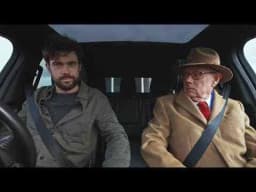
Land Rover Discovery Towing Adventures with Jack and Michael Whitehall
How Land Rover Discovery Turned a Rising-Tide Tow into a Technology Showcase Land Rover's Discovery...
Jeep Turns SUV Posturing Into a Punchline With The Great Pretenders
Jeep's 2026 campaign, The Great Pretenders, is a 65-second satirical film created by BETC Paris that targets drivers who artificially dirty their SUVs to appear adventurous, contrasting that performative ruggedness with the authentic, purpose-built design of the new Jeep Compass across European and worldwide markets.
The campaign launched on 8 January 2026 in Belgium, according to reporting sourced through andzup.com, and expanded to Italy by 11 January 2026, as documented by clubalfa.it. By 13 January 2026, the campaign was reported in UK markets across television, cinema, digital out-of-home, and out-of-home placements, as noted by shots.net. The progressive rollout established The Great Pretenders as one of Jeep's most ambitious multinational launches of the period, with media channels spanning television, cinema, digital out-of-home, out-of-home, radio, press, social media, and digital, according to coverage across andzup.com and shots.net.
The film follows a cast of everyday drivers engaged in elaborate acts of staged ruggedness — smearing mud on windshields, wedging branches into windshield wipers, slipping leaves between rims — while singing Freddie Mercury's cult classic recording of The Great Pretender. When the new Jeep Compass, the only impeccably clean SUV in the frame, drives through the scene, the illusion collapses. As Nicholas Bakshi, Creative Director at BETC Paris, states: adventure is not a costume but a way of being, and Jeep has never needed to prove it belongs in the terrain because it simply does. The campaign marks a deliberate tonal shift for Jeep in Europe, embracing irony, warmth, and self-aware humour while returning the brand to its core identity — the conviction that authentic performance needs no performance at all.
Jeep operates in one of the most competitive vehicle segments in the European automotive market. The compact and midsize SUV category attracts consumers across a wide spectrum of motivations, from genuine off-road utility to lifestyle aspiration, and the gap between those two groups has widened into a cultural phenomenon that BETC Paris identified as the campaign's sharpest strategic lever.
Jeep's primary competitive set in this segment includes Land Rover, Toyota, Ford, Volkswagen, and Hyundai, according to market context published via Media Stellantis. Land Rover competes on premium luxury and serious off-road credibility, positioning itself as the aspirational peak of the category. Toyota contests the segment through the reliability and hybrid accessibility of models including the RAV4 and Land Cruiser. Against these rivals, Jeep's strategic response with The Great Pretenders is not to out-specify or out-price them, but to own authenticity as a category point of difference that no badge engineering can replicate. In France and across the broader European market, where lifestyle-oriented SUV ownership has grown substantially, this distinction carries real weight with consumers who distrust performative brand identities.
Stellantis Chief Marketing Officer Olivier François framed the campaign's intent directly, as reported through media.stellantis.com: at Jeep, the brand has always preferred the reality of the terrain to artifice, and The Great Pretenders restates that preference in a way that is simple and emotionally immediate. The choice to anchor the campaign in satire rather than aspiration is itself a strategic signal — one that acknowledges the cultural moment, respects the audience's intelligence, and positions the new Jeep Compass as the only vehicle in the frame that does not need to pretend. Starcom served as the media-planning agency for the Italian rollout, according to clubalfa.it, reflecting the scale of coordination required for a campaign of this multinational reach.
Martin Werner directed The Great Pretenders, bringing to the film a sensibility for deadpan character comedy that anchors the campaign's satirical premise without tipping into cruelty. The production was handled by Movie Magic, as confirmed across reporting by andzup.com and campaignlive.com, and the finished film runs to 65 seconds — a runtime that gave Werner and the creative team enough space to build the comic world fully before the Jeep Compass arrives to dismantle it.
The creative team at BETC Paris assembled for the campaign included Nicholas Bakshi as Creative Director, Stéphane Xiberras as President and Chief Creative Officer, Olivier Mille as Copywriter, Morgane Alexandre as Art Director, and Florian Pinguet as Assistant Creative Maker and Art Director, as documented across linkedin.com and andzup.com. Mehdi Benali served as Managing Director at BETC Paris, providing executive oversight on a campaign that represented a meaningful shift in Jeep's European creative register.
The central creative device — Freddie Mercury's recording of The Great Pretender — operates on multiple levels simultaneously. The song supplies the film's literal narrative engine, with characters miming and singing along as they stage their fakery. It also provides instant emotional recognition across markets, functioning as both a comic soundtrack and an ideological statement: Mercury's performance of yearning and pretence mirrors precisely the behaviour being satirised on screen. The visual grammar of the film is deliberately mundane and suburban. A father and daughter smear mud together as if completing a ritual. Customers queue at a reverse car wash designed to apply dirt rather than remove it. These images are rendered with a warmth that prevents mockery from becoming contempt, a tonal balance that reflects the campaign's stated intention of exposing the gap between adventure as aesthetic and adventure as identity with irony and a certain tenderness. In France and across multinational markets, that balance is what separates effective automotive satire from alienating brand arrogance.
No independently verified third-party performance metrics for The Great Pretenders campaign — including reach figures, view counts, or sales lift data — are publicly available at the time of writing. What is documented is the campaign's structural ambition: a multinational rollout spanning Belgium, Italy, the United Kingdom, France, and further European and worldwide markets within days of its January 2026 launch, supported by a media mix covering television, cinema, digital out-of-home, out-of-home, radio, press, social media, and digital channels, according to shots.net and andzup.com.
The Clapboard Score for The Great Pretenders is 63 out of 100. That score reflects a campaign that executes its satirical premise with genuine craft and strategic clarity but operates within relatively familiar creative territory for the automotive category. The film's comic architecture is tight, the music selection is precise, and the contrast between artificial ruggedness and the clean Jeep Compass is visually economical. Where the campaign is more constrained is in originality of form: the reverse-premise structure — showing what a brand is not before revealing what it is — is a well-worn device, and the film's impact depends heavily on the quality of its execution rather than the novelty of its concept. In the European automotive market, where Jeep competes against rivals including Land Rover and Toyota for consumer consideration, the campaign's tonal confidence and willingness to use humour represent a meaningful brand evolution. Whether that evolution translates into measurable commercial performance in France and across its multinational footprint will become clearer as 2026 progresses.
The Great Pretenders is a 65-second satirical film by BETC Paris for the Jeep Compass. It depicts drivers staging fake ruggedness by artificially dirtying their SUVs, before the clean new Compass arrives and exposes the pretence. The campaign contrasts performative adventure aesthetics with Jeep's position as a genuinely capable vehicle.
The Great Pretenders launched on 8 January 2026 in Belgium, according to andzup.com. It expanded to Italy by 11 January 2026, as reported by clubalfa.it, and reached UK markets by 13 January 2026, per shots.net, with a progressive multinational rollout across European and worldwide markets across television, cinema, and digital channels.
Martin Werner directed The Great Pretenders. Movie Magic served as the production company, as confirmed by andzup.com and campaignlive.com. The BETC Paris creative team included Creative Director Nicholas Bakshi, Copywriter Olivier Mille, and Art Director Morgane Alexandre, with Stéphane Xiberras as President and Chief Creative Officer of BETC.
The campaign uses Freddie Mercury's recording of The Great Pretender as its central musical and thematic device. The song mirrors the film's satirical premise, with characters singing along as they stage fake ruggedness. Its cultural familiarity across multinational markets strengthens both the comic timing and the campaign's broader emotional resonance.
The Great Pretenders receives a Clapboard Score of 63 out of 100. The score reflects strong craft and tonal confidence in the satirical execution, balanced against a creative structure that follows a familiar automotive reveal format. The campaign marks a meaningful shift in Jeep's European tone without breaking entirely new formal ground.
BETC Paris created The Great Pretenders for Jeep, a Stellantis brand. The agency has a long-standing relationship with Stellantis marques and brought a tone of irony and warmth to this campaign. Starcom handled media planning for the Italian market, according to clubalfa.it, reflecting the campaign's multinational coordination across European channels.
.webp)
Creative Collaboration Platform: The Backbone of Modern Creative WorkWhat is a creative collaboration platform?Clapboard defines a creative collaboration platform as the operational core for today’s distributed creative teams. This is not a collection of digital collaboration tools stitched together; Clapboard’s system


Understanding the Creative Production MarketplaceWhat is a Creative Production Marketplace?Clapboard defines a creative production marketplace as a structured ecosystem where brands, agencies, and production talent converge to execute video, advertising, and branded content at scale. Unlike the legacy agency or freelanREAD FULL ARTICLE

The Urgent Need for a Creative Production Operating SystemWhy Traditional Creative Production Models Break DownClapboard sees the creative production landscape shifting under pressure. Content velocity is no longer a buzzword—it’s a mandate. Modern advertising demands relentless output across dozens of channels, each wREAD FULL ARTICLE