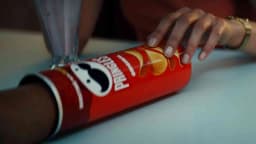
Reese's 'Yes!' campaign by Erich & Kallman debuted at Super Bowl LVIII to launch the Caramel Big Cup, turning fan panic into a crowd-pleasing product reveal.

Reese's Yes! Ad Proves Caramel Big Cup Was Worth the Panic
Reese's 'Yes!' is a 30-second Super Bowl LVIII commercial created by Erich & Kallman that dramatised fan hysteria over a rumoured change to the iconic peanut butter cups, then resolved the panic by revealing that caramel was being added as an entirely new option — the Reese's Caramel Big Cup — rather than replacing the classic product.
The Hershey Company holds the position of the number one candy brand in the United States. That standing made the Super Bowl the logical stage for a product launch of this scale: the first time caramel had ever been layered into a Reese's Big Cup, combining chocolate, peanut butter, and gooey caramel in a single format. The spot aired on February 11, 2024, during Super Bowl LVIII on CBS, marking Reese's first return to football's biggest stage since 2020, according to prnewswire.com.
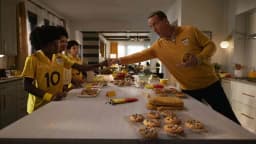
Six neighbours gather for the Big Game in the United States when word spreads that Reese's peanut butter cups are changing. What follows is a sequence of exaggerated, escalating reactions — screaming, disbelief, theatrical grief — voiced and anchored by narrator Will Arnett, a self-described Reese's super fan. The chaos resolves the moment the group learns that nothing beloved is being removed; caramel is simply joining the lineup. The emotional arc snaps from despair to euphoria, landing on a collective, stretched-out 'YESSSSSSSSSSSSSSSSS!' that mirrors the campaign's title. According to erich-kallman.com, the production involved director Harold Einstein alongside production partners dummy. and Golden LA, with Einstein selected specifically for his expertise in physical comedy and the casting of comedic actors, as reported by shots.net. The Clapboard Score for this campaign is 63 out of 100.
 ARCHIVE
Reese's structured the 'Yes!' campaign around a single consumer truth: people resist change to products they love. The creative strategy, as described by D&AD, was rooted in harnessing fan passion through the concept of change rather than simply announcing a new ingredient. That instinct to protect something perfect is not unique to Reese's devotees, but it is unusually intense among peanut butter cup loyalists, and the campaign exploited that intensity as its central engine.
In the United States, the confectionery category operates at considerable scale and competitive pressure. According to globaldata.com, the Americas represented a substantial share of global confectionery value in 2024, with the broader market estimated in the range of hundreds of billions of dollars globally. Within that landscape, Reese's competes directly against Mars, Incorporated — whose M&M's brand has also historically used Super Bowl placements to defend category relevance — and Mondelez International, whose portfolio includes Cadbury and a range of chocolate formats targeting similar snacking occasions. By returning to the Super Bowl for the first time since 2020, Reese's reclaimed premium visibility at a moment when both rival confectionery brands and broader snack competitors were competing for the same consumer attention.
The financial commitment was substantial. According to cbsnews.com, a 30-second Super Bowl airtime slot during Super Bowl LVIII cost approximately seven million dollars. That figure reflects the scale of the bet Hershey placed on the Caramel Big Cup launch, and it signals the internal confidence that the product warranted flagship treatment. Ryan Riess, vice president of creative and brand strategy at The Hershey Company, described the launch as the biggest thing to hit the candy aisle since chocolate and peanut butter came together — a statement that positions Caramel Big Cup not as a line extension but as a category moment.
Director Harold Einstein led the production of Reese's 'Yes!' with a specific mandate: build a 30-second film around escalating physical comedy and genuine emotional performance. According to shots.net, Einstein was selected for the project precisely because of his expertise in directing physical comedy and casting actors capable of sustaining chaotic energy within a tightly controlled format. The production was executed through dummy. and Golden LA, as confirmed by erich-kallman.com.
The film's structure is disciplined despite its apparent pandemonium. Six neighbours are introduced as an ensemble, each contributing a distinct register of panic as the fictional news of Reese's changing its peanut butter cups spreads through the group. The repeated 'No!/Yes!' construct — noted by shots.net as a deliberate architectural choice — creates a rhythmic escalation that keeps the viewer oriented even as the on-screen behaviour grows more extreme. The reveal, when it arrives, is clean: caramel is an addition, not a replacement. The transition from communal dread to communal relief lands because the film has earned the emotional stakes in the preceding seconds.
Will Arnett's narration functions as both comic counterpoint and tonal anchor. His voice carries ironic authority — sardonic enough to signal that the panic is exaggerated, warm enough to validate it. Per shots.net, Arnett was identified as a Reese's super fan, which grounded the casting in authentic brand affinity rather than pure celebrity reach. Eric Kallman, who serves as Chief Creative Officer at Erich & Kallman according to LBBOnline, oversaw the creative direction alongside the agency's team. The result is a spot that uses comedy as a delivery system for genuine product news — a structure that is harder to execute than it appears, and one that the 'Yes!' campaign carries out with consistent control across its full 30 seconds.
No verified performance data for the Reese's 'Yes!' campaign is publicly available in terms of sales lift, brand tracking shifts, or post-air consumer research results attributable to this specific spot. What is documentable is the structural context in which the campaign operated. Super Bowl LVIII drew an audience of approximately 120 million viewers on CBS, according to prnewswire.com, making it one of the most-watched broadcasts in United States television history at that time. For a 30-second slot reported by cbsnews.com to cost approximately seven million dollars, the efficiency calculation depends entirely on conversion — both of awareness and of purchase intent for a genuinely new product format.
Structurally, the 'Yes!' spot was engineered for the conditions of Super Bowl viewing. The No!/Yes! construct, as identified in reporting by shots.net, is designed for audiences watching in groups, with ambient noise, partial attention, and high emotional arousal. The film does not require sustained focus to deliver its payload — the arc is legible in fragments, and the release moment is loud enough to cut through room noise. The campaign also operated as an effective disambiguation tool: by making the 'addition not replacement' message the literal punchline, the spot pre-empted consumer confusion about the original Reese's Peanut Butter Cup continuing to exist alongside the Caramel Big Cup. That is a meaningful commercial function for a product launch in the confectionery category, where shelf proliferation can generate purchase hesitation. The Clapboard Score of 63 out of 100 reflects a campaign that executes its brief with competence and commercial clarity, while remaining within the proven conventions of Super Bowl reveal advertising rather than redefining them.
Reese's 'Yes!' is a 30-second Super Bowl LVIII commercial introducing the Caramel Big Cup. The spot dramatises six friends panicking over rumoured changes to Reese's peanut butter cups, then reveals that caramel is being added as a new option — not replacing the classic — turning collective dread into collective celebration.
Harold Einstein directed the Reese's 'Yes!' spot, selected for his expertise in physical comedy according to shots.net. Will Arnett, identified as a genuine Reese's super fan, served as narrator. The creative agency was Erich & Kallman, with Eric Kallman serving as Chief Creative Officer, as reported by LBBOnline.
Reese's last appeared at the Super Bowl in 2020, according to prnewswire.com. The 'Yes!' campaign in 2024 marked the brand's return to football's biggest stage after a four-year absence, timed to coincide with the launch of the Reese's Caramel Big Cup at retailers nationwide across the United States.
The Reese's Caramel Big Cup adds gooey caramel to the existing combination of chocolate and peanut butter, creating a three-ingredient format. It is positioned as an addition to the Reese's lineup, not a replacement for the classic Reese's Peanut Butter Cup, which continues to be available at retailers across the United States.
The Reese's 'Yes!' campaign receives a Clapboard Score of 63 out of 100. The score reflects a campaign that executes its commercial brief with clarity and structural discipline, deploying proven Super Bowl advertising conventions — escalating comedy, a clean reveal — competently rather than breaking new creative ground.
A 30-second Super Bowl LVIII airtime slot cost approximately seven million dollars, according to cbsnews.com. Reese's purchased one such slot to air the 'Yes!' spot, representing a significant investment by The Hershey Company to launch the Caramel Big Cup to an audience of approximately 120 million viewers in the United States.
.webp)
Creative Collaboration Platform: The Backbone of Modern Creative WorkWhat is a creative collaboration platform?Clapboard defines a creative collaboration platform as the operational core for today’s distributed creative teams. This is not a collection of digital collaboration tools stitched together; Clapboard’s system


Understanding the Creative Production MarketplaceWhat is a Creative Production Marketplace?Clapboard defines a creative production marketplace as a structured ecosystem where brands, agencies, and production talent converge to execute video, advertising, and branded content at scale. Unlike the legacy agency or freelanREAD FULL ARTICLE

The Urgent Need for a Creative Production Operating SystemWhy Traditional Creative Production Models Break DownClapboard sees the creative production landscape shifting under pressure. Content velocity is no longer a buzzword—it’s a mandate. Modern advertising demands relentless output across dozens of channels, each wREAD FULL ARTICLE