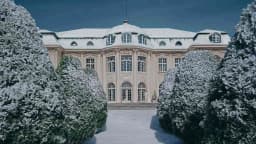
Pimkie International's Mini Fashion Bar replaced hotel minibar products with curated clothing and accessories at a boutique hotel in Antwerp, Belgium, in June

Pimkie International Turns the Hotel Minibar Into a Fashion Destination
Pimkie International's Mini Fashion Bar is an ambient retail campaign created by Happiness Brussels and launched in Belgium in June 2015, in which the brand replaced traditional hotel minibar products with curated women's clothing and accessories placed directly inside hotel-room closets, allowing guests to try items and purchase them at checkout.
The activation debuted at Banks Boutique Hotel in Antwerp, Belgium, as reported by Adweek on June 3, 2015. Rather than pursuing conventional fashion advertising, Happiness Brussels engineered a physical retail touchpoint inside a hotel room, intercepting female travellers at the precise moment they might discover a gap in their wardrobe. Guests could browse a curated selection of Pimkie clothing and accessories mounted on a specially built hanger inside the closet. If a different size was needed, they could call reception and request one, in a process modelled on traditional room-service ordering. Items kept during the stay were settled at checkout, mirroring the mechanics of a standard minibar bill.
The campaign's geographic focus was deliberate. Happiness Brussels selected a boutique hotel in Belgium, according to Kris Hoet, Chief Innovation Officer at Happiness Brussels, specifically because of the hotel's proximity and manageable scale — factors that made the pilot logistically viable and allowed close monitoring of the guest experience. The agency used hotel booking information to identify rooms with female guest reservations and targeted those rooms for the Mini Fashion Bar installation, ensuring relevance without broad-based waste. The product assortment included practical, weather-responsive items such as a raincoat, comfortable shoes, and sunglasses — a selection framed, as Adweek noted, as a practical response to travellers encountering unexpected weather or forgetting appropriate clothes. Earning a Clapboard Score of 71 out of 100, the campaign represents a structurally inventive approach to ambient retail, translating a familiar hospitality format into a branded fashion discovery moment in the Belgian market.
Pimkie International widened its core target audience from ages 15 to 25 to a broader 18 to 35 demographic in 2015, according to Clapboard's editorial research. The Mini Fashion Bar campaign reflects that strategic repositioning directly. A younger teenage audience rarely stays in boutique hotels; a woman in her late twenties or early thirties travelling for work or leisure does. By placing product inside a hotel room, Happiness Brussels reached an audience segment that conventional fashion retail — fixed-location stores, social media lookbooks — was less equipped to intercept at the moment of genuine need.
The strategic rationale rested on a simple but durable consumer truth: travellers frequently pack inadequately or encounter weather conditions they did not anticipate. Rather than advertising the solution, Pimkie placed the solution itself inside the moment of discovery. The hotel closet became a point of sale. The fashion concierge service replaced a sales assistant. The checkout bill replaced the cash register. Every element of the retail transaction was translated into hotel hospitality language, reducing friction and making purchase feel incidental rather than deliberate.
In Belgium and across Western European fast fashion in 2015, Pimkie faced intensifying competitive pressure. According to Clapboard's market analysis, primary fast-fashion competitors in that period included Zara, H&M, Primark, and C&A, all of which were expanding store footprints and digital presence. As reported by Shenglufashion.com, Zara and H&M increased market share in Western Europe during 2015. Against that backdrop, Pimkie could not compete on scale or media spend. The Mini Fashion Bar instead competed on ingenuity — constructing a retail format that neither Zara nor H&M had attempted — and used Belgium as the proving ground for a model that carried clear potential for broader rollout.
Happiness Brussels built the Mini Fashion Bar around the visual and functional grammar of hotel hospitality, not fashion retail. The creative decision to replicate minibar logic — browse, select, pay at checkout — rather than import the aesthetics of an in-store fashion experience was central to the campaign's coherence. Everything a guest encountered, from the specially constructed closet hanger to the fashion concierge contact point via reception, was designed to feel native to the hotel environment rather than grafted onto it.
Kris Hoet, Chief Innovation Officer at Happiness Brussels, is documented by Clapboard as the primary spokesperson for the campaign's strategic and executional rationale. The installation at Banks Boutique Hotel in Antwerp, Belgium, operated as a live retail environment. Clothing and accessories were curated specifically for the traveller context: a raincoat addressed the unpredictability of Belgian weather; comfortable shoes and sunglasses extended the range into practical lifestyle territory. The selection was deliberately concise, reflecting the physical constraints of a hotel closet and the cognitive reality of a guest who is not in a browsing mindset but a needs-resolution mindset.
The ambient medium was chosen with precision. This was not a poster or a digital ad; it was a physical object in a private space, encountered without the defensive posture a consumer brings to advertising. The campaign contained one media asset, as noted by Clapboard, which suggests the activation was documented rather than amplified through paid media — the earned coverage from Adweek and industry press functioned as the broader distribution mechanism. Production credits beyond Kris Hoet's documented role at Happiness Brussels are not publicly available for this campaign, though the execution at Banks Boutique Hotel in Antwerp demonstrates a close collaboration between the agency and the hotel's operational staff to deliver the fashion concierge service reliably.
No verified performance data for the Mini Fashion Bar campaign is publicly available. Pimkie International has not released figures relating to units sold, revenue generated, or guest participation rates from the Banks Boutique Hotel activation in Antwerp, Belgium. Adweek's coverage on June 3, 2015, did not include quantified results, and no subsequent industry reporting has surfaced verified sales or engagement metrics tied to this specific installation.
Structural effectiveness, however, can be assessed with confidence. The campaign operated as a demand-capture mechanism at a moment of genuine consumer need, eliminating the awareness-to-purchase journey entirely by placing product at the point of relevance. The fashion concierge mechanic — requesting sizes via reception — created a service interaction that reinforced Pimkie's repositioning toward an older, more experience-oriented female consumer, consistent with the brand's 2015 audience expansion to the 18 to 35 age bracket documented by Clapboard. The earned media response, led by Adweek, amplified an installation that was by design small-scale, extending its reach far beyond the guest rooms at Banks Boutique Hotel.
The campaign's ambient format also provided a structural advantage over conventional fashion advertising in Belgium's competitive fast-fashion environment: it was, in practical terms, inimitable in the short term by larger competitors such as Zara or H&M, whose scale makes bespoke hotel-room installations operationally complex at volume. The Mini Fashion Bar earned a Clapboard Score of 71 out of 100, reflecting genuine creative and strategic ingenuity balanced against the limited documented reach of a single-hotel pilot activation.
The Mini Fashion Bar was an ambient retail campaign created by Happiness Brussels for Pimkie International in June 2015 in Belgium. It replaced hotel minibar products with curated women's clothing and accessories in guest closets at Banks Boutique Hotel in Antwerp, allowing guests to purchase items at checkout.
Banks Boutique Hotel in Antwerp, Belgium hosted the Mini Fashion Bar activation. Happiness Brussels selected it for its manageable scale and proximity, as stated by Kris Hoet, Chief Innovation Officer at Happiness Brussels, and reported by Adweek on June 3, 2015.
Guests found curated Pimkie clothing on a specially built closet hanger. They could call reception to request different sizes, mirroring a room-service model. Items kept during the stay were charged at checkout, replicating traditional minibar billing mechanics, as documented by Adweek and Clapboard.
Happiness Brussels used the minibar format to intercept female travellers at a genuine moment of need — encountering unexpected weather or inadequate packing. The familiar hotel transaction model reduced purchase friction. Adweek framed this as a practical convenience strategy rather than conventional fashion advertising.
Happiness Brussels created the Mini Fashion Bar campaign for Pimkie International, launched in Belgium in June 2015. Kris Hoet, Chief Innovation Officer at Happiness Brussels, is documented by Clapboard as the primary spokesperson articulating the campaign's strategic rationale and executional approach.
Pimkie International's Mini Fashion Bar received a Clapboard Score of 71 out of 100. The score reflects genuine creative ingenuity in translating hotel hospitality mechanics into a fashion retail format, balanced against the limited documented reach of a single-hotel pilot installation in Belgium.
.webp)
Creative Collaboration Platform: The Backbone of Modern Creative WorkWhat is a creative collaboration platform?Clapboard defines a creative collaboration platform as the operational core for today’s distributed creative teams. This is not a collection of digital collaboration tools stitched together; Clapboard’s system


Understanding the Creative Production MarketplaceWhat is a Creative Production Marketplace?Clapboard defines a creative production marketplace as a structured ecosystem where brands, agencies, and production talent converge to execute video, advertising, and branded content at scale. Unlike the legacy agency or freelanREAD FULL ARTICLE

The Urgent Need for a Creative Production Operating SystemWhy Traditional Creative Production Models Break DownClapboard sees the creative production landscape shifting under pressure. Content velocity is no longer a buzzword—it’s a mandate. Modern advertising demands relentless output across dozens of channels, each wREAD FULL ARTICLE