Native names - Coca-Cola | Clapboard Ad Archive
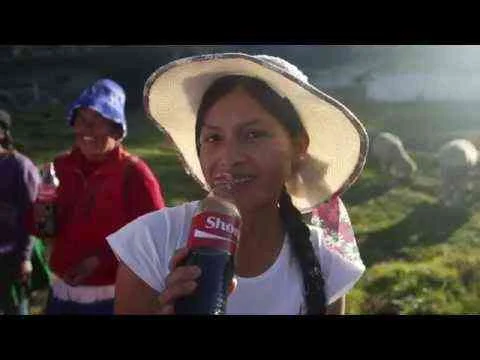
Coca-Cola’s Native Names campaign, developed by McCann Lima in Year: 2015, tackled a critical cultural blind spot within the global Share a Coke platform by turning its focus squarely on Peru’s Quechua community, whose indigenous names had been absent from personalized beverage packaging. Confronting the problem of exclusion that shadowed the campaign’s international success, Coca-Cola and the agency adopted what Clapboard’s taxonomy would classify as FORMAT#2—Show the Problem, explicitly surfacing the issue of underrepresentation before offering a visible, celebratory solution. Instead of relying on narrative devices or celebrity endorsements, McCann Lima’s creative approach embodied a direct and resonant style, inviting members of the Quechua community to see their names—integral markers of identity and heritage—prominently printed on one of the world’s most recognizable brands. The campaign’s concise execution eschewed elaborate storytelling, instead leveraging the power of real inclusion and authentic participation by placing long-marginalized names in a context previously reserved for more mainstream choices. Rooted in the food and drink sector where brand affinity often hinges on both personal resonance and cultural relevance, the initiative signaled a strategic recalibration for Coca-Cola, pushing the brand beyond template personalization toward a more nuanced, place-sensitive model of engagement. In Peru, where tangible gestures of recognition for indigenous culture remain culturally and politically significant, the campaign inherently became more than a product customization—serving as a statement of respect and shared belonging that set a new benchmark for how global advertisers can address social inequities through localized, context-aware activations. The campaign earns 64/100 in Clapboard’s global creative archive. For an industry long content to tokenize diversity from a safe distance, Native Names signals the rising imperative for brands to extend inclusion beyond the superficial, especially in markets with deep-rooted cultural complexity.











.webp)