 ARCHIVE
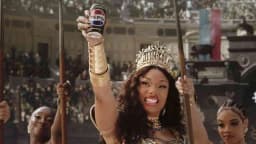
Pepsi Makes Gameday Epic With Gladiators, Megan Thee Stallion and the NFL
How Pepsi Brought the Gladiator Arena Back for the 2024 NFL Season Pepsi's "Make Your Gameday Epic"...
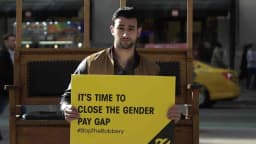
How Inca Kola Turned Every Hour Into a Stand Against Gender Inequality
Equality Time is an integrated campaign created by Wunderman Phantasia for Inca Kola, launched in Peru on International Women's Day, March 8, 2018, that converted the brand's established radio time-announcement slot into a continuous, 24-hour broadcast of 1,440 gender-inequality statistics, one for every minute of the day.
Inca Kola, owned by the Coca-Cola Company, had long maintained a presence in Peruvian radio through its branded "Inca Kola Hour" time announcements. The Equality Time campaign repurposed that existing media real estate entirely. Rather than announcing the hour in the conventional sense, each minute of the campaign's 24-hour run delivered a distinct statistic drawn from official Peruvian government data, producing a cumulative data visualisation across a single broadcast day. The campaign was developed under the creative leadership of Chief Creative Officer José Aburto at Wunderman Phantasia's Lima office, with PR support from Apoyo Comunicación and media distribution coordinated by Starcom, also based in Lima.
In Peru, the campaign addressed a specific and documented social context. The data underpinning the 1,440 statistics was sourced from Peru's National Institute of Statistics and Informatics, the Public Ministry, and the Ministry of Women, as reported by Clapboard. The campaign operated across integrated media, aligning Inca Kola's brand identity with public interest messaging in a market where the brand holds deep cultural resonance. The creative team framed the campaign around the Spanish-language title "Horas por la igualdad," meaning Hours for Equality, and the campaign contained a single primary media asset that anchored the data visualisation execution. This approach situated Inca Kola not merely as a soft-drink brand but as an active participant in Peru's national conversation around gender equity.
Inca Kola occupies a position in Peru unlike almost any other soft-drink brand in its regional market. The brand's long-running strategic programme, known as "Reconexión con los peruanos" and documented by the Peruvian academic repository Alicia Concytec Gob Pe, ran from 2010 to 2014 and was explicitly designed to reinforce Inca Kola's associations with Peruvian identity, creativity, gastronomy, and national progress. That strategic foundation gave Wunderman Phantasia a credible platform from which to pivot the brand toward public interest territory without the move appearing opportunistic.
The core strategic insight behind Equality Time was one of substitution rather than addition. Instead of creating a new media format or buying additional inventory, the agency identified an existing, recognised brand ritual — the Inca Kola radio time announcement — and replaced its conventional content with factual gender-inequality data. This approach ensured the campaign required no audience education about the format itself; Peruvian listeners already knew what to expect from the slot, which meant the substitution of statistics for time created an immediate and legible contrast. The strategy aligned directly with the public interest category alongside the non-alcoholic drinks sector, positioning Equality Time as both a brand communication and a civic act.
In the competitive landscape of Peru's soft-drink market, Inca Kola faces sustained pressure from Coca-Cola's own flagship cola and from PepsiCo's portfolio, both of which operate significant marketing budgets across Latin America. By anchoring Equality Time to International Women's Day and to verifiable Peruvian government data, Wunderman Phantasia built a campaign that competitors could not credibly replicate without the same degree of cultural legitimacy that Inca Kola commands in the Peruvian market. The campaign's use of data visualisation as a creative device also positioned Inca Kola ahead of an emerging trend in purpose-driven advertising across the region.
Director Henry De La Cadena led the production of Equality Time, with Espiritu serving as the Lima-based production company responsible for executing the campaign's audio and data components.
The creative framework was deceptively precise. Executive Creative Directors Augusto Landauro and Bruno Reggiardo, working alongside Creative Director Romy Domínguez and Art Director Diana Tamayoshi, constructed a system in which each of the 1,440 minutes of a 24-hour day corresponded to one verified statistic about gender inequality in Peru. The copywriting team — Pedro Bergelund, Geraldine Marcos, and Milagros Contreras — was responsible for transforming raw government data from Peru's National Institute of Statistics and Informatics, the Public Ministry, and the Ministry of Women into broadcast-ready scripts, each compressed to the duration of a time announcement. The creative challenge was not simply one of scale but of tonal discipline: each data point needed to carry communicative weight within a format that Peruvian audiences associated with a mundane, functional brand moment.
The campaign is classified as an integrated medium execution, and its single primary media asset served as the connective tissue between the radio broadcast and the data visualisation dimension of the work, as noted by Clapboard. The decision to root the creative entirely in official Peruvian government statistics rather than global or regional figures gave the campaign a specificity that strengthened both its journalistic credibility and its emotional directness. For Peruvian listeners encountering each minute-long announcement, the data did not describe a distant or abstracted problem; it described conditions documented within Peru itself. That geographic and evidentiary precision is what separates Equality Time's creative execution from more generalised purpose-advertising in the non-alcoholic drinks and public interest categories.
Equality Time earned verified recognition across multiple international award programmes following its March 2018 launch in Peru.
The campaign received a Bronze Cube at the ADC Annual Awards in 2019 in the category of Interactive: Data Visualization, Single, under official award record ADC_INT19024B, as documented by The One Club. At the London International Awards 2018, the campaign was awarded a Silver in the Radio and Audio category for Public Service and Social Awareness, as reported by Clapboard. At the El Sol Festival 2018, Equality Time earned a Silver in Radio and a Bronze in Media, as reported by latinspots.com. These four distinct honours across three separate award bodies constitute a consistent record of peer recognition for a campaign operating across the integrated, public interest, and non-alcoholic drinks categories.
No verified independent audience measurement data or brand-lift metrics for Equality Time are publicly available. The campaign's structural effectiveness, however, is evident in its design. By operating within an existing and trusted media format — the Inca Kola radio time announcement — Equality Time bypassed the attention barriers that affect purpose-driven advertising built on unfamiliar formats. Each of the 1,440 data points was individually attributed to official Peruvian government sources, making the campaign's claims independently verifiable and resistant to dismissal. The concentration of all creative and civic weight into a single 24-hour window aligned with International Women's Day amplified the campaign's cultural timing in Peru and across the broader Ibero-American advertising community, as reflected in its El Sol recognition.
Equality Time is an integrated campaign by Wunderman Phantasia for Inca Kola, launched in Peru on International Women's Day, March 8, 2018. It replaced Inca Kola's traditional radio time announcements with 1,440 gender-inequality statistics sourced from Peruvian government bodies, one for every minute of a 24-hour broadcast day.
Wunderman Phantasia, based in Lima, created the Equality Time campaign for Inca Kola, a brand owned by the Coca-Cola Company. Chief Creative Officer José Aburto led the creative team, with media distribution handled by Starcom Lima and PR by Apoyo Comunicación, also based in Lima.
Equality Time won a Bronze Cube at the ADC Annual Awards 2019 for Interactive Data Visualization, as documented by oneclub.org. It also received a Silver at the London International Awards 2018 in Radio and Audio for Public Service, plus a Silver and Bronze at El Sol Festival 2018, as reported by latinspots.com.
The 1,440 statistics broadcast during Equality Time were drawn from official Peruvian government sources. These included Peru's National Institute of Statistics and Informatics, the Public Ministry, and the Ministry of Women, as reported by Clapboard. This grounding in domestic Peruvian data gave the campaign verifiable credibility within its home market.
Wunderman Phantasia repurposed Inca Kola's established radio time-announcement slot, known as the Inca Kola Hour, substituting conventional time calls with gender-inequality statistics. This substitution strategy required no new audience behaviour, using a format Peruvian listeners already recognised to deliver 1,440 individual data points across a single International Women's Day broadcast.
Equality Time was published in Peru around International Women's Day, launching on March 8, 2018, with the campaign window running from March 6 to 8, 2018, as reported by Clapboard. The core execution concentrated its 1,440 gender-inequality statistics within a single continuous 24-hour broadcast period in Peru.
.webp)
Creative Collaboration Platform: The Backbone of Modern Creative WorkWhat is a creative collaboration platform?Clapboard defines a creative collaboration platform as the operational core for today’s distributed creative teams. This is not a collection of digital collaboration tools stitched together; Clapboard’s system


Understanding the Creative Production MarketplaceWhat is a Creative Production Marketplace?Clapboard defines a creative production marketplace as a structured ecosystem where brands, agencies, and production talent converge to execute video, advertising, and branded content at scale. Unlike the legacy agency or freelanREAD FULL ARTICLE

The Urgent Need for a Creative Production Operating SystemWhy Traditional Creative Production Models Break DownClapboard sees the creative production landscape shifting under pressure. Content velocity is no longer a buzzword—it’s a mandate. Modern advertising demands relentless output across dozens of channels, each wREAD FULL ARTICLE