PETA's Dismember It Yourself campaign by The Community parodies DIY creator videos to expose the animal cruelty behind luxury crocodile-skin Birkin handbags.

How PETA's Dismember It Yourself Reframes Luxury Leather as Animal Cruelty
PETA's "Dismember It Yourself" is a 2025 public service film campaign created by The Community that parodies DIY creator content to expose the animal cruelty behind exotic-skin luxury handbags, specifically crocodile-skin Hermès Birkin bags, and direct US consumers toward cruelty-free vegan accessories instead.
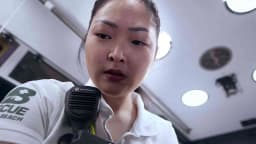
Launched in April 2025 in the United States, the campaign centres on a single film asset built around a fictional influencer named "Erika Makes" who walks viewers through the process of producing a luxury leather bag at home — beginning, with unflinching clarity, with a live crocodile. The conceit is a deliberate inversion of the aspirational try-on and how-to videos that dominate social media feeds, repurposing a format typically associated with craft, creativity, and self-expression to confront audiences with the industrial violence that underlies a handbag costing upward of eighty thousand dollars. The campaign's dedicated website, DismemberItYourself.com, extends the experience beyond the film itself.
The campaign's core argument is direct: if a consumer would not personally hack apart a thinking, feeling animal to produce a luxury item, they should not financially support the industry that does it on their behalf. Tracy Reiman, Executive Vice President of PETA, articulated this position plainly, stating that "no one would want to be caught dead with a Birkin if they had to make one themselves by hacking apart a thinking, feeling being," as quoted in PETA's own campaign materials. PETA reports that more than one billion animals — including cows, pigs, goats, sheep, alligators, ostriches, kangaroos, and even dogs and cats — are killed for their skins each year, according to peta.org. The organisation further notes that industry workers cut off the tails and horns of many animals without painkillers, and some are skinned while still conscious. The Clapboard Score for this campaign is 77 out of 100.
 ARCHIVE
PETA designed "Dismember It Yourself" to meet consumers inside a format they already trust. The DIY and instructional video genre represents one of the most-watched categories of creator content across platforms in the United States, and that cultural familiarity is precisely what the campaign weaponises. By opening in the visual and tonal register of a wholesome craft tutorial, the film earns attention before delivering its confrontational payload — a technique that sidesteps the defensive resistance audiences often raise when they recognise advocacy content immediately.
The strategic choice to target the Hermès Birkin specifically is not incidental. The Birkin is among the most culturally legible symbols of aspirational luxury in the United States and globally, which means its deconstruction carries maximum symbolic weight. Ricky Vior, SVP and Executive Creative Director at The Community, described the creative logic to Muse by Clios: "The idea of flipping the script and having a creator seemingly make a DIY leather bag was the perfect creative solution to telling PETA's story in an unexpected way." That logic is anchored in a clear consumer insight — that the distance between a luxury purchase and the conditions of its production is maintained precisely because that production is invisible.
PETA operates in a competitive landscape of animal-rights and ethical-consumer advocacy. World Animal Protection launched its own "Power of Animals" campaign in September 2024, according to Worldanimalprotection Us, and the Humane Society of the United States maintains a sustained fashion-and-fur lobbying and communications programme. Against those peers, PETA's approach in this campaign is distinctly culture-first rather than petition-first. The organisation reported more than one billion social-media impressions in 2024, according to Headlines Peta, and nearly five million dollars in free advertising space in fiscal year 2025, according to Annual-Review Peta — a scale that reflects PETA's position as the dominant voice in animal-rights public service communication in the United States.
Director Dave Meyers helmed the production of "Dismember It Yourself" for PETA and The Community, bringing a commercial and music-video background to a film that had to sustain tonal credibility in two conflicting registers simultaneously, as documented by Little Black Book and musebyclios.com. The production was handled by RadicalMedia, and the crocodile at the centre of the film is entirely fabricated — constructed through a combination of practical rubber modelling, puppetry, CGI, and visual effects completed by Harbor. That production choice is both ethical and strategic: it allows the film to depict viscerally realistic animal imagery without using a living animal, while also enabling precise creative control over every moment of the crocodile's on-screen treatment.
The fictional presenter persona, "Erika Makes," is rendered with enough period-accurate influencer detail — lighting choices, editing rhythm, direct-to-camera address, chirpy instructional pacing — that the spoof holds its disguise long enough to generate genuine unease before the campaign's intent becomes undeniable. This formal commitment to mimicry is the film's primary creative achievement. It does not announce its intentions through a title card or a voiceover disclaimer; instead, it trusts the escalating horror of its own premise to do the persuasive work.
The campaign's single-film format concentrates the entire creative argument into one asset, a discipline that sharpens the message and suits the platform environments — social feeds in the United States — where the content is designed to travel. The connection to PETA's established creative lineage is visible: as noted by nonprofitpro.com, the organisation's 1991 "Rather Go Naked Than Wear Fur" campaign established fashion disruption as a core PETA communications strategy, and "Dismember It Yourself" updates that tradition with contemporary creator-culture fluency. The campaign's dedicated URL, DismemberItYourself.com, functions as a downstream action layer where viewers are directed to learn more about leather production, according to peta.org.
"Dismember It Yourself" generated 682,376 views, 464 likes, and 93 comments on its primary platform, according to data reported by Roastbrief Com Mx. While those headline figures represent a defined reach, they do not capture the full distribution of a film designed for social sharing, press pickup, and earned media amplification — all channels through which PETA has historically multiplied campaign exposure. The organisation secured nearly five million dollars in free advertising space in fiscal year 2025, according to annual-review.peta.org, which indicates that earned and donated media extensions routinely expand the footprint of individual campaign assets well beyond their owned-channel performance.
Structurally, the campaign is built for longevity as much as immediacy. The DismemberItYourself.com destination provides an action pathway that converts awareness into advocacy engagement, consistent with PETA's reported output of more than twenty-five million advocacy letters and over one and a half million text-message actions in fiscal year 2025, according to annual-review.peta.org. The film's format — a social-native spoof in a viral genre — means it can continue circulating long after its April 2025 launch without requiring paid amplification.
The Clapboard Score of 77 out of 100 reflects the campaign's strong creative intelligence: its format subversion is precise, its production craft is high, and its moral argument is communicated without abstraction. Where the score does not reach higher tier, it is consistent with the inherent ceiling of a single-asset public service campaign whose conversion metric — behaviour change rather than purchase — is difficult to verify at scale.
PETA's Dismember It Yourself is a 2025 public service film created by The Community in the United States. It parodies DIY creator videos to expose the animal cruelty involved in producing exotic-skin luxury handbags, particularly crocodile-skin Hermès Birkin bags, and encourages consumers to choose cruelty-free vegan accessories instead.
Dave Meyers directed the Dismember It Yourself film for PETA. Production was handled by RadicalMedia, with the on-screen crocodile built using practical rubber modelling, puppetry, CGI, and visual effects by Harbor. The campaign was created by agency The Community, with Ricky Vior serving as SVP and Executive Creative Director, as documented by lbbonline.com.
PETA targeted the Hermès Birkin because it is among the most recognised symbols of aspirational luxury in the United States. By connecting a bag costing upward of eighty thousand dollars to the violent reality of crocodile-skin production, the campaign uses the Birkin's cultural weight to make the ethical cost of exotic leather impossible to ignore.
PETA states, according to peta.org, that more than one billion animals — including cows, alligators, ostriches, and kangaroos — are killed for their skins each year. Industry workers cut off tails and horns without painkillers, and some animals are skinned while still conscious. The campaign presents these facts through a spoof DIY format to make them viscerally immediate.
The Community, led by Executive Creative Director Ricky Vior, built the campaign around the DIY creator-video format already trusted by audiences in the United States. Vior told Muse by Clios that flipping the instructional-content script was the perfect way to tell PETA's story unexpectedly, challenging viewers to question the ethical cost of luxury goods and reconsider their relationship with animal products.
PETA directs viewers to DismemberItYourself.com, the campaign's dedicated website, for further information about how leather products are made. The site functions as an action layer beyond the film, consistent with PETA's broader advocacy infrastructure, which according to annual-review.peta.org generated more than twenty-five million advocacy letters in fiscal year 2025.
.webp)
Creative Collaboration Platform: The Backbone of Modern Creative WorkWhat is a creative collaboration platform?Clapboard defines a creative collaboration platform as the operational core for today’s distributed creative teams. This is not a collection of digital collaboration tools stitched together; Clapboard’s system


Understanding the Creative Production MarketplaceWhat is a Creative Production Marketplace?Clapboard defines a creative production marketplace as a structured ecosystem where brands, agencies, and production talent converge to execute video, advertising, and branded content at scale. Unlike the legacy agency or freelanREAD FULL ARTICLE

The Urgent Need for a Creative Production Operating SystemWhy Traditional Creative Production Models Break DownClapboard sees the creative production landscape shifting under pressure. Content velocity is no longer a buzzword—it’s a mandate. Modern advertising demands relentless output across dozens of channels, each wREAD FULL ARTICLE