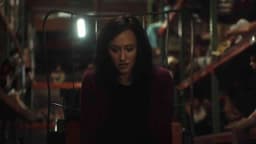
Oxfam's POVerty: On the Curb, created by S.I. Newhouse School of Public Communications students Ami Jin and Joshua Race in April 2018, uses experiential

Oxfam POVerty On the Curb Puts Student Creativity to Work Against Inequality
POVerty: On the Curb is a 2018 student experiential campaign created for Oxfam by Ami Jin and Joshua Race at the S.I. Newhouse School of Public Communications, using panhandling as a live social experiment to make economic inequality visible and immediate to passersby in the United States.
Published in April 2018, the campaign translates Oxfam's global mission of poverty alleviation into a street-level encounter. Rather than asking audiences to engage with poverty through a screen or a donation portal, the work places the reality of destitution directly on the curb, literally and conceptually. The creative premise invites observers to confront the gap between privilege and poverty at close quarters, a distance that polished broadcast or digital advertising rarely closes.
The campaign was produced within the academic environment of Syracuse University's S.I. Newhouse School of Public Communications, one of the United States' most respected schools for communications and advertising education. Art director Ami Jin and copywriter Joshua Race developed the concept under the supervision of Professor Mel White. The work was submitted to the public archive in April 2018 as a student campaign aligned with the Public Interest industry classification, and the single media asset documented in the archive captures the experiential format's core visual logic.
Oxfam itself is a confederation of twenty independent charitable organisations focused on poverty alleviation, combining humanitarian relief, long-term development work, and policy-change campaigning across multiple continents, according to oxfam.org. In the United States, where income inequality has remained a persistent and politically charged subject, the decision to stage a panhandling simulation carries particular cultural weight. The campaign does not ask its audience to feel sympathy from a safe distance; it engineers an encounter in which discomfort becomes the primary communicative tool.
Experiential public interest advertising places the audience inside the argument. That structural choice defines the strategic intelligence behind POVerty: On the Curb and separates it from conventional nonprofit communications in the United States.
By 2018, the broader nonprofit and charitable sector in the United States was navigating a significant shift in how organisations communicated their missions. According to Charity Digital, NGOs and charities were accelerating adoption of social, mobile, and digital fundraising channels, moving audiences away from passive reception toward participatory engagement. POVerty: On the Curb reflects that same directional impulse but routes it through physical space rather than a digital interface, betting that embodied discomfort produces a stronger attitudinal shift than scrolling past a campaign post.
The competitive context for attention in public interest advertising in 2018 was crowded. Organisations such as the American Red Cross and Save the Children were investing substantially in digital fundraising and social media storytelling across the US market. Against that backdrop, a street-level experiential campaign for Oxfam offered a different kind of interruptive logic: it could not be skipped, muted, or swiped away. The encounter was unavoidable for anyone who walked past it.
The strategic insight driving the work is rooted in proximity. Oxfam has long recognised, as documented across its own communications at oxfam.org, that global poverty can feel abstract and distant to audiences in wealthy nations. Situating the simulation in and around Syracuse University was not accidental. The contrast between a well-resourced American university campus and the surrounding city, where economic hardship is visible and documented, gave the creative team a geographically specific tension to exploit. That localisation of a global issue is one of the cleaner strategic moves in the campaign's architecture.
Ami Jin and Joshua Race built POVerty: On the Curb around the raw visual grammar of documentary observation. The campaign's single archived media asset functions as both a record of the live event and a piece of standalone film, collapsing the experiential moment and its documentation into one communicative object.
The creative approach draws on a tradition of social experiment filmmaking that uses real public reactions as its primary content. Rather than casting performers or scripting responses, Jin and Race staged a situation and let unmediated human behaviour generate the narrative. That choice carries a specific craft risk: the outcome cannot be controlled, and the resulting footage must be shaped in post-production to carry the argument the campaign intends to make. The fact that the single media asset holds together as a coherent public interest statement suggests a disciplined editorial eye operating on material that was, by design, unpredictable.
The title itself demonstrates copywriting precision. POVerty fuses point-of-view, the documentary filmmaker's foundational concept, with the subject matter. That compression of meaning into a single typographic choice is the work of a copywriter, Joshua Race, thinking across visual and verbal registers simultaneously. Ami Jin's role as art director and co-director of the video ensures that the visual language of the piece carries the same conceptual load as the title.
The campaign was developed under Professor Mel White at the S.I. Newhouse School of Public Communications, an institution that has consistently produced advertising and communications professionals whose student work reflects professional-level strategic and craft thinking. The experiential medium was chosen not for spectacle but for its capacity to create a first-person encounter with economic inequality, aligning the form of the work directly with its content.

No verified performance data for POVerty: On the Curb is publicly available. No confirmed reach figures, donation uplift, brand-tracking shifts, or audience response rates have been identified, and no verified wins in Cannes Lions, the Clio Awards, D&AD, The One Show, Effie Awards, Webby Awards, or WARC Awards have been recorded for this campaign.
That absence of metrics is structurally expected for a student experiential campaign produced in an academic context in the United States in 2018. Student work of this kind is typically evaluated on creative and strategic merit rather than on paid-media performance or verified commercial outcomes. What the campaign can be assessed on is the coherence of its structural choices.
The decision to use experiential format for a public interest brief is defensible on several grounds. Experiential campaigns produce personal, memorable encounters that are difficult to replicate through paid media at equivalent emotional intensity. The localisation of the concept to a university setting in the United States gave the campaign an immediate and specific audience: students, faculty, and community members already embedded in the geographic and economic contrast the work was designed to expose.
According to oxfam.org, Oxfam's communications philosophy has increasingly prioritised dignity and agency in its representation of people affected by poverty, moving away from passive victimhood imagery toward more active and systemic framings. POVerty: On the Curb is consistent with that directional shift, placing the audience in the position of witness rather than distant benefactor.
Clapboard Score: 58/100. The score reflects a well-conceived experiential premise and disciplined craft within the constraints of a student production, offset by the absence of verifiable real-world impact data and the limited scale of distribution inherent to the format.
POVerty: On the Curb is a 2018 experiential student campaign created for Oxfam by Ami Jin and Joshua Race at the S.I. Newhouse School of Public Communications. It used a live panhandling simulation in the United States to make economic inequality tangible, producing a documentary-style video as its primary media asset.
Art director Ami Jin and copywriter Joshua Race created the campaign at the S.I. Newhouse School of Public Communications, Syracuse University, in 2018. Both also served as the video's directors. The project was developed under the supervision of Professor Mel White as a student public interest advertising exercise in the United States.
The campaign staged a live panhandling simulation rather than using paid media or digital content, engineering an unavoidable physical encounter with economic inequality. In the United States in 2018, where most nonprofit communications were moving toward digital channels, choosing unmediated street-level experience gave the Oxfam concept a different kind of communicative force.
S.I. Newhouse School of Public Communications is located at Syracuse University, giving Ami Jin and Joshua Race immediate access to a campus environment. The contrast between a well-resourced university and the economic hardship visible in the surrounding city provided a geographically specific tension that reinforced the Oxfam campaign's argument about inequality in the United States.
No verified wins for POVerty: On the Curb have been recorded at Cannes Lions, the Clio Awards, D&AD, The One Show, Effie Awards, Webby Awards, or WARC Awards. The campaign was a student submission from the S.I. Newhouse School of Public Communications and was not entered into the standard professional awards circuit.
POVerty: On the Curb holds a Clapboard Score of 58 out of 100. The score reflects a coherent experiential premise and disciplined craft for a 2018 student production, balanced against the absence of verifiable real-world performance data and the inherently limited distribution scale of a live public interest activation in the United States.
.webp)
Creative Collaboration Platform: The Backbone of Modern Creative WorkWhat is a creative collaboration platform?Clapboard defines a creative collaboration platform as the operational core for today’s distributed creative teams. This is not a collection of digital collaboration tools stitched together; Clapboard’s system


Understanding the Creative Production MarketplaceWhat is a Creative Production Marketplace?Clapboard defines a creative production marketplace as a structured ecosystem where brands, agencies, and production talent converge to execute video, advertising, and branded content at scale. Unlike the legacy agency or freelanREAD FULL ARTICLE

The Urgent Need for a Creative Production Operating SystemWhy Traditional Creative Production Models Break DownClapboard sees the creative production landscape shifting under pressure. Content velocity is no longer a buzzword—it’s a mandate. Modern advertising demands relentless output across dozens of channels, each wREAD FULL ARTICLE