 ARCHIVE
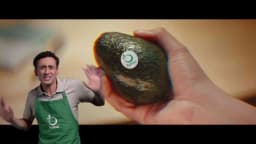
Spoiler Alert! - Apeel Sciences | Clapboard Ad Archive
Humanaut's Spoiler Alert! campaign for Apeel Sciences brilliantly showcases an innovative approach...
Nissin Lámen Builds a Robot to Find Brazil's Perfect Ramen
Nissin Lámen's Perfect Ramen campaign, created by Dentsu Brasil and launched in Brazil in January 2019, is an integrated food and drink campaign built around a single mechanical provocation: a robot programmed to follow the brand's official package preparation instructions to the letter, competing against ten human participants in a blind taste test to determine whether anyone could actually cook a better bowl of instant noodles than the instructions themselves prescribed.
The campaign operates across film, promotion, packaging, and a live event format, making it one of the more structurally ambitious integrated executions in the Brazilian food industry that year. Its central question — whether the perfect ramen is the one on the box or the one adapted by generations of Brazilian cooks — is both a product truth and a cultural provocation. Nissin Lámen had been selling its instant noodles in Brazil for 53 years before the campaign launched, according to adsoftheworld.com, and in that time Brazilian consumers had developed deeply personal rituals around preparation: different water quantities, extended cooking times, added ingredients, and modified methods that diverged sharply from the official guidance printed on every pack.
In Brazil, that divergence became the creative raw material. Rather than correct consumer behaviour or restate product authority, Dentsu Brasil chose to dramatise the tension between institutional instruction and lived culinary instinct. The robot — programmed over a period of one and a half months, as documented by Meio & Mensagem — served as the brand's mechanical ambassador for orthodoxy, while the ten human contestants represented the full spectrum of how Brazilian cooking actually engages with instant noodles. A special appearance by Nissin president Takashi reinforced the campaign's integration of corporate identity with consumer narrative, lending the execution an unusual degree of brand sincerity.
Nissin Lámen enters the Perfect Ramen campaign from a position of category leadership rather than challenger anxiety. The global instant noodle market was valued at US$44.11 billion in 2019, according to Ken Research, with a forecasted compound annual growth rate of 5.90 percent — a trajectory driven, per the same source, by urbanisation, demand for affordable convenience food, and widening retail access. In Brazil specifically, instant noodles occupy a distinct cultural register: they are simultaneously everyday sustenance and a canvas for domestic creativity, which is precisely the tension the 2019 campaign was designed to surface.
Dentsu Brasil's strategic insight was that Nissin Lámen's greatest competitive asset was not price or distribution but longevity and cultural familiarity. Competitors including Nestlé's Maggi line and Toyo Suisan's Maruchan brand compete on convenience positioning, according to directional market estimates cited by Ken Research, but neither carries the 53-year local heritage that Nissin Lámen holds in Brazil. Rather than contest on product attributes, the Perfect Ramen campaign converted brand age into creative authority — arguing, through the robot device, that the original preparation method represents a genuinely considered culinary standard worth testing.
The promotion mechanic reinforced the strategy. By structuring the campaign as a blind taste test rather than a conventional advertisement, Dentsu Brasil embedded the product claim inside an apparently objective process. Brazilian cooking culture, with its strong tradition of adapting and personalising recipes, gave the test immediate cultural credibility. Consumers in Brazil were not being told what to think about Nissin Lámen; they were being invited to watch the question resolved in real time, which is a materially different persuasive posture for a food industry brand to adopt in the narrative advertising landscape of 2019.
The central creative execution of Perfect Ramen rests on a single engineered object: a robot built specifically to replicate every step of Nissin Lámen's official package preparation instructions with mechanical precision. Filipe Cuvero, VP de Criação at Dentsu Brasil, described the process directly in Meio & Mensagem on January 21, 2019: "Construímos o primeiro robô programado para cozinhar o 'Nissin Lámen perfeito'. Todo o processo de programação levou um mês e meio e foi muito divertido. Ao final, a máquina reproduzia de forma fiel todo o passo a passo do preparo do lámen, conforme a embalagem do produto orienta." The quote was subsequently republished by Propmark on August 30, 2019, confirming the campaign's extended media presence well beyond its January launch window.
Creative leadership for the campaign was shared across Mário D'Andrea, Filipe Cuvero, Kojiro Tanoue, and Christian Faria, according to adsoftheworld.com — a four-person creative team whose combined involvement suggests a production of genuine scale within the Dentsu Brasil operation in São Paulo. Video production was handled by Fantástica Filmes, whose contribution gave the campaign's film assets the visual credibility required to make the robot feel like a serious culinary instrument rather than a novelty prop.
The ten human contestants who faced the robot represent the campaign's human layer — the element that transforms a product demonstration into a narrative. In the context of Brazilian food and drink advertising in 2019, the decision to use real participants rather than actors or influencers is a meaningful craft choice. It aligns the Perfect Ramen campaign with a broader documentary instinct in food industry communications, where authenticity of process has become increasingly persuasive. The integration of Nissin president Takashi as a special appearance further blurs the line between corporate statement and creative content, a structural move that deepens the campaign's credibility without requiring explicit product claims.
No verified numerical performance data for the Perfect Ramen campaign — including sales lift percentages, units sold, revenue figures, or market-share change — is publicly available. What is documented is qualitative and significant. According to Propmark Com Br, the campaign generated Nissin Lámen's highest monthly sales record in the company's 53-year history in Brazil, a result that positions Perfect Ramen among the most commercially effective integrated campaigns the brand had run to that point, even without a disclosed numerical baseline against which to measure the scale of that lift.
In awards terms, the campaign was recognised at Effie Brasil 2019 in the Promotions category under the title "Nissin Lámen: a promo sem lamentos!", with finalist status confirmed, though the specific award level is not specified in available sources, according to Cidademarketing Com Br. No records for Perfect Ramen appear in the Cannes Lions, One Show, D&AD, Clios, Webby, or WARC databases, which positions the campaign's recognised excellence firmly within the Brazilian market context rather than the global creative circuit.
Structurally, the campaign's effectiveness is explicable. The blind taste test mechanic creates a falsifiable claim — the robot either wins or it does not — which gives consumers a reason to engage with the result rather than dismiss it as advertising assertion. In a food industry category where Brazilian cooking habits had diverged from brand instructions for decades, making that divergence the subject of the campaign rather than its problem is a strategically sound conversion of consumer behaviour into earned attention. The Clapboard Score for Perfect Ramen is 66 out of 100.
Perfect Ramen is an integrated campaign created by Dentsu Brasil for Nissin Lámen, launched in Brazil in January 2019. It featured a robot programmed to follow official package preparation instructions competing against ten human participants in a blind taste test, exploring how Brazilian cooking habits compare to the brand's prescribed ramen method.
Dentsu Brasil created the campaign, with creative leadership from Mário D'Andrea, Filipe Cuvero, Kojiro Tanoue, and Christian Faria, according to adsoftheworld.com. Video production was handled by Fantástica Filmes. Filipe Cuvero, VP de Criação at Dentsu Brasil, confirmed that programming the robot took one and a half months.
The campaign generated Nissin Lámen's highest monthly sales record in the company's 53-year history in Brazil, according to propmark.com.br. No specific numerical data — including sales lift or units sold — is publicly available. The campaign was also recognised at Effie Brasil 2019 in the Promotions category, per cidademarketing.com.br.
Dentsu Brasil built the robot to mechanically replicate Nissin Lámen's official package preparation instructions, creating an objective benchmark against which ten human contestants could compete. The device dramatised a genuine tension in Brazil: consumers had adapted the product's preparation for decades, diverging from the brand's own recommended cooking method.
The campaign achieved finalist status and recognition at Effie Brasil 2019 in the Promotions category, according to cidademarketing.com.br, under the title "Nissin Lámen: a promo sem lamentos." No records appear in the Cannes Lions, One Show, D&AD, Clios, Webby, or WARC databases for this specific campaign.
Brazilian consumers had personalised Nissin Lámen preparation for 53 years before the 2019 campaign, according to adsoftheworld.com, modifying water quantities, cooking times, and ingredients. Perfect Ramen treated that cultural divergence as creative material rather than a brand problem, making Brazilian cooking instinct the subject of the campaign's central narrative challenge.
.webp)
Creative Collaboration Platform: The Backbone of Modern Creative WorkWhat is a creative collaboration platform?Clapboard defines a creative collaboration platform as the operational core for today’s distributed creative teams. This is not a collection of digital collaboration tools stitched together; Clapboard’s system


Understanding the Creative Production MarketplaceWhat is a Creative Production Marketplace?Clapboard defines a creative production marketplace as a structured ecosystem where brands, agencies, and production talent converge to execute video, advertising, and branded content at scale. Unlike the legacy agency or freelanREAD FULL ARTICLE

The Urgent Need for a Creative Production Operating SystemWhy Traditional Creative Production Models Break DownClapboard sees the creative production landscape shifting under pressure. Content velocity is no longer a buzzword—it’s a mandate. Modern advertising demands relentless output across dozens of channels, each wREAD FULL ARTICLE