National Pediatric Cancer Foundation's Pediatric Cancer Warriors film features three childhood cancer survivors and a leading oncologist to reframe pediatric

National Pediatric Cancer Foundation Puts Survivor Voices at the Center
Pediatric Cancer Warriors – Hopes and Dreams is a 3:33-minute nonprofit brand film produced by Tampa Bay-based creative video agency Diamond View for the National Pediatric Cancer Foundation, released in the United States in September 2024, in which three childhood cancer survivors speak directly to camera about their diagnoses, treatments, and lasting effects.
The film centers on Eli, age six, Ever, age eight, and Audrey, age ten — each a pediatric cancer survivor — alongside Dr. Trisha Larkin, a pediatric oncology investigator and herself a survivor of childhood leukemia. The campaign's core objective is to illuminate a structural gap in cancer medicine: that most treatments administered to children with cancer were developed for adult bodies, not the fragile physiology of infants and young children. Dr. Larkin states plainly in the film, "The way that a lot of the medications and therapies we're using currently have been developed are really for adult cancers." That single clinical reality anchors the entire creative and advocacy case the film makes.
In the United States, childhood cancer remains one of the most underfunded areas of oncology research relative to its human cost. The National Pediatric Cancer Foundation was founded in 1991 by two mothers organizing around the urgent need for better pediatric cancer treatment outcomes, according to nationalpcf.org. The Hopes and Dreams film extends that founding mission into the present, channeling survivor testimony into a public awareness vehicle designed to build both emotional and rational support for dedicated pediatric oncology research. The film was directed by Vanessa Diaz of Diamond View and produced with a full creative team, with executive producer Susan Mulvey and producer Victoria Pezzella overseeing production. Its Clapboard Score of 59 out of 100 reflects a campaign with clear creative intentionality operating within the structural constraints common to nonprofit healthcare filmmaking.
Pediatric cancer occupies a distinct and underserved position within the broader United States health industry. Research published via Pmc Ncbi Nlm Nih Gov confirms that the majority of chemotherapy agents and targeted therapies in clinical use for children were originally developed, tested, and approved for adult oncology populations, creating meaningful gaps in dosing precision, side-effect profiles, and long-term outcome data for pediatric patients. Dr. Larkin, featured in the film as an investigator for the Sunshine Project Consortium, articulates this directly: the field is "constantly looking at ways to reduce the toxicities of the treatments we're giving." That scientific context transforms the film from a sympathetic portrait into a strategic advocacy document.
The National Pediatric Cancer Foundation operates in a nonprofit healthcare funding environment shaped by significantly larger competitors. ALSAC, the fundraising organisation for St. Jude Children's Research Hospital, reported total revenue of approximately $3.790 billion for the fiscal year ending June 30, 2024, including approximately $823.2 million allocated to research, according to stjude.org. Alex's Lemonade Stand Foundation, another prominent childhood cancer nonprofit active across the United States, reported approximately $30.24 million in 2024 revenue with approximately $21.7 million in grants paid, according to alexslemonade.org. Against that competitive landscape, NPCF's communications strategy depends on emotional precision and narrative authenticity rather than scale. The Hopes and Dreams film reflects that calculus: rather than broad awareness statistics, it deploys three specific children whose particular diagnoses — including Audrey's stage 3 liver cancer diagnosed at five months old — make the pediatric cancer experience concrete and undeniable. The Childhood Cancer Data Lab, documented through Research Chop Edu, and funding streams tracked by Cdmrp Health Mil both underscore the degree to which institutional research support for childhood cancer in the United States remains heavily dependent on awareness-driven philanthropy, which is precisely the environment the film is designed to influence.
Director Vanessa Diaz brings more than ten years of directing experience to Hopes and Dreams, with a portfolio spanning brand films for the Atlanta Braves, Expedia, WWE, and Tampa Bay Thrives. For this project, that commercial craft was applied in service of a more demanding creative task: creating a set environment safe enough for three young cancer survivors to speak openly about experiences that include surgical scarring, chemotherapy-induced hearing loss, and lasting gastrointestinal complications.
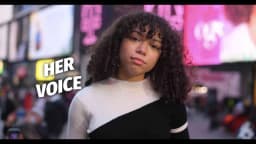
Diaz, herself a new mother at the time of production, cultivated what she described as a deliberately supportive atmosphere on set. The result is visible in the film's most arresting moments. Eli, age six, describes his brain cancer as "something you're not supposed to have in your head" and physically points to the location on his scalp where surgeons removed his tumor. That specificity — a child locating his own surgery site — is not the product of scripting. It emerges from a production methodology that prioritises trust over efficiency. Audrey, diagnosed with stage 3 liver cancer at just five months old, speaks with equivalent directness about the hearing loss and GI tract issues she lives with today as consequences of the chemotherapy that saved her life.
Director of photography Alex Segovia handled the visual framing of the film, with Camila Camacho serving as camera operator and Kayla Gremer editing the final cut. Colorist Alec Pieper completed the grade, and Vicky Caicedo handled hair and makeup for the production. The resulting visual language is restrained rather than sentimental — a choice that allows the children's testimony to carry weight without aesthetic manipulation. The film's 3:33 runtime is long by conventional PSA standards, and that length is a deliberate structural decision: it affords each child enough screen time to move past surface-level responses into the frank, surprisingly deep observations that define the film's impact.
No campaign-specific effectiveness data for Pediatric Cancer Warriors – Hopes and Dreams is publicly available, including verified figures for donations generated, fundraising lift, donor acquisition, or changes in brand awareness attributable to the film. No verified awards recognition for the campaign has been recorded at Cannes Lions, the Effies, The One Show, D&AD, the Clios, the Webby Awards, or WARC Awards as of the time of publication.
Archive data recorded 1,586 views and four likes against zero comments at the time of indexing by Clapboard. Those figures are modest by platform standards, and they reflect the distribution reality common to nonprofit healthcare films in the United States: this category of content is rarely engineered for viral reach and is more typically deployed through institutional channels, medical conferences, donor communications, and earned media rather than paid social amplification. The film's structural effectiveness rests on a different foundation. The decision to lead with survivor testimony rather than statistics is supported by established frameworks in health communication research. According to cancer progress reporting indexed at Cancerprogressreport Aacr, the emotional and narrative framing of childhood cancer outcomes has measurable influence on public awareness and policy engagement. The Hopes and Dreams film applies that principle with craft: three named children, specific diagnoses, precise consequences, and a credentialed medical voice connecting personal experience to systemic research need.
Hopes and Dreams earns a Clapboard Score of 59 out of 100. That score reflects the film's genuine creative and human strengths — directorial sensitivity, authentic subject performance, and a clear strategic rationale — offset by limited documented distribution, the absence of verified impact metrics, and the structural challenge of measuring awareness outcomes in the nonprofit pediatric oncology sector.
Hopes and Dreams is a 3:33-minute PSA produced by Diamond View for the National Pediatric Cancer Foundation, released in the United States in September 2024. The film features three childhood cancer survivors — Eli, Ever, and Audrey — and pediatric oncologist Dr. Trisha Larkin, making the case for child-specific cancer treatment research.
Vanessa Diaz of Diamond View directed Hopes and Dreams. Diaz has over ten years of directing experience, with credits including brand films for the Atlanta Braves, Expedia, and WWE. She created a supportive production environment that allowed each young cancer survivor to speak candidly about their experiences and lasting treatment effects.
Three childhood cancer survivors appear in the film: Eli, age six, who had brain cancer; Ever, age eight; and Audrey, age ten, who was diagnosed with stage 3 liver cancer at five months old. Each child describes their diagnosis and the lasting effects of treatments developed primarily for adult cancer patients, not children.
The National Pediatric Cancer Foundation is a United States nonprofit dedicated to improving pediatric cancer treatment outcomes. According to nationalpcf.org, NPCF was founded in 1991 by two mothers responding to the need for better childhood cancer therapies. The Foundation supports research into treatments designed specifically for children rather than adapted from adult oncology protocols.
Hopes and Dreams received a Clapboard Score of 59 out of 100. The score reflects strong directorial craft and authentic survivor testimony, weighed against limited documented distribution reach and the absence of publicly verified campaign performance metrics such as fundraising lift or donor acquisition data attributable to the film.
NPCF operates in a sector dominated by significantly larger organisations. ALSAC, which fundraises for St. Jude Children's Research Hospital, reported approximately $3.790 billion in total revenue for fiscal year 2024, according to stjude.org. Hopes and Dreams competes for attention through narrative precision and survivor authenticity rather than media scale, a strategy consistent with NPCF's positioning.
.webp)
Creative Collaboration Platform: The Backbone of Modern Creative WorkWhat is a creative collaboration platform?Clapboard defines a creative collaboration platform as the operational core for today’s distributed creative teams. This is not a collection of digital collaboration tools stitched together; Clapboard’s system


Understanding the Creative Production MarketplaceWhat is a Creative Production Marketplace?Clapboard defines a creative production marketplace as a structured ecosystem where brands, agencies, and production talent converge to execute video, advertising, and branded content at scale. Unlike the legacy agency or freelanREAD FULL ARTICLE

The Urgent Need for a Creative Production Operating SystemWhy Traditional Creative Production Models Break DownClapboard sees the creative production landscape shifting under pressure. Content velocity is no longer a buzzword—it’s a mandate. Modern advertising demands relentless output across dozens of channels, each wREAD FULL ARTICLE