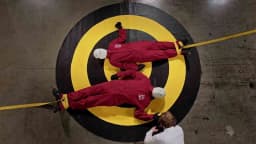
MINI Cooper's 2023 DIY MINI Cooper Crisis campaign by Pereira O'Dell used TikTok, generative AI, and a fake task force to announce full production had resumed

How MINI Cooper Turned a Supply Chain Crisis Into a DIY TikTok Takeover
The DIY MINI Cooper Crisis is a 2023 integrated campaign by MINI USA and agency Pereira O'Dell that reframed the brand's pandemic-era supply chain shortage as a satirical social media event, culminating in a dramatic announcement that MINI production had returned to full capacity and cars were once again available for purchase across the United States.
The campaign launched on April 13, 2023, as reported by MediaPost, with a boosted media run extending through May 10, 2023. Its premise drew directly from a real cultural moment: during the global supply chain disruption, consumers across the United States had turned to DIY content in unprecedented volumes, building homemade substitutes for everything from furniture to, reportedly, a submarine. MINI fans who could not get their hands on a real vehicle channelled that same energy into crafting their own versions of the iconic car. Rather than ignore this behaviour, MINI USA and Pereira O'Dell placed it at the centre of their creative strategy.
The campaign operated in two phases. In the first phase, MINI USA posted what appeared to be authentic DIY MINI Cooper tutorial videos on TikTok — the platform that had become synonymous with Do-It-Yourself content culture in the United States. These videos depicted fans constructing MINI replicas from cardboard, yarn, and other household materials. Some physical objects, including a fully crocheted MINI, were fabricated in real life. The majority of the imagery was generated at speed using generative AI tools developed through Pereira O'Dell's internal AI Lab, a production approach that PJ Pereira, Founder and Creative Chairman of Pereira O'Dell, cited as essential given that automotive production itself had not yet reached full capacity. In the second phase, MINI launched a fictional enforcement body — the Don't Do It Yourself Department — which called out DIYers on TikTok in comedic fashion before delivering the campaign's true message: the MINIs are back, go get a real one. The Don't Do It Yourself Department paid direct homage to MINI's Counter Counterfeit Commission, a campaign launched nearly twenty years earlier in 2005, grounding the 2023 work in a lineage of brand self-awareness. Social videos from the campaign remained permanently available on MINI USA's TikTok page after the boosted media period concluded, according to available campaign records.
MINI USA identified a consumer behaviour that was already happening organically and built its entire strategic rationale around it. The brand recognised that the DIY content explosion on TikTok was not simply a pandemic pastime but a genuine expression of affinity — fans who could not buy a MINI were making one instead, and that act of improvisation carried significant creative and emotional weight for the brand.
The strategic context in the United States automotive market was precise. MINI competes in the premium small-car segment, where its primary competitors include Fiat with the 500 and 500e, Volkswagen with the Polo and T-Cross, and Audi with the A1, according to market positioning analysis from Press Bmwgroup and thecollectivepitch.com. Unlike those competitors, MINI's brand equity rests substantially on cultural personality rather than on volume or price-point advantage. A supply chain disruption that left showrooms empty therefore posed a reputational risk that conventional inventory advertising could not address — it required a creative response that turned scarcity into a story the brand could own.
The generative AI production method was not merely a cost or speed decision. As PJ Pereira stated publicly, as cited by LBBOnline, it would have been impossible to achieve the campaign's creative ambitions through conventional production because physical vehicle production was not yet at full capacity. Using Pereira O'Dell's AI Lab to generate thousands of MINI images allowed the campaign to simulate the chaotic volume of real DIY content flooding TikTok, lending the fictional epidemic its credibility. The campaign also drew strategic lineage from MINI's own history, specifically the Counter Counterfeit Commission from 2005, demonstrating that Pereira O'Dell — creative agency of record for MINI USA for over seven years at the time of the campaign — understood how to build on the brand's tradition of self-aware humour rather than simply import a trend.
Pereira O'Dell constructed the campaign's creative execution across two distinct registers: physical fabrication and AI-generated imagery, each serving the campaign's satirical realism. The centrepiece physical object was a MINI Cooper crocheted entirely from yarn, a fabricated prop that grounded the fictional DIY epidemic in tangible, shareable reality. Additional DIY replicas were depicted in formats consistent with the cardboard-build and craft-tutorial aesthetic that dominates DIY content on TikTok in the United States.
The majority of the campaign's visual content was produced using generative AI tools through Pereira O'Dell's AI Lab. This production infrastructure allowed the team to generate a high volume of convincing MINI replica imagery at a speed that matched the rapid-fire cadence of TikTok content, where the DIY trend lives and moves quickly. The choice of generative AI was not decorative — it was structurally necessary. PJ Pereira, Founder and Creative Chairman of Pereira O'Dell, explained publicly via LBBOnline that the supply chain shortage that inspired the campaign also constrained conventional production options, making the AI Lab approach the only viable path to creative ambition at the required scale.
The campaign's film component ran between 90 and 99 seconds, according to documentation published by pereiraodell.com and Little Black Book, and was supplemented by daily TikTok videos distributed throughout April 2023. The Don't Do It Yourself Department was introduced as a fictional task force with its own visual identity and tone, parodying the earnest authority of public safety announcements while functioning as a comedic reveal mechanism. The creative device paid explicit homage to MINI's Counter Counterfeit Commission from 2005, connecting a contemporary generative AI and TikTok campaign to nearly two decades of brand storytelling craft. Production credits beyond PJ Pereira's creative chairmanship are not fully documented in publicly available sources for this campaign.
No independently verified performance metrics for the DIY MINI Cooper Crisis campaign — including view counts, engagement rates, website traffic lift, or dealership inquiry data — are publicly available at the time of writing. What the available record does confirm, as reported by MediaPost and documented by pereiraodell.com and campaignlive.com, is that the campaign ran its boosted media phase from April 13 to May 10, 2023, and that social video content remained permanently live on MINI USA's TikTok channel after that period ended, suggesting the brand considered the material worth sustaining as evergreen brand content.
Structurally, the campaign demonstrates a coherent effectiveness model. The two-phase architecture — seed a believable DIY epidemic, then deploy a fictional enforcement agency to dismantle it — creates natural earned media potential through its inherent absurdity. The use of TikTok as the primary channel was strategically appropriate: in the United States, TikTok is the dominant platform for DIY content consumption and creation, making MINI's presence there contextually credible rather than opportunistic. The generative AI production method enabled content volume and visual variety that conventional shoots could not have matched under the same constraints. According to press.bmwgroup.com, MINI sold 295,474 vehicles worldwide in 2023, representing a year-over-year increase of 0.9%, though attributing any portion of that recovery to this campaign specifically is not supportable without brand-side data. No award wins for the campaign have been verified across Cannes Lions, Effies, The One Show, D&AD, Clios, Webby Awards, or WARC Awards. The Clapboard Score for this campaign is 69 out of 100, reflecting strong strategic ingenuity and channel fit offset by the absence of independently verifiable performance outcomes.
The DIY MINI Cooper Crisis was a 2023 campaign by MINI USA and Pereira O'Dell that announced full production had resumed. The campaign fabricated a satirical epidemic of homemade MINI replicas on TikTok before revealing that the real cars were back in US showrooms and available for purchase.
The campaign launched on April 13, 2023, as reported by MediaPost. The boosted media phase ran through May 10, 2023. Social videos were kept permanently live on MINI USA's TikTok page after the paid campaign period concluded, extending the content's organic reach.
Pereira O'Dell used its internal AI Lab to generate thousands of MINI replica images at scale. As PJ Pereira explained via LBBOnline, conventional production was not viable because vehicle supply was still constrained. Generative AI allowed the team to match TikTok's high-volume content cadence convincingly and efficiently.
The Don't Do It Yourself Department was a fictional task force created by MINI USA and Pereira O'Dell to comically call out DIY MINI builders on TikTok. It served as the campaign's reveal mechanism and paid homage to MINI's Counter Counterfeit Commission, an earlier brand campaign launched in 2005.
No verified award wins for the DIY MINI Cooper Crisis have been confirmed across Cannes Lions, the Effies, The One Show, D&AD, the Clios, the Webby Awards, or WARC Awards at the time of writing. The campaign received editorial coverage from MediaPost and LBBOnline following its April 2023 launch in the United States.
The DIY MINI Cooper Crisis receives a Clapboard Score of 69 out of 100. The score reflects strong strategic logic, smart channel selection, and innovative use of generative AI, moderated by the absence of independently verified performance data to confirm the campaign's commercial or audience impact in the United States market.
.webp)
Creative Collaboration Platform: The Backbone of Modern Creative WorkWhat is a creative collaboration platform?Clapboard defines a creative collaboration platform as the operational core for today’s distributed creative teams. This is not a collection of digital collaboration tools stitched together; Clapboard’s system


Understanding the Creative Production MarketplaceWhat is a Creative Production Marketplace?Clapboard defines a creative production marketplace as a structured ecosystem where brands, agencies, and production talent converge to execute video, advertising, and branded content at scale. Unlike the legacy agency or freelanREAD FULL ARTICLE

The Urgent Need for a Creative Production Operating SystemWhy Traditional Creative Production Models Break DownClapboard sees the creative production landscape shifting under pressure. Content velocity is no longer a buzzword—it’s a mandate. Modern advertising demands relentless output across dozens of channels, each wREAD FULL ARTICLE