 ARCHIVE
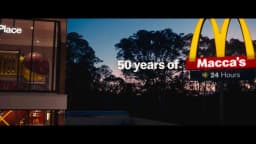
How McDonald's Celebrated 50 Years of Macca's With Australia
How McDonald's and DDB Sydney Turned a 50-Year Milestone Into a National Story McDonald's Australia...
Meat & Livestock Australia Reframes Lamb as an Act of Maternal Love
Like a Mum is a 2013 Australian film campaign created by BMF for Meat & Livestock Australia, positioning lamb as a symbol of maternal care and home-cooking culture, with a call to action directing audiences to easylambroast.com.au.
Meat & Livestock Australia launched Like a Mum in July 2013, marking a deliberate shift in how the organisation spoke to Australian consumers about lamb. Where earlier MLA campaigns had leaned into patriotic occasion — most notably the Australia Day platform that began in 2005 and ran for approximately five years featuring former AFL player Sam Kekovich in deliberately provocative monologues, as documented by mla.com.au — Like a Mum traded spectacle for intimacy. The campaign centred on the emotional symbolism of mothers, home cooking, and the kind of nourishment that extends beyond nutrition into memory and identity.
The campaign consists of a single film asset, produced in Australia and distributed digitally, accumulating more than 350,000 views. Its creative territory is explicitly domestic: the lamb roast is not a party dish or a national statement but an act of quiet, familiar love. BMF, the Sydney-based agency responsible for the work, assigned the production to Jungle Boys, with post-production handled by Method and media planning and buying managed by UM. The campaign's destination URL — easylambroast.com.au — signals a secondary objective alongside emotional engagement: lowering the perceived barrier to cooking lamb at home. In the Australian Food & Drink category, that dual ambition of feeling and function is relatively uncommon, and it lends Like a Mum a structural coherence that extends its relevance beyond the broadcast moment. Clapboard rates the campaign 69 out of 100, reflecting solid creative intent and cultural grounding alongside room for broader measurable reach.
Meat & Livestock Australia built Like a Mum on a consumer insight rooted in domestic ritual rather than national identity. The campaign recognised that lamb's most durable emotional association in Australia is not the barbecue or the public holiday but the family table — and specifically the figure of the mother who presides over it.
This represented a meaningful strategic departure from MLA's established Australia Day platform, which, according to mla.com.au, had anchored lamb to communal, occasion-based consumption since 2005. By 2013, that platform had run its course as the primary creative vehicle, and Like a Mum signalled a new direction: lamb as an expression of everyday care, accessible enough to be cooked midweek, emotionally resonant enough to carry a full brand narrative. The strategic logic is sound in the context of the Australian meat market, where lamb competes not only against beef — another MLA-represented category — but against the sustained growth of poultry. According to indexbox.io, poultry represented approximately 35 percent of global meat production by 2013, up from around 12 percent in 1961, illustrating the competitive pressure that red meat categories faced across comparable developed markets. In Australia, that pressure was acutely felt, with chicken's convenience and lower price point consistently attracting time-poor households.
Farmland Foods, operating in a parallel category with its For the Love of Pork positioning, represented the kind of emotionally coded competitor MLA was implicitly responding to — campaigns that reached beyond product attributes into household sentiment. BMF's strategic answer for MLA was to claim maternal care as lamb's exclusive emotional territory in Australia, a positioning that competitors in the pork and poultry segments had not explicitly occupied. The easylambroast.com.au call to action reinforced this by reducing the friction that often prevents consumers from translating emotional affinity into purchase behaviour.
Like a Mum is a single-film campaign, and its creative power rests entirely on the quality of that one asset. BMF structured the work around a simple but emotionally loaded premise: the lamb roast as an inheritance, something passed from mother to child not through instruction but through presence and repetition.
Production was handled by Jungle Boys, a Sydney-based production company with a track record in character-driven Australian commercial filmmaking. Post-production was completed by Method, whose work shaped the film's tonal register — warm, unhurried, and grounded in the textures of a recognisable Australian domestic interior. The visual language of Like a Mum is deliberately restrained. There are no grand cinematographic gestures or aspirational lifestyle framings of the kind common in food advertising across the Australian market. Instead, the film occupies the register of a home video or a recalled memory, which is consistent with the maternal nostalgia at the campaign's emotional core.
Carlos Alija, a creative contributor at BMF, lists the Easy Lamb Roast — Like a Mum work on his professional profile, as documented by clapboard.com, indicating his involvement in the creative development of the campaign. The decision to anchor the film at easylambroast.com.au rather than a generic MLA destination reflects a creative and strategic coherence: the URL is itself a piece of communication, reinforcing the accessible, non-intimidating promise of the campaign's title. In the Australian Food & Drink advertising landscape of 2013, that kind of end-to-end creative thinking — from the film's emotional register through to the destination experience — was a distinguishing characteristic of BMF's approach to the MLA brief. UM's role in media planning ensured the film reached audiences in contexts likely to amplify its domestic and familial themes.
Like a Mum accumulated more than 350,000 views following its July 2013 release in Australia, as documented by clapboard.com. For a single-asset film campaign operating in the Food & Drink category without a reported paid amplification figure, that figure indicates meaningful organic traction — the kind of sharing behaviour that typically accompanies content with a strong emotional mechanism.
No verified award citations for Like a Mum are publicly available at the time of writing, though Carlos Alija's professional profile, as noted on clapboard.com, includes the campaign among his credited work, suggesting it was considered representative of his creative output at BMF. No independently verified campaign effectiveness data — such as brand tracking uplift, purchase intent shifts, or retail sell-through figures — is publicly available for Like a Mum.
What the structural evidence does confirm is that the campaign achieved its dual objective of emotional engagement and behavioural direction. The easylambroast.com.au destination provided a measurable conversion pathway that most emotionally coded food campaigns do not include, giving MLA and BMF a data layer that the publicly visible view count alone does not capture. In the context of MLA's broader creative history — which, according to mla.com.au, includes campaigns that became genuine cultural touchstones in Australia — Like a Mum represents a quieter but structurally disciplined piece of work. Its Clapboard Score of 69 out of 100 reflects that balance: a campaign with real cultural and emotional intelligence, constrained in scale but coherent in purpose.
Like a Mum is a 2013 Australian film campaign created by BMF for Meat & Livestock Australia. It positions lamb as a symbol of maternal care and home-cooking culture. The campaign directed audiences to easylambroast.com.au and accumulated more than 350,000 views, as documented by clapboard.com.
BMF created Like a Mum for Meat & Livestock Australia. The campaign was produced by Jungle Boys, with post-production by Method and media handled by UM. Carlos Alija is among the BMF creative contributors credited with the work, as noted on clapboard.com.
MLA's Australia Day campaign, which began in 2005 and featured Sam Kekovich, anchored lamb to patriotic and communal occasions, according to mla.com.au. Like a Mum shifted that positioning toward everyday domestic nurture, framing the lamb roast as an expression of maternal care rather than national identity.
Like a Mum received more than 350,000 views following its July 2013 release in Australia, according to clapboard.com. For a single-asset film campaign in the Food & Drink category, that figure reflects strong organic sharing behaviour driven by the campaign's emotional and maternal creative premise.
Like a Mum holds a Clapboard Score of 69 out of 100. The score reflects the campaign's solid emotional intelligence and cultural grounding within the Australian market, balanced against its limited scale as a single-asset film campaign without publicly verified award recognition or broader effectiveness data.
Like a Mum directed viewers to easylambroast.com.au, as documented by clapboard.com. The URL itself reinforced the campaign's creative promise — that cooking a lamb roast is accessible and achievable — giving Meat & Livestock Australia a measurable behavioural pathway beyond the film's emotional engagement.
.webp)
Creative Collaboration Platform: The Backbone of Modern Creative WorkWhat is a creative collaboration platform?Clapboard defines a creative collaboration platform as the operational core for today’s distributed creative teams. This is not a collection of digital collaboration tools stitched together; Clapboard’s system


Understanding the Creative Production MarketplaceWhat is a Creative Production Marketplace?Clapboard defines a creative production marketplace as a structured ecosystem where brands, agencies, and production talent converge to execute video, advertising, and branded content at scale. Unlike the legacy agency or freelanREAD FULL ARTICLE

The Urgent Need for a Creative Production Operating SystemWhy Traditional Creative Production Models Break DownClapboard sees the creative production landscape shifting under pressure. Content velocity is no longer a buzzword—it’s a mandate. Modern advertising demands relentless output across dozens of channels, each wREAD FULL ARTICLE