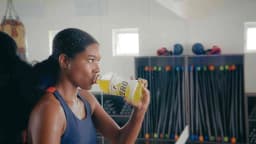
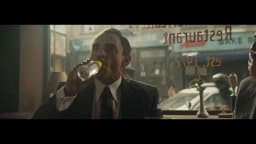
McDonald's France and TBWA Paris launched Chicken Forever Spicy in March 2015, a 30-second film using zoo-set symbolic storytelling to dramatise lasting spicy

McDonald's France Bets on Symbolic Heat With Chicken Forever Spicy
McDonald's France launched "Chicken Forever Spicy" in March 2015, a 30-second television film created by TBWA Paris that dramatises the lasting intensity of a spicy chicken sandwich featuring Tabasco sauce through a zoo-set scenario in which two young men's reactions become a piece of exaggerated sensory theatre.
The campaign occupies a specific moment in McDonald's France's creative evolution. According to clapboard.com, the work belongs to a broader product-first filmmaking approach that TBWA Paris began applying to McDonald's France advertising around 2013, shifting the brand away from celebrity-led or heavily plot-driven executions toward symbolic, sensory storytelling. "Chicken Forever Spicy" carries that philosophy into limited-time product territory, using a single contained scenario to make one irreducible point: the heat from this sandwich endures.
In France, where the quick-service restaurant category operates in a mature and competitive food-and-drink market, a limited-time spicy offering requires more than a product announcement. The film format — distributed as a single media asset, per the Clapboard archive — concentrates the entire argument into thirty seconds of visual comedy. The creative team directed audience attention not toward the sandwich itself but toward its consequences, letting the animal surroundings of a zoo amplify the exaggeration. The objective is brand salience for a time-limited menu variant, delivered through a tone that is distinctive within McDonald's France's output for that period.
The campaign earns a Clapboard Score of 56 out of 100, reflecting competent execution of a familiar sensory exaggeration mechanic within the food-and-drink category without breaking substantially new creative ground.
McDonald's France faced a structural challenge common to large quick-service operators in 2015. According to Euromonitor's assessment cited via slideshare.net, McDonald's globally was achieving only around three percent value growth while contending with declining guest counts, menu complexity, and operational inefficiencies. In France specifically, maintaining consumer engagement around limited-time menu items demanded creative work capable of cutting through a category where competitors including Burger King — which had re-entered the French market in 2012 — and KFC were actively competing for the same spicy and flavour-forward menu occasions.
TBWA Paris's strategic answer was to sidestep literal product demonstration entirely. Per clapboard.com, the agency's approach characterised the campaign as using symbolic film storytelling and exaggerated visual cues to communicate lasting intensity. Rather than showing the sandwich in close-up or relying on appetite-appeal photography, the film externalises the internal experience of eating something genuinely spicy. This is a strategy rooted in emotional memorability: viewers recall the reaction, and by extension recall the product that caused it.
The broader quick-service restaurant market context reinforces why such differentiation mattered. According to figures reported via scribd.com, global QSR revenue was estimated at roughly 570 billion US dollars annually around this period, with more than 826,000 locations worldwide, making individual campaign cut-through a genuine strategic challenge. McDonald's reported approximately 25.4 billion US dollars in 2015 revenue according to scribd.com, confirming its position as the largest QSR company by revenue — a scale that paradoxically creates pressure to make individual product campaigns feel specific and immediate rather than corporate and generic. "Chicken Forever Spicy" attempts precisely that compression.
Director Vincent Lobelle brought the "Chicken Forever Spicy" script to life through Les Télécréateurs, the production company credited on the campaign, according to clapboard.com. The film's central conceit — two young men at a zoo whose physical reactions to a spicy chicken sandwich create an escalating comic scenario — places the entire creative burden on performance timing and environmental staging. A zoo setting provides an inherently legible symbolic register: wildness, uncontrollable nature, and animal intensity become metaphors for a heat that cannot be tamed or quickly forgotten.
The creative team assembled by TBWA Paris for the spot reflects a lean, specialist structure. Jean-François Goize served as creative director, Antoine Colin as copywriter, and Ingrid Varetz as art director, per clapboard.com. TV producer Émilie Prud'Homme managed production alongside Les Télécréateurs. This configuration — a single creative director overseeing a writer-art director pairing with an experienced production company — is characteristic of TBWA Paris's working method for McDonald's France during this period, as noted by tbwa-paris.com.
The craft choices in the thirty-second format are intentional compressions. According to clapboard.com's editorial commentary, the work relies on larger-than-life sensory cues and physical comedy to carry its message. The film avoids voiceover explanation, trusting the visual escalation to communicate the product's defining quality. In the food-and-drink category, where competitors routinely rely on appetite-driven close-ups and aspirational lifestyle framing, this commitment to pure situational comedy represents a meaningful tonal choice. The Tabasco co-branding embedded in the product itself gives the campaign an ingredient-level specificity that anchors the exaggeration to something concrete and recognisable.
No verified performance data for "Chicken Forever Spicy" is publicly available. McDonald's France does not publish campaign-level metrics for 2015 television activity, and TBWA Paris has not released documented results for this specific execution. The absence of public figures is consistent with standard practice for limited-time product campaigns in the French quick-service market, where media investment data and sales uplift figures remain proprietary.
Structural analysis, however, offers a basis for assessment. The campaign's single-asset film format and television distribution in France represent a focused deployment rather than an integrated multi-channel effort, which limits the surface area for measurable consumer interaction compared to campaigns that layer digital, social, and experiential touchpoints. The thirty-second format is well-suited to broadcast environments and to the kind of high-frequency scheduling that limited-time offers typically require to drive trial within a compressed promotional window.
The symbolic creative approach — exaggerated physical reaction as proof of product intensity — is a well-tested mechanism in the food-and-drink category and carries inherent recall advantages over purely rational product messaging. According to musebyclios.com's documentation of TBWA Paris's McDonald's France work, the agency's product-first sensory approach during this period was editorially recognised as a coherent creative direction, lending the campaign context within a broader validated strategy. Whether "Chicken Forever Spicy" individually drove measurable uplift for McDonald's France in March 2015 cannot be determined from available evidence. Its Clapboard Score of 56 out of 100 reflects the campaign's solid creative competence within an established genre rather than exceptional structural innovation.
"Chicken Forever Spicy" is a 30-second television film created by TBWA Paris for McDonald's France in March 2015. It dramatises the lasting heat of a spicy chicken sandwich featuring Tabasco sauce through a zoo-set scenario involving two young men's escalating physical reactions, using exaggerated sensory comedy rather than direct product demonstration.
Vincent Lobelle directed the spot for production company Les Télécréateurs. The TBWA Paris creative team comprised Jean-François Goize as creative director, Antoine Colin as copywriter, and Ingrid Varetz as art director. Émilie Prud'Homme served as TV producer, according to the Clapboard archive.
The zoo setting functions as a symbolic environment where animal wildness amplifies the exaggeration of uncontrollable heat. TBWA Paris used this backdrop to externalise the internal experience of eating something intensely spicy, making the product's defining quality visible and memorable without relying on conventional appetite-appeal food photography.
The campaign advertises a McDonald's spicy chicken sandwich featuring Tabasco sauce, sold in France as a limited-time menu variant in March 2015. The Tabasco co-branding provides ingredient-level specificity that grounds the film's comic exaggeration in a recognisable and credible flavour reference for French consumers.
McDonald's Chicken Forever Spicy earns a Clapboard Score of 56 out of 100. The score reflects competent execution of a sensory exaggeration mechanic that is well-established in the food-and-drink category, without substantially advancing the creative format or introducing structural innovations that would distinguish it from comparable quick-service restaurant campaigns.
The campaign sits within a product-first sensory direction that TBWA Paris began applying to McDonald's France advertising around 2013, shifting away from celebrity-led executions. According to tbwa-paris.com, this approach prioritised close-up food imagery and minimal branding, with "Chicken Forever Spicy" extending that logic into symbolic situational comedy for a limited-time offer.
.webp)
Creative Collaboration Platform: The Backbone of Modern Creative WorkWhat is a creative collaboration platform?Clapboard defines a creative collaboration platform as the operational core for today’s distributed creative teams. This is not a collection of digital collaboration tools stitched together; Clapboard’s system


Understanding the Creative Production MarketplaceWhat is a Creative Production Marketplace?Clapboard defines a creative production marketplace as a structured ecosystem where brands, agencies, and production talent converge to execute video, advertising, and branded content at scale. Unlike the legacy agency or freelanREAD FULL ARTICLE

The Urgent Need for a Creative Production Operating SystemWhy Traditional Creative Production Models Break DownClapboard sees the creative production landscape shifting under pressure. Content velocity is no longer a buzzword—it’s a mandate. Modern advertising demands relentless output across dozens of channels, each wREAD FULL ARTICLE