ARCHIVE
Chicken Licken Turns Female Solidarity Into a Soul Food Moment
How Chicken Licken's Soul Sister Campaign Reframed Female Solidarity in South Africa Chicken...
Mazda Bets on Hiroshima Resilience to Redefine Brand in South Africa
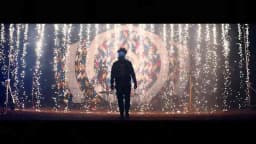
Mazda's 'Impossible Made Possible' is a November 2014 Adruby.clapboard.com/archive/sbt-warning-impossible-ignore-media">South African film campaign, created by Blackriver FC, that reframes the Mazda brand through the lens of its Hiroshima origin story, using the automaker's survival and reinvention after the atomic bombing as an emotional platform to position Mazda vehicles as the product of extraordinary human perseverance, according to Engineeringnews Co Za.
The campaign arrived at a moment when Mazda South Africa needed a distinctly local brand direction. Rather than extending the global 'Zoom-Zoom' platform that had defined Mazda's international communications for over a decade, 'Impossible Made Possible' staked out new creative territory, according to Newsroom Mazda. The decision to anchor the campaign in Hiroshima's pre- and post-atomic history gave Blackriver FC a narrative architecture that no competitor in the South African automotive market could credibly replicate — the story belonged exclusively to Mazda.
In South Africa, the automotive industry occupies a structurally significant role in the national economy. The campaign targeted South African consumers at a time when the country's vehicle market was navigating real pressures, including currency volatility and shifting consumer confidence, making brand-level emotional storytelling a strategically sound complement to product-led messaging. By connecting the Mazda3 and the broader Mazda range to a founding myth of resilience and ingenuity, the campaign sought to elevate the brand above price-point competition and position it as a marque with genuine character.
The film format — a single media asset produced to broadcast and digital standards — was the deliberate choice of a creative team confident that one well-crafted piece of work could carry the weight of a full brand repositioning. That confidence was underwritten by a production roster of considerable South African and international talent, assembled by Blackriver FC in Johannesburg and delivered through production company Egg Films.
Blackriver FC identified a consumer insight that is both universal and acutely relevant to the South African market: audiences respond to brands that have earned their position through genuine adversity rather than manufactured aspiration. South Africa's own cultural and political history gives its consumers a heightened sensitivity to narratives of resilience, making Mazda's Hiroshima story unusually resonant in this geography compared with many Western markets.
The strategic rationale behind 'Impossible Made Possible' was to separate Mazda from the dominant volume players in South Africa's automotive industry. In the South African passenger vehicle segment, Mazda competes against significantly larger manufacturers. Volkswagen Group led global manufacturers with 9.91 million vehicles sold and an estimated 11.6% global share in 2014, according to Focus2move's coverage of more than 110 markets. Toyota Group sold 9.81 million vehicles with an estimated 11.5% global share in the same period, according to Focus2move. Both brands maintain deep distribution and brand recognition in South Africa, leaving Mazda in a position where out-spending competitors on media volume was not a viable strategy. Outnarrating them was.
The global light-passenger-vehicle market reached approximately 86.5 million units in 2014, up 2.8% year-over-year from 2013, according to Focus2move's analysis of more than 110 markets. South Africa's share of that global volume remained modest, but the domestic competitive intensity was high, with established Japanese, German, and Korean brands all investing in brand communications. Against that backdrop, a campaign that offered consumers a reason to believe in Mazda beyond the specification sheet was a coherent and defensible strategic choice, according to Marklives.
The campaign also signalled a broader ambition: that Mazda South Africa, working with Blackriver FC, was willing to treat local consumers as sophisticated enough to engage with complex, historically grounded storytelling rather than conventional automotive advertising tropes.
Director Terence Neale led the film's creative execution, working alongside director of photography Paul Gilpin and production company Egg Films — a combination that brought established South African production craft to a campaign with the emotional ambition of a prestige brand film. The single film asset at the centre of 'Impossible Made Possible' required the team to compress a complex historical and brand narrative into a format suitable for broadcast and digital distribution without losing the gravity that the subject demanded.
Executive creative director Ahmed Tilly oversaw the creative direction at Blackriver FC, with copywriter Jessica Everson and art director Jayson Dicks developing the campaign's core concept and visual language. The creative team's decision to draw on Mazda's Hiroshima history — including the period preceding the 1945 atomic bombing — was an audacious choice that required both narrative precision and tonal care. Hiroshima is not an easy subject for brand storytelling, and the campaign's credibility depended entirely on the craft with which that material was handled.
Post-production was handled by Black Ginger, with editing by Ricky Boyd and production produced by Rozanne Rocha-Gray. The post-production pipeline suggests a commitment to finished quality consistent with the ambition of the campaign's strategic positioning. Black Ginger's involvement indicates a level of visual refinement that goes beyond standard automotive advertising in the South African market.
The film's visual and narrative architecture drew on archival sensibility — using Mazda's founding story as both backdrop and foreground — to create a piece of work that functions as corporate heritage communication and consumer-facing brand advertising simultaneously. That dual register is difficult to sustain in a single film and represents one of the more demanding creative challenges the Blackriver FC team set for themselves on this project.
No verified performance data for 'Impossible Made Possible' is publicly available. No campaign-specific sales lift, market-share change, brand-tracking data, return on advertising spend, or dealership traffic figures have been documented in publicly accessible sources. The campaign received no verified awards at Cannes Lions, the Effie Awards, The One Show, D&AD, the Clios, the Webby Awards, or the WARC Awards.
Structural analysis of the campaign's effectiveness, however, points to several durable strengths. The decision to anchor brand communication in an origin story unique to Mazda gave 'Impossible Made Possible' a defensibility that product-led campaigns in the South African automotive industry rarely achieve. Competitors operating at greater volume — including Volkswagen and Toyota, both deeply embedded in the South African market — cannot access the same narrative. The Hiroshima story is Mazda's alone.
The campaign's reliance on a single, high-quality film asset rather than a multi-format media scatter reflects confidence in the creative work and suggests a production investment concentrated on quality over reach. In a market where consumer trust in automotive brands is built over sustained brand behaviour rather than individual campaign bursts, the emotional register of 'Impossible Made Possible' is better understood as a long-term brand equity investment than a short-cycle conversion tool.
Clapboard rates 'Impossible Made Possible' at 63 out of 100, recognising the campaign's creative ambition and strategic coherence while noting the absence of verifiable impact data and major industry recognition to corroborate its effectiveness in the South African market.
Mazda's 'Impossible Made Possible' is a 2014 South African film campaign built around the brand's Hiroshima origin story. Created by Blackriver FC, the campaign uses Mazda's survival and reinvention after the atomic bombing as a platform for brand storytelling, positioning Mazda vehicles as products of extraordinary human perseverance rather than conventional automotive ambition.
Blackriver FC, based in Johannesburg, created the campaign for Mazda South Africa. The agency's creative team included executive creative director Ahmed Tilly, copywriter Jessica Everson, and art director Jayson Dicks, with Terence Neale directing through production company Egg Films.
Mazda's 'Impossible Made Possible' was published in South Africa in November 2014. The film campaign was produced by Egg Films, with post-production completed by Black Ginger, and represented a deliberate departure from the global 'Zoom-Zoom' platform that had previously defined Mazda's international advertising communications.
No verified awards for 'Impossible Made Possible' are recorded at Cannes Lions, the Effie Awards, The One Show, D&AD, the Clios, the Webby Awards, or the WARC Awards. The campaign's absence from major award shortlists limits independent verification of its creative standing within the South African or global automotive advertising industry.
The 2014 Blackriver FC campaign represented a new local brand direction for Mazda South Africa rather than a continuation of the global 'Zoom-Zoom' platform. By centring communications on Mazda's Hiroshima history, the campaign gave South African consumers a culturally resonant resilience narrative that the global platform had not previously explored at a local market level.
Clapboard rates 'Impossible Made Possible' at 63 out of 100. The score reflects the campaign's clear creative ambition and strategic coherence in the South African automotive market, balanced against the absence of publicly verifiable performance metrics and the lack of recognition from major international advertising award bodies.
.webp)
Creative Collaboration Platform: The Backbone of Modern Creative WorkWhat is a creative collaboration platform?Clapboard defines a creative collaboration platform as the operational core for today’s distributed creative teams. This is not a collection of digital collaboration tools stitched together; Clapboard’s system


Understanding the Creative Production MarketplaceWhat is a Creative Production Marketplace?Clapboard defines a creative production marketplace as a structured ecosystem where brands, agencies, and production talent converge to execute video, advertising, and branded content at scale. Unlike the legacy agency or freelanREAD FULL ARTICLE

The Urgent Need for a Creative Production Operating SystemWhy Traditional Creative Production Models Break DownClapboard sees the creative production landscape shifting under pressure. Content velocity is no longer a buzzword—it’s a mandate. Modern advertising demands relentless output across dozens of channels, each wREAD FULL ARTICLE