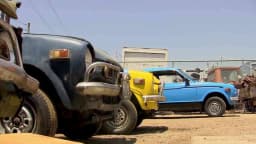
Volkswagen’s "Social Test Drive" campaign leverages the Amarok’s core attributes—off-road capability and robust carrying capacity—to reposition the traditional vehicle test drive as a purposeful community engagement. By shifting the test drive environment from urban settings to real-world, rugged terrain, the campaign aims to demonstrate the Amarok’s functional strengths authentically. The brand proposition centers on aligning product performance with social responsibility, suggesting that owning an Amarok is not only about capability but also about contributing positively to communities in need.
The market strategy hinges on an insightful understanding of the test drive experience—commonly a routine, low-impact activity—transforming it into a meaningful interaction that resonates on an emotional level. Rather than simply focusing on technical specifications, the campaign connects with potential buyers through a narrative that emphasizes social impact and utility beyond personal use. Targeting consumers who value both performance and community engagement, Volkswagen engages these prospects by integrating the vehicle’s practical features with local social initiatives. The creative approach, rooted in ambient advertising, bridges the gap between commercial intent and community benefit, enhancing brand perception through authenticity and relevance. This dual focus aims to deepen consumer trust and differentiation within a competitive automotive market.
FORMAT#1 DEMONSTRATION — Directly shows how a product works and highlights its benefits.
This campaign fits the Demonstration format because it is centered around utilizing the Volkswagen Amarok’s real-world off-road abilities and carrying capacity in an authentic public context. The narrative takes everyday city test drives and transforms them into a tangible demonstration of the vehicle’s capabilities by having it deliver aid to communities in need. This approach clearly exhibits what makes the Amarok distinctive—turning practical product features into meaningful action—without defaulting to a character-driven story or overt problem-solution arc. The focus is on how the product works in an ambient, real-world test, proving its value directly and memorably.
1. Toyota – Market Positioning
Toyota positions itself as a reliable, durable, and fuel-efficient automotive brand, with a strong emphasis on versatility and affordability. In South Africa, its Hilux pick-up dominates the market by focusing on toughness and proven performance in both urban and rugged environments, appealing to both commercial users and private buyers seeking dependability.
2. Ford – Market Positioning
Ford positions itself as a provider of tough, innovative, and performance-driven vehicles, especially with its Ranger pick-up. The brand emphasizes advanced technology, safety features, and strong after-sales support, targeting consumers looking for a blend of rugged capability and modern convenience in the pick-up segment.
3. Isuzu – Market Positioning
Isuzu is known for its no-nonsense, durable, and highly practical pick-ups that excel in commercial and industrial use. Its market positioning centers on reliability, cost-effectiveness, and excellent load-carrying capacity, making it a preferred choice among business users and fleet operators in South Africa.
4. Nissan – Market Positioning
Nissan focuses on offering value-driven, versatile vehicles that combine utility with comfort. Its NP300 Hardbody pick-up is positioned as a durable, affordable, and fuel-efficient option, appealing to small business owners and rural customers who need a dependable workhorse without unnecessary frills.
5. Chevrolet – Market Positioning
Chevrolet positions its pick-ups as powerful, rugged, and stylish, targeting a younger, aspirational demographic. It blends strong performance capabilities with bold design and contemporary features, aiming to attract buyers who want both utility and a distinctive presence on and off the road.
Q: What is Social Test Drive about?
A: Social Test Drive is a 2016 campaign created by Ogilvy for Volkswagen in South Africa, targeting the automotive sector. The central idea was to transform the conventional pick-up test drive into a meaningful community engagement by using the Volkswagen Amarok’s off-road capabilities and carrying capacity to deliver aid to communities in need. Rather than limiting test drives to urban environments, the campaign invited potential customers to experience the Amarok in real-world, rugged settings, simultaneously showcasing the vehicle’s strengths and reinforcing Volkswagen’s commitment to social responsibility.
Q: What creative device does Social Test Drive use?
A: Social Test Drive employs the Demonstration format, as classified by Clapboard’s 12-format taxonomy. This approach centers on directly showcasing the Volkswagen Amarok’s off-road abilities and carrying capacity in authentic, real-world scenarios. By turning routine city test drives into purposeful journeys that deliver aid to underserved communities, the campaign provides a tangible, memorable demonstration of the product’s functional benefits, rather than relying on character-driven storytelling or hypothetical problem-solving.
Q: What is the campaign proposition for Social Test Drive?
A: The campaign proposition for Social Test Drive is to reposition the traditional vehicle test drive as a purposeful community engagement, leveraging the Amarok’s core strengths of off-road capability and robust carrying capacity. Volkswagen aims to connect with consumers who value both performance and social impact by shifting the test drive experience from urban settings to challenging terrains where real needs exist. This strategy aligns product performance with social responsibility, appealing to buyers who seek utility and a sense of contribution, and differentiating the Amarok in a competitive automotive market.
Q: How does Social Test Drive rank in Clapboard's archive?
A: Social Test Drive holds a Clapboard Campaign Score of 67/100. This score reflects the campaign’s creative ambition, execution quality, and cultural relevance as evaluated by Clapboard’s global ad archive.
Q: Who are the competitors in Volkswagen's category?
A: In the South African automotive market, Volkswagen’s key competitors include Toyota, which is positioned as a reliable and durable brand with its Hilux dominating both urban and rugged environments; Ford, which emphasizes innovation, technology, and performance through its Ranger pick-up; Isuzu, known for practical, cost-effective, and highly reliable vehicles favored by commercial users; Nissan, which offers value-driven, versatile pick-ups appealing to small business owners and rural customers; and Chevrolet, which targets younger buyers seeking power, style, and a bold presence both on and off the road.


 ARCHIVE
.webp)