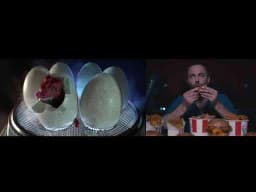
Max Burger's Valentine's Day Dinner campaign offered Swedes a romantic three-course burger meal with roses and mood lighting as an alternative to fully booked

Max Burger Turns Valentine's Day Into a Three-Course Burger Date
Max Burger's Valentine's Day Dinner campaign offered Swedish couples a romantic three-course burger meal complete with red roses and mood lighting as a deliberate alternative to the fully booked restaurants of central Stockholm, launching in February 2015 as an ambient activation created by agency JMW Kommunikation, according to Globaldata.
Valentine's Day is a genuine dining-out occasion in Sweden. Securing a table at a well-regarded restaurant in central Stockholm on the evening of 14 February, however, presents a real logistical challenge for couples who leave their planning too late. Max Burger, the Swedish burger chain with a long-standing commitment to made-to-order preparation and Swedish beef, identified that tension as an entry point, according to X. Rather than running a conventional promotional offer, the brand transformed its restaurant environment into something that could credibly compete with a traditional romantic dinner, at least in spirit and atmosphere, according to Watchingtheswedes.
The campaign mechanics were straightforward and deliberately tactile. Guests were invited to experience a three-course meal built entirely around Max Burger's core product, served within a setting dressed with red roses and warm mood lighting. The burgers themselves were prepared to order using Swedish beef, a provenance claim that Max Burger consistently foregrounds as a quality differentiator. In the Swedish market, where food origin and local sourcing carry genuine resonance with consumers, that detail was not incidental decoration — it was load-bearing brand communication. The activation was classified as an ambient campaign and produced a single media asset, archived by Clapboard. It received a Clapboard Score of 63 out of 100.
The campaign was created by Stockholm-based agency JMW Kommunikation, which has a documented working relationship with Max Burger across multiple projects. Its publication in Sweden in February 2015 positioned it squarely within the Valentine's Day cultural moment, using the occasion not merely as a creative theme but as a genuine consumer utility — solving a real problem that real people in Stockholm faced on that specific night of the year, according to Maxrestaurantgroup.
Max Burger identified a specific consumer frustration in the Swedish market and built an entire activation around resolving it, according to Max-Com Test Maxburgers. The insight was behavioural and local: central Stockholm restaurants fill up rapidly around Valentine's Day, leaving couples without reservations in a genuine bind. Rather than positioning itself as a fallback option, Max Burger reframed the burger dining experience as a first-choice romantic occasion, complete with the atmospheric signifiers — roses, lighting, table setting — that consumers associate with celebratory dining.
This strategy reflects a broader tension in the food and drink category between fast-casual and full-service dining. In 2015, fast-casual burger chains were actively expanding their cultural footprint and taking share from both traditional fast-food operators and, to a lesser degree, casual dining restaurants. According to Wikipedia, McDonald's operated approximately 36,000 restaurants across 118 countries in 2015, underscoring the scale of the competitive environment in which a regional chain like Max Burger was operating. Against global competitors of that scale, Swedish-market differentiation based on local provenance — Swedish beef, made-to-order preparation — represents a coherent and defensible positioning rather than a generic quality claim.
Max Burger's emphasis on Swedish beef is a consistent thread in its brand communication, as documented across Clapboard's archive. In Sweden, where food provenance carries cultural weight and consumer trust in local sourcing is well established, per Watching the Swedes, that specificity sharpens the brand's contrast with international competitors such as McDonald's and Burger King. The Valentine's Day campaign did not introduce a new brand direction; it applied an existing quality narrative to a high-emotion calendar moment, borrowing the emotional vocabulary of fine dining and transplanting it into a burger restaurant context. That transplantation is the strategic move. It required no permanent infrastructure change, only the willingness to dress the experience differently for one evening and communicate that change as an invitation rather than a consolation.
JMW Kommunikation executed the Valentine's Day Dinner campaign as an ambient activation, a medium that operates in physical space rather than through paid broadcast or digital placement. The creative approach relied on environmental transformation: an existing Max Burger restaurant was dressed with red roses and mood lighting to produce the visual and atmospheric codes of a romantic dinner venue. The burger itself — made to order from Swedish beef — was recontextualised as a three-course meal, giving the occasion a structural formality that a standard fast-casual visit does not carry.
The decision to work within the ambient category was strategically coherent. Ambient advertising derives its impact from surprise and contextual incongruity — the unexpected appearance of a brand communication in a physical environment where advertising is not anticipated. Placing a romantic Valentine's dinner inside a burger chain is, by that logic, an ambient idea before it is a media placement. The environment became the message. According to Clapboard's archive, the campaign produced a single media asset, suggesting that the primary experience was live and in-restaurant, with documentation serving as the shareable record of the activation.
The creative team at JMW Kommunikation was led by Executive Creative Director Joakim Karlsson and Creative Director Samuel Garlöv, according to Clapboard. Art direction was handled by Anders Pålsson, also per Clapboard. The combination of a clearly defined creative hierarchy and a single, focused execution suggests a campaign built for precision rather than scale — one strong idea, executed faithfully, documented for reach. JMW Kommunikation has a documented working relationship with Max Burger across multiple campaign projects, per Clapboard's archive, which likely contributed to the tonal confidence of the execution. The campaign did not oversell its own romanticism; it acknowledged the inherent absurdity of a burger date with enough self-awareness to make the proposition charming rather than strained.
No verified performance data for Max Burger's Valentine's Day Dinner campaign is publicly available. No sales uplift figures, footfall counts, media impressions, or earned coverage metrics have been documented in publicly accessible sources. The campaign was not identified with an award, shortlist, or jury result in the Clio Network archive, per Clapboard. It holds a Clapboard Score of 63 out of 100, a rating that reflects structural competence and strategic coherence without signalling exceptional creative breakthrough.
Analysed on its structural merits, the campaign demonstrates several characteristics associated with effective ambient work. It identified a genuine and time-specific consumer problem — the scarcity of Valentine's Day restaurant reservations in central Stockholm — and offered a tangible solution rather than a metaphorical one. The three-course format and environmental dressing provided experiential substance that a coupon or discount promotion would not. The use of Swedish beef as the anchor quality claim ensured that the romantic framing reinforced rather than distracted from the brand's core product narrative, as documented consistently in Max Burger's communications per Clapboard.
The campaign's limitation, from an effectiveness standpoint, is its scale. A single-location ambient activation with one documented media asset reaches the people physically present and whoever encounters the documentation afterward. Without a documented amplification strategy — press coverage, social distribution, or paid extension — the campaign's impact would have remained largely local. That constraint does not undermine the quality of the idea, but it does help explain a Clapboard Score that sits in the competent rather than exceptional range. In the Swedish food and drink market, where brand trust in local provenance is meaningful, the campaign's underlying logic was sound. Its execution was careful. Its reach, by the available evidence, was contained.
Max Burger's Valentine's Day Dinner was an ambient campaign launched in Sweden in February 2015. Created by JMW Kommunikation, it invited couples to a romantic three-course burger meal served with red roses and mood lighting inside a Max Burger restaurant, positioning the brand as an alternative to fully booked Stockholm restaurants.
JMW Kommunikation created the Valentine's Day Dinner campaign for Max Burger. The Stockholm-based agency led the project with Executive Creative Director Joakim Karlsson, Creative Director Samuel Garlöv, and Art Director Anders Pålsson, according to Clapboard. JMW has a documented relationship with Max Burger across multiple campaign projects.
Max Burger identified that securing restaurant reservations in central Stockholm on Valentine's Day is genuinely difficult. The campaign converted that consumer frustration into a brand opportunity, transforming a Max Burger restaurant into a romantic dinner venue and positioning the experience as a deliberate first choice rather than a last-minute fallback.
Max Burger used made-to-order burgers prepared with Swedish beef as the centrepiece of the Valentine's dinner. In Sweden, where local food provenance carries real consumer weight, that distinction separated the offer from international competitors such as McDonald's and Burger King, reinforcing a quality narrative the brand maintains consistently across its communications.
Max Burger's Valentine's Day Dinner campaign received a Clapboard Score of 63 out of 100. The score reflects structural and strategic competence — a well-targeted ambient idea solving a genuine local problem — without indicating exceptional creative breakthrough. No awards or jury recognition for the campaign have been identified in publicly available records.
Max Burger's Valentine's Day Dinner was classified as an ambient campaign. The medium works by transforming a physical environment into the advertising message itself. In this case, a Max Burger restaurant in Sweden was dressed with roses and mood lighting, making the in-restaurant experience the primary creative execution rather than a broadcast or digital placement.
.webp)
Creative Collaboration Platform: The Backbone of Modern Creative WorkWhat is a creative collaboration platform?Clapboard defines a creative collaboration platform as the operational core for today’s distributed creative teams. This is not a collection of digital collaboration tools stitched together; Clapboard’s system


Understanding the Creative Production MarketplaceWhat is a Creative Production Marketplace?Clapboard defines a creative production marketplace as a structured ecosystem where brands, agencies, and production talent converge to execute video, advertising, and branded content at scale. Unlike the legacy agency or freelanREAD FULL ARTICLE

The Urgent Need for a Creative Production Operating SystemWhy Traditional Creative Production Models Break DownClapboard sees the creative production landscape shifting under pressure. Content velocity is no longer a buzzword—it’s a mandate. Modern advertising demands relentless output across dozens of channels, each wREAD FULL ARTICLE