Livlab Turns Political Napping Into a Sleep Health Movement
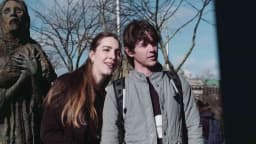
Livlab's Stop the Sleep Crisis is a January 2022 integrated documentary and social-experiment campaign, created in-house by the brand's own agency operation and launched in Portugal, that sent natural sleep aids to politicians photographed or filmed sleeping during major public events, while inviting citizens to identify further cases using the hashtag #stopsleepcrisis.
The campaign's central argument is disarmingly direct. Politicians must first address their own sleep deprivation before they can meaningfully address the world's problems. By framing government inaction and poor decision-making as a downstream consequence of inadequate rest, Livlab positioned itself not merely as a product vendor but as a civic actor with a stake in public life. The initiative operated across Education, Health, and Public Interest categories, reflecting the brand's ambition to move the conversation about sleep beyond personal wellness and into the domain of collective consequence.
Livlab described the campaign as its first New Year's resolution of 2022, characterising the act of sending sleep aids to politicians as an act of kindness. The three products placed inside those packages — HoomBand, HoomBook, and Dodow — represent the core of the brand's natural, non-pharmaceutical sleep portfolio. Each product addresses sleep onset or sleep quality without medication, which anchored the campaign's implicit message: the solution to the sleep crisis is accessible, natural, and already available. The hashtag #stopsleepcrisis served as a live crowdsourcing mechanism, extending the campaign's reach beyond any single media placement and turning ordinary social media users into active participants in a public-interest investigation. Clapboard scores this campaign 63 out of 100, recognising its conceptual originality while noting the limited scale of documented public engagement at the time of analysis, according to Bccresearch.
Livlab identified a gap in how sleep deprivation is typically communicated to the public, according to Thebrainyinsights. Most sleep-aid marketing in Portugal and across European markets concentrates on the individual sufferer — the stressed professional, the insomniac parent — leaving the systemic, societal dimension of poor sleep largely unexplored by commercial brands. By directing its lens at politicians, Livlab claimed that higher-order territory and gave its message immediate cultural and political relevance at the start of a year still shaped by pandemic-era institutional fatigue.
The global market for sleep aids provides context for the competitive landscape Livlab operates within. According to BCC Research, the broad sleep-aids market — encompassing devices, supplements, and behavioural tools — was valued at approximately US$80 billion in 2022, according to Verifiedmarketresearch. According to The Brainy Insights, a comparable estimate placed the market at US$80.16 billion in the same year, with compound annual growth rates projected in the range of six to seven per cent through the late 2020s, according to Mordor Intelligence. In Portugal specifically, no equivalent nationally segmented figure is publicly available from these sources, but the country participates in the same European demand trend for natural, non-habit-forming sleep solutions that underpins Livlab's product positioning, according to Researchandmarkets.
Within that landscape, Livlab competes with established pharmaceutical sleep-aid brands as well as digital wellness platforms. Competitors such as Calm and Sleep Cycle have built substantial audiences through app-based sleep improvement, while traditional over-the-counter medication brands occupy the pharmacy channel. Livlab's differentiation rests on hardware and guided audio products — HoomBand and Dodow in particular — that require no prescription and leave no chemical dependency. The Stop the Sleep Crisis campaign reinforced that distinction by associating the brand exclusively with natural interventions, even when addressing a problem of genuinely political scale.
Stop the Sleep Crisis adopted a documentary and social-experiment format, a creative choice that separated it from conventional healthcare advertising in Portugal. Rather than constructing a fictional scenario or hiring actors, Livlab drew on real, publicly available footage and photographs of politicians visibly sleeping during official proceedings. The evidentiary quality of that material gave the campaign a factual authority that a scripted execution could not have replicated.
The social-experiment dimension was structural rather than incidental. By inviting the Portuguese public to submit sightings of sleeping politicians via the hashtag #stopsleepcrisis, Livlab built participation directly into the campaign's architecture. The mechanism transformed audiences from passive viewers into co-investigators, and gave the campaign an open-ended duration: it could, in principle, continue generating content as long as politicians continued being photographed asleep on duty. This participatory logic is characteristic of campaigns that aim to generate earned media alongside owned content, reducing dependence on paid distribution.
Production credits for Stop the Sleep Crisis are partially documented. According to Clapboard, copywriter Andreia Silva of Livlab is listed as the campaign's submitting creator, and the project represents one of her first two documented Livlab-related works. The campaign was produced entirely within Livlab's in-house agency structure, with the brand's Paris-based operation overseeing creative development for the Portuguese market activation. The three products featured — HoomBand, HoomBook, and Dodow — were presented not as props but as functional gifts, a detail that grounded the campaign's activist tone in genuine product utility. The overall visual and editorial register was consistent with the healthcare public-interest genre: sober, evidence-forward, and deliberately free of the aspirational aesthetics that dominate commercial wellness advertising.
No independently verified third-party performance data for the Stop the Sleep Crisis campaign is publicly available beyond the engagement figures recorded on the campaign's own submission page. According to Clapboard, the campaign accumulated one thousand five hundred and sixty-nine views, two likes, and zero comments at the time of archiving. These figures reflect the campaign's documented digital footprint within that specific platform context and do not account for organic social reach generated through the #stopsleepcrisis hashtag or any media coverage the activation may have attracted in Portugal.
Clapboard assigns Stop the Sleep Crisis a score of 63 out of 100. That figure reflects a campaign with genuine conceptual strength — the political framing is original, the social-experiment mechanic is well-constructed, and the natural-product positioning is coherent — offset by limited evidence of broad public uptake or measurable behavioural change. The hashtag crowdsourcing mechanism was structurally sound, but without documented examples of widespread participation or press amplification in the Portuguese market, the campaign's reach appears to have remained narrower than its ambition.
Structurally, the campaign's most durable asset is its earned-media logic. By framing every future instance of a politician sleeping in public as a potential campaign activation, Livlab created an indefinitely renewable creative premise. That quality of evergreen relevance — tied to a genuine and recurring public behaviour — gives Stop the Sleep Crisis a longer theoretical shelf life than most single-execution healthcare campaigns of comparable scale launched in Portugal in 2022.
Stop the Sleep Crisis is a 2022 integrated campaign by Livlab, launched in Portugal, that sent natural sleep aids to politicians filmed sleeping during public events. The campaign invited citizens to identify further cases using the hashtag #stopsleepcrisis, framing politicians' sleep deprivation as a public health issue with societal consequences.
Stop the Sleep Crisis launched in January 2022 in Portugal. Livlab created and produced the campaign through its own in-house agency operation, according to Clapboard, with creative development overseen from the brand's Paris-based office targeting the Portuguese public and political landscape.
Livlab sent packages containing three natural sleep products: HoomBand, HoomBook, and Dodow. All three are non-pharmaceutical sleep aids from Livlab's core portfolio. Their inclusion reinforced the campaign's positioning around natural, accessible sleep solutions rather than medication-based interventions, according to Clapboard.
The hashtag #stopsleepcrisis functioned as a public crowdsourcing tool. Livlab asked social media users in Portugal to tag photographs or videos of politicians sleeping during official events, enabling the brand to identify new recipients for its sleep-aid packages and extending the campaign's reach through user-generated content.
Stop the Sleep Crisis received a Clapboard Score of 63 out of 100. The score reflects strong conceptual originality in framing political sleep deprivation as a public health issue, alongside limited documented evidence of broad public participation or measurable audience reach within the Portuguese market at the time of evaluation.
Livlab created Stop the Sleep Crisis entirely in-house, acting as both brand and agency. According to Clapboard, copywriter Andreia Silva is the documented submitting creator, and the campaign represents one of her first two recorded Livlab projects, produced through the brand's Paris-based agency structure for the Portuguese market.
.webp)
Creative Collaboration Platform: The Backbone of Modern Creative WorkWhat is a creative collaboration platform?Clapboard defines a creative collaboration platform as the operational core for today’s distributed creative teams. This is not a collection of digital collaboration tools stitched together; Clapboard’s system


Understanding the Creative Production MarketplaceWhat is a Creative Production Marketplace?Clapboard defines a creative production marketplace as a structured ecosystem where brands, agencies, and production talent converge to execute video, advertising, and branded content at scale. Unlike the legacy agency or freelanREAD FULL ARTICLE

The Urgent Need for a Creative Production Operating SystemWhy Traditional Creative Production Models Break DownClapboard sees the creative production landscape shifting under pressure. Content velocity is no longer a buzzword—it’s a mandate. Modern advertising demands relentless output across dozens of channels, each wREAD FULL ARTICLE