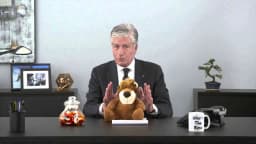
Lg2's 'Worst Nightmare' is a 2015 Canadian digital self-promo film created to present the agency's Strategy 2014 Agency of the Year recognition in an

Lg2 Confronts Its Own Fears in a Strategy Agency of the Year Film
"Worst Nightmare" is a 2015 Canadian digital presentation film created by Montréal-based independent agency Lg2 to accompany its recognition as Strategy magazine's 2014 Agency of the Year, replacing a conventional credentials document with a single cinematic video asset built around the theme of professional fear.
Lg2 published the campaign in February 2015, marking a deliberate departure from the format most agencies use when presenting their credentials to industry audiences. Rather than assembling a reel of client wins or a slide deck of metrics, the agency chose a self-reflective, narrative-driven film as its primary asset. The decision reflected a growing ambition within the Canadian independent agency landscape to treat self-promotion with the same creative rigour applied to paying clients. In Canada, where independent agencies compete directly against the local offices of global holding companies, the ability to articulate a distinct creative identity carries significant strategic weight.
The campaign is categorised under agency self-promotion and sits within the broader media and entertainment production context, given its reliance on a fully produced digital film with a credited director, cinematographer, and post-production team. It contains a single media asset, which concentrates all communicative and persuasive weight on one piece of storytelling. Lg2 has its roots in Montréal, where it was founded in 1991, according to Lg2's own corporate history, giving it more than two decades of independent operation before the Strategy Agency of the Year recognition brought the agency to national prominence. "Worst Nightmare" arrived at a moment when that recognition demanded a public statement, and Lg2 chose candour and craft over convention. The Clapboard Score for this campaign is 63 out of 100.
Lg2 operates as a Canadian independent agency in a market where global network agencies hold structural advantages in scale, international resource access, and multinational client relationships. The strategic logic behind "Worst Nightmare" acknowledges this context directly. By framing the film around professional anxiety rather than triumph, Lg2 positioned itself not as a challenger imitating network agency behaviour but as an agency with a fundamentally different relationship to honesty and creative risk.
The Canadian advertising and marketing services sector is home to a concentrated competitive landscape. Global holding companies including WPP Group and Omnicom Group maintain significant Canadian operations, with WPP reporting approximately US$18.7 billion in global revenue for 2015, according to WPP's own financial disclosures, and Omnicom reporting approximately US$15.1 billion for the same period, according to Omnicom Group's annual reporting. Against that backdrop, a Montréal-founded independent agency earning Strategy magazine's 2014 Agency of the Year designation represented a meaningful signal to Canadian marketers that creative quality could outperform structural scale. "Worst Nightmare" was designed to extend and capitalise on that signal, using the digital medium to reach industry peers and prospective clients at the moment when the agency's profile was highest.
The choice to produce a single, coherent digital film rather than a multi-asset campaign also reflects a disciplined media strategy. In Canada, where agency self-promotion budgets are modest by definition, concentrating production investment in one high-quality piece reduces dilution and ensures consistent message delivery across the industry press and digital channels where agency audiences concentrate their attention. Strategy magazine's recognition provided the earned-media foundation; the film provided the creative substance that gave that recognition something worth discussing.
"Worst Nightmare" carries a full production team more commonly associated with branded entertainment than agency self-promotion. Director Jean-Marc Piché led the film, with cinematographer Pierre Gill responsible for its visual language, as documented by Adsoftheworld.com. The combination of a dedicated director and a named cinematographer signals that Lg2 invested in a production process consistent with the creative standards the agency applies to client work.
Creative director Marc Fortin oversaw the creative direction, with Philippe Comeau contributing as creative, according to Adsoftheworld.com. Agency producers Johanne Pelland and Julie Lorazo managed production on the agency side, while Sophie Gérard served as producer on the production company side. The film was edited by Mathieu Lebel, with video post-production handled by Post 430, as documented by Adsoftheworld.com. The audio post-production credits round out a team whose depth is unusual for a category — agency self-promotion — that typically operates with reduced resources and internal-only crews.
The choice of a montage structure for the film is consistent with the campaign's thematic intent. A montage allows the narrative to accumulate emotional weight through the juxtaposition of images and moments rather than through linear argument, which suits a subject as abstract as professional fear. In the context of Canadian advertising production in 2015, the deployment of this format within an agency self-promotional film was a deliberate creative statement — one that treated the agency's own story as worthy of the same production ambition Lg2 would bring to any client brief. Pierre Gill's cinematographic involvement in particular lends the film a visual credibility that separates it from the demo-reel aesthetic that characterises most agency self-promotion work in the Canadian market.
No verified performance data for "Worst Nightmare" is publicly available. No published figures covering view counts, earned media reach, new business attribution, or audience engagement metrics have been documented by Lg2, Strategy magazine, or any third-party source in connection with this campaign. Similarly, no verified award wins for "Worst Nightmare" are recorded at Cannes Lions, the Effies, The One Show, D&AD, the Clios, or the Webby Awards, according to Clapboard's own research.
Structural effectiveness, however, can be assessed on its own terms. The film's single-asset format ensures message coherence, eliminating the fragmentation risk that comes with multi-piece campaigns. The decision to lead with vulnerability rather than achievement creates a differentiated positioning at a moment — immediately following a major industry award — when audiences would have expected a victory lap. That inversion is strategically sound: it signals confidence rather than insecurity, and it pre-empts the cynicism that often greets self-promotional work in the Canadian advertising industry.
The engagement of a recognised director in Jean-Marc Piché and cinematographer Pierre Gill, as documented by Adsoftheworld.com, also functions as a credibility signal independent of viewership numbers. In a category where production quality is rarely prioritised, the visible investment in craft communicates the agency's values without requiring a single metric to do so. Lg2's founding history in Montréal, its growth from three employees in 1991 to Strategy's 2014 Agency of the Year, according to Lg2's own corporate history, provides the contextual credibility that gives "Worst Nightmare" its earned authority.
"Worst Nightmare" is a digital self-promotional film published by Lg2 in Canada in February 2015. Created to accompany the agency's recognition as Strategy magazine's 2014 Agency of the Year, it replaced a conventional credentials presentation with a single cinematic film built around the theme of professional fear, directed by Jean-Marc Piché.
Lg2 chose a narrative film over a traditional credentials format to apply the same creative ambition to its own story that it brings to client briefs. The approach treated self-promotion as a genuine creative opportunity, using vulnerability as a differentiating strategy against larger, globally networked agency competitors operating in Canada at the time.
Jean-Marc Piché directed the film, with Pierre Gill serving as cinematographer, according to Adsoftheworld.com. Creative director Marc Fortin led the creative, with Philippe Comeau as creative. Producers included Johanne Pelland, Julie Lorazo, and Sophie Gérard, with editing by Mathieu Lebel and post-production by Post 430.
No verified award wins for "Worst Nightmare" are recorded at Cannes Lions, the Effies, The One Show, D&AD, the Clios, or the Webby Awards, according to Clapboard's research. The campaign was associated with Lg2's Strategy 2014 Agency of the Year recognition, which predates the film's February 2015 publication date.
Lg2's "Worst Nightmare" holds a Clapboard Score of 63 out of 100. This score reflects the campaign's creative ambition and production craft within the agency self-promotion category, balanced against the absence of publicly verified performance data and the campaign's limited single-asset media footprint in the Canadian market.
.webp)
Creative Collaboration Platform: The Backbone of Modern Creative WorkWhat is a creative collaboration platform?Clapboard defines a creative collaboration platform as the operational core for today’s distributed creative teams. This is not a collection of digital collaboration tools stitched together; Clapboard’s system


Understanding the Creative Production MarketplaceWhat is a Creative Production Marketplace?Clapboard defines a creative production marketplace as a structured ecosystem where brands, agencies, and production talent converge to execute video, advertising, and branded content at scale. Unlike the legacy agency or freelanREAD FULL ARTICLE

The Urgent Need for a Creative Production Operating SystemWhy Traditional Creative Production Models Break DownClapboard sees the creative production landscape shifting under pressure. Content velocity is no longer a buzzword—it’s a mandate. Modern advertising demands relentless output across dozens of channels, each wREAD FULL ARTICLE