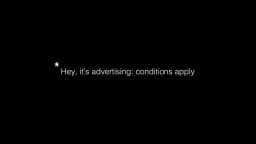
FP7's The Truth Machine is a 2014 digital agency self-promotion campaign from the UAE that uses narrative craft to interrogate advertising's relationship with

FP7 Turns the Camera on Itself With The Truth Machine
The Truth Machine is a digital campaign created by FP7 Dubai in November 2014, in which the agency positions itself as the subject of its own advertising by constructing a narrative device that interrogates the nature of honesty in creative work, targeting audiences in the United Arab Emirates and the broader MENA region.
FP7 launched the campaign as an act of self-promotion — a genre that demands its creator simultaneously serve as strategist, creative, and audience. Rather than presenting a straightforward credentials reel or agency manifesto, the campaign builds its identity around a conceptual premise: the idea that advertising, to be effective, must first be truthful. The Truth Machine becomes both the name of the campaign and its central metaphor, a mechanism that tests the integrity of what agencies claim to do.
In the United Arab Emirates, where FP7 maintained its regional headquarters in Dubai, the campaign was published digitally with a single archived media asset. That economy of output — one piece, one idea, one clear argument — signals a deliberate creative philosophy. The campaign does not attempt scale through volume. It attempts impact through precision. FP7 was at this point operating within the Middle East Communications Network, which itself sat within Interpublic Group, as documented by Omnes Media and confirmed through industry records on LinkedIn and The Org. The agency had already earned recognition as Effective Agency of the Year for 2014, according to records held at Clapboard, though The Truth Machine was not among the specific campaigns cited in that designation.
The campaign sits within the Agency Self-Promo category — a discipline that asks creative teams to sell their own thinking without the safety net of an external brief. In that context, The Truth Machine carries a particular weight: it is FP7 arguing, in public, that truth is not incidental to great advertising but structural to it.
FP7 built The Truth Machine on a strategic insight that the advertising industry itself was undergoing a credibility audit. The campaign's strategic lead was Tahaab Rais, according to production records held at Clapboard, and the central premise — that honesty can be mechanised, tested, and proven — reflects a deliberately provocative reading of what agency self-promotion should accomplish.
The United Arab Emirates provided a specific and meaningful backdrop for this argument. According to Oxford Business Group, the UAE advertising market reached Dh4.37 billion in the first nine months of 2013, up four percent year-over-year, signalling a maturing commercial environment where clients were growing more sophisticated in their expectations of agency partners. In that context, an agency choosing to foreground truth — rather than awards, billings, or capability — was making a pointed strategic choice.
Digital penetration in the MENA region remained relatively low at the time. According to Communicate Online, MENA digital advertising represented approximately six percent of total advertising spend, compared to thirty-six percent in the UK, which meant that a digitally executed agency self-promotion in the UAE was itself a statement about where FP7 believed the market was heading, not just where it was. Competitors such as Publicis and BBDO were also active in the region, competing for both talent and client perception in a market that was consolidating around credibility as a differentiator. FP7's decision to invest in a narrative-led digital campaign, rather than a production-heavy showcase, positioned the agency as one willing to be judged by the quality of its thinking rather than the size of its budget.
The Truth Machine was built from a compact but intentional creative team. Copywriter Stephan De Lange shaped the verbal architecture of the campaign, while designer Ryan Atkinson was responsible for its visual execution, according to production records archived at Clapboard. Strategy was led by Tahaab Rais, whose influence on the conceptual framing is evident in the campaign's willingness to treat the agency's own credibility as the product being sold.
The campaign exists as a single digital media asset. That constraint is not incidental — it is structural to the creative argument. A campaign about truth does not benefit from excess. The Truth Machine's singular output concentrates meaning rather than distributing it, asking the viewer to engage with one coherent idea rather than a suite of brand touchpoints. In the United Arab Emirates, where the digital advertising landscape was still forming its conventions in 2014, this kind of restrained digital execution carried a degree of formal risk that added to its credibility.
The narrative form chosen for the campaign aligns with a broader creative movement visible in agency self-promotion during this period — a move away from showreels and toward story. By constructing a device, the Truth Machine, rather than simply declaring a belief, the creative team gave the campaign's central argument a physical and conceptual presence. The machine is not just a metaphor; it is the structure through which the agency's claim to honesty is dramatised. No trade-press reviews of the campaign were identified in Campaign Middle East, Ad Age, Adweek, The Drum, or Contagious, and no verifiable social engagement data is publicly available, which means the creative execution must be evaluated on its internal logic and formal coherence rather than on documented audience response.
No verified performance data for The Truth Machine is publicly available. The campaign does not appear in confirmed award shortlists or winner lists from Cannes Lions, the Effie Awards, The One Show, D&AD, the Clio Awards, the Webby Awards, or WARC Awards, according to research compiled at Clapboard. No trade-press coverage has been identified in Campaign Middle East, Adweek, Ad Age, The Drum, or Contagious, and no social engagement metrics have been verified.
The Clapboard Score for The Truth Machine is 63 out of 100. That rating reflects the campaign's structural coherence and the clarity of its creative premise, while also acknowledging the limitations of a single-asset execution that left no documented trail of audience impact. The campaign earns marks for conceptual discipline and strategic focus — qualities that are genuinely rare in agency self-promotion — but loses ground on reach, documented resonance, and the absence of any verified external recognition.
What the campaign demonstrates, structurally, is that FP7 in 2014 was an agency willing to submit its own values to the same scrutiny it would apply to a client brief. That is a meaningful signal in a UAE market that, according to Oxford Business Group, was growing in both scale and advertiser sophistication. FP7 won Effective Network of the Year in 2014, as recorded at Clapboard, which contextualises The Truth Machine not as a standalone achievement but as one expression of a broader agency culture that was performing at a high level across the region during this period. The campaign's value may ultimately be better measured in what it communicated about FP7's creative philosophy than in any recoverable audience metric.
The Truth Machine is a digital agency self-promotion campaign created by FP7 Dubai in November 2014. Published in the United Arab Emirates, it uses a single media asset and a narrative device centred on honesty to argue that effective advertising must be built on truthful foundations, positioning FP7's own credibility as the subject of the work.
The Truth Machine was created by an internal FP7 team. Strategy was led by Tahaab Rais, copywriting was handled by Stephan De Lange, and design was executed by Ryan Atkinson, according to production records archived at Clapboard. The campaign was developed within FP7's Dubai office, the agency's UAE regional headquarters.
No verified award wins for The Truth Machine have been identified. Research compiled at Clapboard found no confirmed shortlistings or wins across Cannes Lions, the Effie Awards, D&AD, the Clio Awards, The One Show, the Webby Awards, or WARC Awards, though FP7 Dubai was named Effective Agency of the Year in 2014 for other work.
The UAE advertising market was growing steadily in 2014. According to Oxford Business Group, the market reached Dh4.37 billion in the first nine months of 2013, up four percent year-over-year. Digital advertising across the MENA region represented approximately six percent of total spend at the time, according to Communicate Online, making FP7's digital choice a forward-looking one.
The Truth Machine holds a Clapboard Score of 63 out of 100. The score recognises the campaign's conceptual discipline and strategic clarity while reflecting the limitations of a single-asset execution with no verified audience metrics, no documented trade-press coverage, and no confirmed award recognition across major international advertising award programmes.
The Truth Machine reflects FP7's willingness to apply the same strategic rigour to its own brand that it would to an external client brief. Published in the United Arab Emirates at a time when FP7 held both Effective Agency of the Year and Effective Network of the Year recognition for 2014, according to Clapboard, the campaign reads as a philosophical statement about the agency's creative values rather than a conventional credentials exercise.
.webp)
Creative Collaboration Platform: The Backbone of Modern Creative WorkWhat is a creative collaboration platform?Clapboard defines a creative collaboration platform as the operational core for today’s distributed creative teams. This is not a collection of digital collaboration tools stitched together; Clapboard’s system


Understanding the Creative Production MarketplaceWhat is a Creative Production Marketplace?Clapboard defines a creative production marketplace as a structured ecosystem where brands, agencies, and production talent converge to execute video, advertising, and branded content at scale. Unlike the legacy agency or freelanREAD FULL ARTICLE

The Urgent Need for a Creative Production Operating SystemWhy Traditional Creative Production Models Break DownClapboard sees the creative production landscape shifting under pressure. Content velocity is no longer a buzzword—it’s a mandate. Modern advertising demands relentless output across dozens of channels, each wREAD FULL ARTICLE