Leonard Cheshire's 'Journey to Independence' film by Don't Panic reframes disability and employment through one man's rehabilitation story, released in the

Leonard Cheshire and Don't Panic Confront Disability Bias Head-On
Leonard Cheshire's 'Journey to Independence' is a 60-second public interest film created by Don't Panic, released in the United Kingdom in April 2019, that follows one disabled man's physical and emotional recovery from an accident through rehabilitation to a job interview, reframing what the question 'What's your work ethic like?' truly means.
Leonard Cheshire is a UK disability charity with a long-established mission of enabling disabled people to live, learn, and work independently. The 'Journey to Independence' campaign arrived as the first creative work produced under Don't Panic's newly awarded agency-of-record mandate, which was formalised in February 2019, according to coverage published by LBBOnline. The campaign was positioned as the opening expression of Leonard Cheshire's broader strategic platform titled 'Supporting Journeys towards Independence', signalling a shift toward emotionally direct, narrative-driven public communications for the charity.
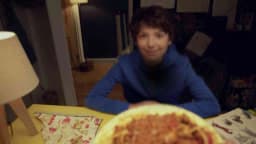
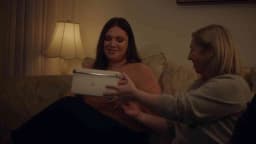
The campaign centres on a single, unbroken human story: a man experiences an accident, endures a demanding rehabilitation process across multiple stages, and ultimately arrives at a job interview. The dramatic arc is constructed so that the audience understands the journey before they hear the interview question, inverting the conventional framing of disability in advertising from one of limitation to one of extraordinary, largely invisible effort. Production took place over four days at locations across London, as reported by LBBOnline, grounding the film in the specific geography of the United Kingdom and giving the story an immediacy that connects with British audiences. The campaign was designed as a digital-first rollout, with planned expansion to television, out-of-home, and press formats, per LBBOnline. The Clapboard Score for 'Journey to Independence' is 60 out of 100.
Don't Panic identified a specific, underexplored tension in public attitudes toward disability and employment in the United Kingdom. The strategic insight is precise: disabled people demonstrate exceptional resilience and work ethic every day, yet this effort is structurally invisible to employers and the wider public. By anchoring the entire film to a single job interview question, the agency created a mechanism that meets audiences on familiar professional ground before recontextualising what competence and determination genuinely look like.
The United Kingdom's charity and public interest advertising sector operates in a competitive and increasingly scrutinised environment. Organisations such as Scope and Mencap pursue similar awareness and advocacy objectives for disabled people in the UK, often through emotionally direct film content. Within this competitive landscape, Leonard Cheshire and Don't Panic chose narrative specificity over broad statistics, betting that one man's story would generate more empathy and behavioural shift than aggregated data. This approach aligns with established behavioural economics research on the identifiable victim effect, which consistently demonstrates that single, named individuals generate stronger emotional and charitable responses than population-level framing.
The UK charitable sector context reinforces the campaign's strategic logic. The Fundraising Regulator introduced changes to direct-marketing suppression rules during this period, tightening the compliance environment for charities reaching out to donors and supporters, according to fundraising.co.uk. This regulatory pressure placed greater value on organic, earned media reach — precisely the territory that a high-quality film campaign is designed to capture. LBBOnline described the film as 'hard-hitting' in its editorial coverage, suggesting the creative approach succeeded in earning the kind of trade and media attention that extends a campaign's reach beyond paid placements.
Matilda Finn directed 'Journey to Independence' for production company Stink Films, as reported by LBBOnline. The film's construction is disciplined: a 60-second runtime imposes strict narrative economy, and Finn uses that constraint to build cumulative emotional weight rather than melodrama. Each stage of the protagonist's rehabilitation is rendered with observational restraint, allowing the physical difficulty of recovery to speak without embellishment. The choice to film across London over four days, per LBBOnline, gives the piece a documentary texture — a visual register that aligns with the film's implicit argument that this is not a fictional scenario but an ordinary, recurring human experience.
Creative leadership on the campaign was credited to Rick Dodds and Georgia McCallum at Don't Panic, according to LBBOnline. George McCallum, Creative Director at Don't Panic, articulated the campaign's central conviction directly, stating: 'If you want to know about work ethic, ask a disabled person. Disability can happen to anybody and when it does the hard work never ends; and yet the physical and emotional struggle of disabled people often goes unnoticed or unseen.' This statement, as quoted by LBBOnline, functions simultaneously as a brief, a manifesto, and a thesis for the film's structure. The decision to pose the interview question 'What's your work ethic like?' and answer it through the preceding narrative, as McCallum described to LBBOnline, is the campaign's most precise creative mechanism.
The social experiment framing — presenting audience members with a question before revealing the full context of the answer — is a format with proven resonance in UK public interest documentary and advertising. By denying viewers easy emotional shortcuts and instead building understanding through observed experience, the film positions Leonard Cheshire not as a charity asking for sympathy but as an organisation presenting evidence. Production credits for additional crew on 'Journey to Independence' beyond those named above are not fully documented in publicly available sources.
 ARCHIVE
No verified performance data for 'Journey to Independence' is publicly available in terms of view counts, reach figures, or measurable shifts in brand perception for Leonard Cheshire following the April 2019 release. No award wins for the campaign are documented in publicly accessible records. What is verifiable is the quality of editorial attention the work attracted: LBBOnline published substantive coverage describing the film as 'hard-hitting', which represents meaningful earned media within the UK advertising industry's primary trade press ecosystem.
Structural analysis of the campaign suggests several indicators of effectiveness. The film's digital-first strategy, as reported by LBBOnline, was correctly calibrated for 2019 UK media consumption patterns, where online video had become the dominant format for charitable awareness content. The single-asset approach — one film carrying the full weight of the message — concentrates creative impact rather than diffusing it across multiple executions, a discipline that tends to generate stronger recall and sharing behaviour. The campaign also arrived at a culturally relevant moment: disability employment remained a persistent policy and public conversation topic in the United Kingdom, with the gap between disabled and non-disabled employment rates a recurring subject in parliamentary and third-sector discourse, according to Publications Parliament Uk.
As the inaugural campaign under Don't Panic's agency-of-record relationship with Leonard Cheshire, 'Journey to Independence' carried the additional strategic function of establishing a creative tone and strategic positioning for all subsequent work. That foundational role, independent of any single metric, represents a form of long-term organisational value that conventional campaign measurement rarely captures.
'Journey to Independence' is a 60-second public interest film for Leonard Cheshire, released in the United Kingdom in April 2019. Created by Don't Panic and directed by Matilda Finn, it follows one disabled man's rehabilitation journey from an accident to a job interview, reframing what work ethic genuinely requires of disabled people.
Don't Panic created the campaign as Leonard Cheshire's agency of record, appointed in February 2019. Director Matilda Finn led production through Stink Films, shooting across London over four days. Creative leadership was credited to Rick Dodds and Georgia McCallum at Don't Panic, according to LBBOnline.
Don't Panic built the campaign around the job interview question 'What's your work ethic like?' and answered it by showing one disabled man's rehabilitation story. The strategy made invisible effort visible, positioning Leonard Cheshire as an organisation presenting evidence of disabled people's resilience rather than requesting public sympathy.
'Journey to Independence' was published in the United Kingdom in April 2019, as a digital-first film with planned expansion to television, out-of-home, and press formats, per LBBOnline. Filming took place across London over four days, grounding the campaign in a recognisably British environment for its target audience.
No award wins for Leonard Cheshire's 'Journey to Independence' are documented in publicly available records. The campaign did receive substantive editorial coverage from LBBOnline, which described the film as 'hard-hitting', representing meaningful recognition within the United Kingdom's advertising trade press at the time of its release.
Leonard Cheshire's 'Journey to Independence' holds a Clapboard Score of 60 out of 100. The score reflects the campaign's disciplined creative approach and cultural relevance within UK disability awareness advertising, balanced against the absence of verified performance metrics and documented award recognition for the 2019 Don't Panic film.
.webp)
Creative Collaboration Platform: The Backbone of Modern Creative WorkWhat is a creative collaboration platform?Clapboard defines a creative collaboration platform as the operational core for today’s distributed creative teams. This is not a collection of digital collaboration tools stitched together; Clapboard’s system


Understanding the Creative Production MarketplaceWhat is a Creative Production Marketplace?Clapboard defines a creative production marketplace as a structured ecosystem where brands, agencies, and production talent converge to execute video, advertising, and branded content at scale. Unlike the legacy agency or freelanREAD FULL ARTICLE

The Urgent Need for a Creative Production Operating SystemWhy Traditional Creative Production Models Break DownClapboard sees the creative production landscape shifting under pressure. Content velocity is no longer a buzzword—it’s a mandate. Modern advertising demands relentless output across dozens of channels, each wREAD FULL ARTICLE