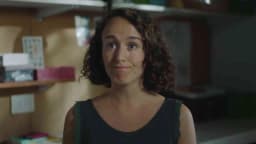
Klarna's 2019 I Wish I'd Bought It With Klarna campaign, created by 72andSunny Amsterdam, stars Celeste Barber in a three-part film series launched across The

Klarna and Celeste Barber Reframe Shopping Regret as Relief
Klarna's "I Wish I'd Bought It With Klarna" campaign is a three-part home-shopping-style film series starring Australian comedian Celeste Barber, created by 72andSunny Amsterdam and launched on 4 September 2019 across the United Kingdom, United States, The Netherlands, Germany, and Sweden to promote Klarna's Pay Later service.
The campaign positions Klarna's Pay Later proposition around a universal consumer frustration: buying something online, receiving it, and wishing you hadn't. Each of the three approximately sixty-second films takes a different online shopping failure as its subject — including a miniature garden furniture order and a disastrously curled hairstyle — and frames Barber as the host of her own episodic series, a format that nods directly to home-shopping television. The hashtag #IWIBIWK anchored the social distribution strategy, with content pushed across Klarna's own Instagram and YouTube channels as well as Barber's considerable personal following. Shorter edits and six-second placements ran across paid media in all five markets, as reported by The Drum. In The Netherlands specifically, the campaign appeared as part of Klarna's broader effort to establish the brand's cultural identity in a market where buy-now-pay-later services were competing hard for consumer awareness. The series earned a Clapboard Score of 64 out of 100, reflecting a campaign that executes its comedic concept competently while operating within a recognisable influencer-led framework.
The campaign represents a deliberate chapter in Klarna's evolution from a conventional financial-services provider into a culturally fluent lifestyle brand. Launched internationally in 2019, it carried the visual and verbal identity that Stockholm agency Essen International had introduced through a comprehensive rebrand begun around 2017 to 2018, according to clapboard.com — a transformation that replaced what CampaignLive described as a brand that was "boring, blue and male" with the now-familiar Klarna pink and fashion-forward art direction. In The Netherlands and across all five launch markets, "I Wish I'd Bought It With Klarna" served as both a product explainer and a proof of concept for that new brand personality.
Klarna selected Celeste Barber because her existing social media identity was already built on the idea of the reality check. Barber had built a global following by recreating aspirational celebrity images with deliberate, self-deprecating imperfection — a practice that translated directly onto the territory of online shopping, where product photography routinely overpromises and delivery regularly disappoints. Creative team members Sarah Hardcastle and Renée Lam at 72andSunny Amsterdam stated, as reported by thedrum.com, that Barber is "the queen of reality checks on Instagram" and described Pay Later as "a huge relief for any shopper who has ever felt the sting of an online purchase not quite meeting their expectations".
The strategic context in The Netherlands and across European markets in 2019 was shaped by an accelerating buy-now-pay-later sector. The global BNPL market was estimated at thirty-four billion dollars in 2019, according to giiresearch.com, with projected compound annual growth exceeding forty-six percent through 2024. In that competitive environment, Klarna faced direct pressure from Afterpay and Affirm, among others. Klarna's gross merchandise volume reached fifty-three billion dollars in 2020, up forty-six percent year over year, according to cbinsights.com, signalling the scale the brand had already achieved by the time this campaign was designed to consolidate consumer trust. Afterpay's 2020 transaction volume stood at approximately eleven billion dollars, according to cbinsights.com, illustrating the gap Klarna had opened but also the speed at which rivals were growing. In The Netherlands and across Northern Europe, where Klarna had operated longest and held the deepest merchant relationships, converting brand awareness into emotional affinity was the strategic priority that this campaign was built to serve.
Director Alyssa McClelland helmed the three-part series for production company Anonymous Content, with post-production and editorial handled by The Quarry, as documented by adsoftheworld.com. The choice of McClelland was consequential. Her background in comedy direction shaped the pacing of each film, allowing Barber's improvisational energy to read as spontaneous within a tightly structured narrative arc that still communicated a product message before the sixty-second runtime expired.
The episodic format was the campaign's most distinctive creative decision. Rather than producing a single hero film or a standard influencer integration, 72andSunny Amsterdam constructed a miniature series with its own title card, episode numbering, and recurring presenter. This gave Klarna a content architecture that could sustain multiple distribution moments across Instagram and YouTube rather than exhausting itself in a single release. Episode one addressed a hair-related online purchase failure; subsequent episodes tackled additional shopping disasters, each one calibrated to be immediately recognisable to anyone who has experienced the gap between a product listing and its physical reality. Klarna also partnered with Refinery29 in the United Kingdom and the United States for bespoke Instagram assets supporting the launch, as reported by thedrum.com, extending the campaign's reach into editorial-adjacent environments that Barber's core audience already inhabited.
The production design reinforced the home-shopping television reference without tipping into parody so broad it obscured the product. Set dressing, lighting, and Barber's presenting style all maintained legibility as a comedy format while keeping Pay Later's value proposition — buy, receive, decide, then pay — at the centre of each narrative. Production credits for post and visual effects work beyond The Quarry are not fully publicly documented, though clapboard.com records the campaign's three media assets as part of its advertising archive.
No verified performance data for "I Wish I'd Bought It With Klarna" is publicly available in terms of view counts, conversion rates, or sales attribution specific to The Netherlands or any of the other four launch markets. The campaign earned a Clapboard Score of 64 out of 100, a rating that reflects genuine creative competence alongside structural limitations inherent to the format.
Structurally, the campaign's episodic architecture gave Klarna an unusual degree of content longevity for a finance brand operating in what was, in 2019, still a category where most advertising defaulted to rational benefit communication. By anchoring the Pay Later message inside a comedy format fronted by a talent whose existing audience already understood irony and self-deprecation, 72andSunny Amsterdam reduced the friction typically associated with financial product advertising. In The Netherlands and across European markets where Klarna had established merchant networks, that tonal shift carried real strategic weight.
The partnership with Refinery29, as reported by thedrum.com, extended the campaign beyond Klarna's own channels into environments where purchase intent and editorial credibility intersect — a distribution logic well suited to a product that lives at the moment of buying decision. Klarna held forty-four and a half percent of tracked BNPL app downloads globally in the third quarter of 2022, according to paymentsdive.com, a market position that the brand's sustained investment in culturally relevant advertising — of which this 2019 campaign was a meaningful early example — helped to build over time.
"I Wish I'd Bought It With Klarna" is a three-part film series created by 72andSunny Amsterdam for Klarna in 2019. It stars Australian comedian Celeste Barber as the host of an episodic show built around online shopping failures, promoting Klarna's Pay Later service across The Netherlands, the United Kingdom, the United States, Germany, and Sweden.
Klarna launched the campaign on 4 September 2019, according to thedrum.com. It ran across five international markets: The Netherlands, the United Kingdom, the United States, Germany, and Sweden. Distribution included Klarna's and Celeste Barber's Instagram and YouTube channels, with shorter edits and six-second placements supporting paid media activity.
Alyssa McClelland directed the three-part series for production company Anonymous Content, as documented by adsoftheworld.com. Post-production and editorial were handled by The Quarry. The creative team at 72andSunny Amsterdam included Sarah Hardcastle and Renée Lam, who led the campaign's strategic and creative development.
Klarna's Pay Later service allows customers to receive a purchase before committing to payment, so they only pay once satisfied. The 2019 Celeste Barber campaign communicated this by dramatising online shopping failures — miniature furniture, hair disasters — making the relief of delayed payment tangible and comedic rather than abstract or transactional.
Klarna began repositioning from a conventional finance brand to a lifestyle and shopping brand around 2017 to 2018, when Stockholm agency Essen International introduced the Klarna pink identity, according to clapboard.com. The 2019 Celeste Barber campaign was an early expression of that cultural strategy in The Netherlands and other European markets.
Klarna's "I Wish I'd Bought It With Klarna" campaign received a Clapboard Score of 64 out of 100. The rating reflects the campaign's competent comedic execution and smart episodic structure while acknowledging that influencer-led finance advertising, even when well-crafted, operates within a format that limits creative distinction at the highest level.
.webp)
Creative Collaboration Platform: The Backbone of Modern Creative WorkWhat is a creative collaboration platform?Clapboard defines a creative collaboration platform as the operational core for today’s distributed creative teams. This is not a collection of digital collaboration tools stitched together; Clapboard’s system


Understanding the Creative Production MarketplaceWhat is a Creative Production Marketplace?Clapboard defines a creative production marketplace as a structured ecosystem where brands, agencies, and production talent converge to execute video, advertising, and branded content at scale. Unlike the legacy agency or freelanREAD FULL ARTICLE

The Urgent Need for a Creative Production Operating SystemWhy Traditional Creative Production Models Break DownClapboard sees the creative production landscape shifting under pressure. Content velocity is no longer a buzzword—it’s a mandate. Modern advertising demands relentless output across dozens of channels, each wREAD FULL ARTICLE