ARCHIVE
Day in the Life
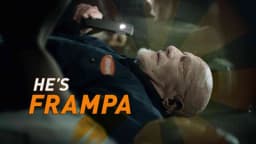
This campaign, launched by Ford in the United States in September 2024, showcases the brand’s...
Kia Australia Bets on Humour to Launch the Tasman Ute
Kia Australia's "I need a tow." is a single-asset film campaign published in April 2025, designed to introduce the Kia Tasman — the brand's first ute — to Australian consumers and position it as a credible, capable alternative in one of the country's most fiercely contested vehicle segments.
The campaign carries a title that functions as both a product demonstration and a cultural wink. In the Australian automotive market, the ute is not merely a vehicle category — it is a deeply ingrained cultural identity. Kia Australia's decision to enter this space represented one of the brand's most significant strategic pivots in the local market, and the film was tasked with doing considerable heavy lifting: establishing awareness, signalling capability, and earning a degree of trust from buyers who have historically shown fierce loyalty to incumbent nameplate holders. According to Clapboard's editorial archive, the campaign was created for Kia Australia and published in April 2025, with one media asset in the Film medium.
The campaign's title phrase — "I need a tow." — operates on multiple levels simultaneously. On its surface, it articulates the most elemental utility of any ute. Read with the dry comic register that Australian advertising has long favoured, it also functions as an understated boast: the Kia Tasman can handle the job. The phrase is compact enough to double as a call to action, echoing the directness of Kia Australia's broader "Reserve yours now" and "Join the family" messaging that has accompanied the Tasman's market rollout. The campaign sits within the automotive industry category and reflects the broader pressure Kia Australia faces to convert consideration into purchase commitment as the Tasman moves from reservation pipeline to delivered volume.
Australia's ute segment is the single most competitive arena in the country's new-vehicle market. The Ford Ranger and Toyota HiLux have traded the title of Australia's best-selling vehicle for years, and their combined dominance shapes every new entrant's positioning challenge. For Kia Australia, launching the Tasman meant entering territory where brand heritage, perceived toughness, and owner-community loyalty function as barriers that price and specification alone cannot overcome.
The broader market context reinforces the stakes. According to AdNews, 2024 was a record year for Australian new-car sales, with seven of the ten largest brands increasing their share. Kia reported sales growth of 7.4% in 2024, according to AdNews, and management anticipated another record year in 2025 — a trajectory that the Tasman is expected to sustain and extend. The ute segment contributed meaningfully to that momentum, and the "I need a tow." film arrived at precisely the moment when reservation holders needed reassurance and the broader market needed education about what a Kia ute could actually do.
Competitors such as Ford Australia, with the Ranger, and Toyota Australia, with the HiLux, command loyalties built across decades and reinforced through consistent above-the-line investment. Kia Australia's response, developed with Innocean Australia according to Clapboard's campaign records, is to sidestep a direct toughness arms race and instead use wit and product confidence as differentiating signals. In the Australian automotive industry, humour has historically served as a trust mechanism — it signals that a brand understands local culture rather than simply importing a global template. The single-film format concentrates the campaign's argumentative force into one precise creative moment rather than diffusing it across a multi-asset campaign architecture.
The film medium defines everything about how "I need a tow." communicates. A single film asset, as documented by Clapboard, imposes discipline on the creative team: there is no secondary execution to clarify an ambiguous message, no second cut to correct a tonal misjudgement. The title phrase must carry the full argumentative and emotional weight of the campaign in the first moment of viewer contact.
Production credits for "I need a tow." are not publicly documented in any trade press, award submission, or creative directory identified through Clapboard's research. What is apparent from the campaign's structure is that the creative approach prioritises economy over spectacle. The Kia Tasman is positioned not through the sweeping outback cinematography that typically anchors ute advertising in Australia — that register belongs to the incumbents — but through a tonal register that implies capability without needing to dramatise it at length. The phrase "I need a tow." is functionally demonstrative and comedically understated, a combination that requires precise timing and confidence in the viewer's ability to complete the joke.
Innocean Australia, identified as the agency partner in Clapboard's records, brings a long-standing relationship with the Hyundai Motor Group's brand stable to this brief. That institutional knowledge of how Kia's brand voice should sound in a local market — distinct from its global template but consistent with its global positioning — is visible in the campaign's tonal choices. The film's restraint is a creative argument in itself: a brand willing to let a single line of copy do the work of a much larger production is a brand that believes in the product. For the Kia Tasman's Australian debut, that confidence is the message as much as any specific capability claim.
No verified performance data for "I need a tow." is publicly available. No campaign-specific sales lift, market-share change, brand-tracking movement, or media spend figures have been published, according to Clapboard's research. The campaign has not been entered into or recognised by Cannes Lions, the Effies, The One Show, D&AD, the Clios, the Webby Awards, or WARC Awards as of the time of writing.
Clapboard scores "I need a tow." at 56 out of 100. That score reflects a campaign that is strategically coherent and tonally competent but constrained by its single-asset footprint and the absence of any documented amplification strategy. A 56 indicates a functional creative idea that stops short of the structural distinctiveness or cultural penetration that would mark it as a benchmark execution within the Australian automotive industry.
Structurally, the campaign's effectiveness rests on two conditions it cannot control: the Kia Tasman's ability to deliver on the capability implied by the creative, and the breadth of paid media distribution behind the single film asset. According to AdNews, Kia Australia's sales trajectory entering 2025 was demonstrably positive, which provides a commercially supportive context for the Tasman's launch. However, a single film — however well-crafted — operates as a spark rather than a sustained flame in a segment where Ford and Toyota maintain year-round above-the-line presence. The campaign's long-term contribution to the Tasman's market position will ultimately be readable only through Kia Australia's sales reporting across the 2025 financial year.
"I need a tow." is a film campaign published by Kia Australia in April 2025 to introduce the Kia Tasman ute to the Australian market. The campaign comprises a single film asset and uses a concise, dry phrase to signal the Tasman's towing capability while appealing to Australian automotive consumers with understated humour.
Innocean Australia is identified in Clapboard's campaign records as the agency associated with the "I need a tow." film. No additional production credits, including director or creative director, are publicly documented in trade press or creative directories as of the time of this analysis.
The Kia Tasman is Kia's first ute offered in Australia, marking a significant strategic expansion for the brand into the country's most competitive vehicle segment. Australia's ute market is dominated by Ford Ranger and Toyota HiLux, making the Tasman's launch one of Kia Australia's most consequential product introductions in recent years.
No awards have been identified for "I need a tow." across Cannes Lions, the Effies, The One Show, D&AD, the Clios, the Webby Awards, or WARC Awards, according to Clapboard's research. The campaign was published in April 2025, and award cycles for that period may not yet be complete.
Clapboard scores "I need a tow." at 56 out of 100. The score reflects a strategically sound and tonally appropriate campaign that is limited by its single-asset structure and the absence of publicly documented amplification, preventing it from reaching benchmark status within the Australian automotive advertising category.
The film aligns with Kia Australia's 2025 growth momentum, which included 7.4% sales growth in 2024 according to AdNews. The Tasman's launch, supported by "Reserve yours now" and "Join the family" messaging, positions Kia Australia as a full-spectrum automotive brand capable of competing across every major vehicle segment in the Australian market.
.webp)
Creative Collaboration Platform: The Backbone of Modern Creative WorkWhat is a creative collaboration platform?Clapboard defines a creative collaboration platform as the operational core for today’s distributed creative teams. This is not a collection of digital collaboration tools stitched together; Clapboard’s system


Understanding the Creative Production MarketplaceWhat is a Creative Production Marketplace?Clapboard defines a creative production marketplace as a structured ecosystem where brands, agencies, and production talent converge to execute video, advertising, and branded content at scale. Unlike the legacy agency or freelanREAD FULL ARTICLE

The Urgent Need for a Creative Production Operating SystemWhy Traditional Creative Production Models Break DownClapboard sees the creative production landscape shifting under pressure. Content velocity is no longer a buzzword—it’s a mandate. Modern advertising demands relentless output across dozens of channels, each wREAD FULL ARTICLE