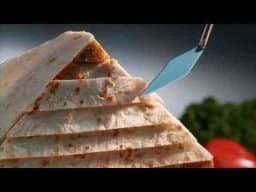
Kellogg's Fiber Plus 'Cupcake' film campaign by Leo Burnett debuted in the United States in August 2011, positioning a high-fiber cereal as a genuine rival to

Kellogg's Fiber Plus Cupcake Ad Shows Nutrition Can Taste Indulgent
Kellogg's 'Cupcake' is a 2011 film campaign created by Leo Burnett in the United States that positions Kellogg's Fiber Plus Caramel Pecan Crunch cereal as a satisfying, health-conscious alternative to an indulgent baked treat, using a direct taste-comparison format to argue that fiber and flavor are not mutually exclusive.
The campaign launched on August 15, 2011, entering a United States breakfast cereal market facing measurable headwinds. According to 247wallst.com, U.S. ready-to-eat cereal sales reached approximately $6.41 billion for the 52 weeks ending April 17, 2011, a decline of roughly 2.6 percent year-over-year, signalling that established brands needed sharper creative arguments to hold consumer attention. Against that backdrop, Leo Burnett constructed a single-film execution built around one provocative challenge: can Kellogg's Fiber Plus Caramel Pecan Crunch satisfy in the way that a chocolate lava cupcake from Perfect Circle Cupcakery can?
The campaign's objective is straightforward. Kellogg's Fiber Plus needed to close the perceived gap between virtuous nutrition and genuine sensory pleasure, a gap that had long made fiber-forward products difficult to market to mainstream consumers in the United States without leaning on clinical language. By staging the product against a culturally loaded symbol of indulgence — the cupcake — the campaign reframes the choice not as deprivation versus pleasure but as one pleasurable option versus another. The film medium, a single asset, concentrates all creative energy into one tightly argued narrative moment, relying on the contrast itself to do the strategic heavy lifting rather than dispersing attention across multiple executions.
Leo Burnett grounded the Kellogg's Fiber Plus 'Cupcake' campaign in a consumer insight that had been building pressure across the United States food industry for several years: health-motivated shoppers were not willing to accept that eating well meant eating joylessly. The creative positioning directly addressed this tension by contrasting the fiber-oriented Kellogg's product with the chocolate lava cupcake from Perfect Circle Cupcakery, a specific, named competitor product that gave the comparison tactile credibility rather than abstract nutritional superiority.
The broader market context reinforces why this strategy was necessary. According to preparedfoods.com, U.S. cold cereal retail sales stood at approximately $11.3 billion in early 2012, with a four percent compound annual growth rate over the preceding three years, yet the ready-to-eat segment was simultaneously losing ground as consumers increasingly reached for portable, indulgent breakfast alternatives. General Mills, with its similarly positioned fiber and wellness cereal portfolio, represented the most direct competitive pressure on Kellogg's in this segment, while brands such as Special K had already established within Kellogg's own stable that appetite-control messaging could work when paired with taste credibility. The 'Cupcake' film distinguishes itself by making the indulgence competitor visible and specific rather than implied.
The decision to use a single film asset rather than an integrated multi-channel campaign reflects a deliberate focus on narrative economy. In the United States food and drink advertising landscape of 2011, the thirty-second or sixty-second television film remained the dominant vehicle for shifting brand perception at scale, and Leo Burnett's choice to concentrate the entire argument into one cinematic comparison allowed the creative team to pursue tonal precision — warm, slightly playful, confident — without dilution across formats.
Chris Hooper directed the 'Cupcake' film for Kellogg's Fiber Plus. The production places two objects — a bowl of Caramel Pecan Crunch cereal and a chocolate lava cupcake from Perfect Circle Cupcakery — in visual and narrative opposition, allowing the camera and the edit to construct the argument that the cereal delivers comparable sensory satisfaction alongside genuine fiber benefit.
The creative leadership at Leo Burnett brought considerable pedigree to the execution. Susan Credle served as Chief Creative Officer, with Bob Drevney as Executive Creative Director. Derek Sherman held the role of Creative Director, Brad Hall served as Art Director, and Jimmy Pardi wrote the copy. This is a team with deep roots in the food and drink category, and the 'Cupcake' film reflects their understanding that food advertising in the United States lives or dies on appetite appeal — the ability to make a product look and feel genuinely desirable rather than merely virtuous.
The narrative format chosen for the campaign is a taste-comparison or product-challenge structure, a creative mechanic with a long history in the food industry. What distinguishes this execution is its choice of opponent. By selecting a chocolate lava cupcake — culturally coded as a premium, indulgent treat rather than a generic sweet snack — the creative team elevates the stakes of the comparison and implicitly elevates the status of the Kellogg's Fiber Plus product alongside it. The single-asset discipline also demands that every frame carry argumentative weight. In the United States food advertising environment of 2011, where audience fragmentation was accelerating, that economy of means represented a considered craft decision as much as a budget one.
No verified performance data for the 'Cupcake' campaign is publicly available. No contemporaneous reviews from trade publications including Campaign, Ad Age, or Adweek have been located, and no award citations or market-share outcomes attributable to this specific film have been confirmed through publicly accessible records.
Assessed on structural grounds, the campaign presents a coherent and disciplined creative argument. The choice to name and visualise a specific competitor product — the chocolate lava cupcake from Perfect Circle Cupcakery — gives the comparison concreteness that generic indulgence imagery would not provide. The narrative mechanic of the taste challenge is well established in United States food and drink advertising precisely because it compresses complex positioning into a single, legible moment of proof. The film's reliance on a single asset focuses all executional energy, which in the hands of a team led by Susan Credle and Bob Drevney at Leo Burnett is an asset rather than a limitation.
The campaign's structural weakness, and the primary factor moderating its Clapboard Score of 60 out of 100, is the familiarity of the comparison format itself. The product-challenge mechanic carries inherent credibility risk: audiences in the United States have long experience with category advertising that stages these confrontations, and the degree to which 'Cupcake' differentiates itself tonally or cinematically beyond the core conceit is difficult to assess from the single available asset. The strategic insight is sound; the question the score reflects is whether the execution achieves sufficient distinctiveness to shift brand perception at the scale a national Kellogg's campaign would require.
The 'Cupcake' campaign is a 2011 film created by Leo Burnett in the United States for Kellogg's Fiber Plus Caramel Pecan Crunch cereal. It positions the cereal as a satisfying, fiber-rich alternative to a chocolate lava cupcake, using a direct taste-comparison format to argue that nutrition and indulgence are compatible choices.
Leo Burnett created the 'Cupcake' film for Kellogg's in 2011. Susan Credle served as Chief Creative Officer and Bob Drevney as Executive Creative Director. Derek Sherman directed creative, Brad Hall was Art Director, Jimmy Pardi wrote copy, and Chris Hooper directed the film.
The campaign advertises Kellogg's Fiber Plus Caramel Pecan Crunch cereal. The film contrasts the cereal directly with a chocolate lava cupcake from Perfect Circle Cupcakery, using that specific competitor product to make the taste-versus-nutrition comparison concrete and credible for United States audiences.
The United States ready-to-eat cereal market was under pressure in 2011. According to 247wallst.com, U.S. ready-to-eat cereal sales reached approximately $6.41 billion for the 52 weeks ending April 2011, a decline of roughly 2.6 percent year-over-year, making taste-credibility messaging increasingly important for established brands.
The Kellogg's Fiber Plus 'Cupcake' campaign receives a Clapboard Score of 60 out of 100. The strategic insight is sound, but the product-comparison format is familiar in United States food advertising, and the single available asset makes it difficult to assess whether the execution achieves sufficient distinctiveness at national scale.
No verified award citations for the Kellogg's Fiber Plus 'Cupcake' campaign have been confirmed through publicly accessible records. No contemporaneous reviews from major United States trade publications including Ad Age or Adweek have been located for this specific 2011 Leo Burnett film execution.
.webp)
Creative Collaboration Platform: The Backbone of Modern Creative WorkWhat is a creative collaboration platform?Clapboard defines a creative collaboration platform as the operational core for today’s distributed creative teams. This is not a collection of digital collaboration tools stitched together; Clapboard’s system


Understanding the Creative Production MarketplaceWhat is a Creative Production Marketplace?Clapboard defines a creative production marketplace as a structured ecosystem where brands, agencies, and production talent converge to execute video, advertising, and branded content at scale. Unlike the legacy agency or freelanREAD FULL ARTICLE

The Urgent Need for a Creative Production Operating SystemWhy Traditional Creative Production Models Break DownClapboard sees the creative production landscape shifting under pressure. Content velocity is no longer a buzzword—it’s a mandate. Modern advertising demands relentless output across dozens of channels, each wREAD FULL ARTICLE