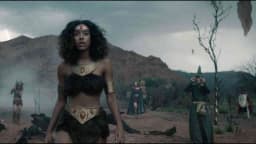
Jeep's Inspired By Nature campaign by F.biz positioned the Jeep Compass through animal ability analogies, anchored by a 20-day Pantanal documentary expedition

Jeep Inspired By Nature Reframes the Compass as a Wildlife-Born Machine
Jeep's "Inspired By Nature" campaign is a 2019 Brazilian automotive branded-content initiative created by F.biz that positions the Jeep Compass as a vehicle whose core technologies mirror the sensory and navigational capabilities of wild animals native to the region.
F.biz published the campaign in June 2019, anchoring it to the Brazilian market where the Jeep Compass is locally manufactured. The creative premise is precise: three specific animal analogies map directly onto vehicle technologies. The owl's night vision corresponds to the Compass's low-light driving systems; the horse's innate sense of direction mirrors the vehicle's navigation and orientation features; and the chameleon's wide field of vision reflects the Compass's camera and perimeter-awareness capabilities. Rather than relying on performance specifications or track footage — the default language of automotive advertising — the campaign asks Brazilian consumers to understand the Compass through biology.
The campaign's scope expanded significantly beyond a single film. An initial paid-media rollout ran across television, cinema, radio, out-of-home, digital, and social media in the first half of May 2019, according to reporting by Propmark. That activation was followed by a six-episode branded-content documentary series, each episode running approximately five minutes, as reported by Adnews Com Br. The series premiered on October 4, 2019, simultaneously in cinemas and on National Geographic, with weekly episode releases scheduled thereafter. The campaign was created under the creative direction of Alessandro Bernardo at F.biz's São Paulo office, with art direction led by Rafaela Santurian, Vitor Bomfim, Vinicios Gonzaga, and Pedro Gait. The work was later archived on Ads of the World, with the archive record published on April 22, 2022.
Jeep entered the Brazilian SUV market with a distinct local manufacturing advantage. The Jeep Compass is produced in Brazil, giving the brand a pricing and supply-chain position that imported competitors cannot easily replicate in the South American market. That structural fact shaped the campaign's ambition: with the product credibly embedded in Brazilian industry, F.biz could push the brand's identity beyond utilitarian SUV messaging toward something with cultural and emotional resonance.
The strategic foundation rests on a single consumer insight — that Brazilians hold a deep and well-documented cultural relationship with nature, particularly with ecosystems as iconic as the Pantanal, the world's largest tropical wetland. Positioning the Jeep Compass as a vehicle inspired by, rather than merely capable of handling, that natural environment allowed the campaign to speak to national identity rather than category performance. In the global SUV segment, the competitive pressure in 2019 was intensifying. According to Carindustryanalysis Wordpress, global SUV sales reached approximately 28 million units in 2019, with growth slowing to around one percent compared with six percent the prior year. In Brazil, Jeep faced direct competition from Toyota's RAV4 and Volkswagen's T-Cross, both of which pursued more conventional specification-led advertising strategies in that period. F.biz's decision to pursue branded documentary content rather than product-demo filmmaking represents a deliberate departure from category norms.
Frederico Battaglia, Director of Brand Marketing Communication at FCA Latin America, framed the campaign's intent directly. According to Propmark, Battaglia stated that the work was designed to demonstrate that Jeep vehicles are more than SUVs — a declaration that crystallised the brand's ambition to own a values-driven position in the Brazilian automotive conversation.
The creative execution of "Inspired By Nature" operates across two distinct registers: a broad-reach paid-media campaign and an immersive branded-content series of uncommon ambition for the Brazilian automotive industry. Alessandro Bernardo served as creative director, with Rafaela Santurian, Vitor Bomfim, Vinicios Gonzaga, and Pedro Gait as art directors, and Will Etchebehere as photographer.
The film component — the campaign's most distinctive asset — was produced through a 20-day expedition into Brazil's Pantanal, covering approximately 2,000 kilometres of terrain, as reported by Adnews.com.br. The production was led by Brazilian documentarian Lawrence Wahba, whose background in natural-history filmmaking lent the series the observational credibility that separates it from conventional automotive content. The Jeep Compass featured throughout not as a prop but as an operational vehicle navigating the expedition's actual conditions. The six episodes, each running approximately five minutes, aired on National Geographic — a distribution choice that placed the brand inside an editorial environment already associated with serious wildlife and natural-world storytelling. The series premiered in cinemas on October 4, 2019, before moving to weekly broadcast, according to Adnews.com.br.
The animal-analogy structure — owl, horse, chameleon — gave F.biz a repeatable creative device that could sustain six episodes without repetition, each instalment exploring a different facet of the Pantanal ecosystem while mapping it to a specific Compass technology. Photographer Will Etchebehere's involvement signals that the visual language was developed with the same rigour across still and moving formats. The production's physical scale — weeks in a remote wetland ecosystem — is itself a creative argument: the Jeep Compass had to earn its place in that environment, not simply be placed there.
No verified performance data for the "Inspired By Nature" campaign is publicly available. No independently sourced figures for viewership, reach, sales lift, or brand-tracking movement have been documented in connection with this campaign. The Clapboard Score for "Inspired By Nature" stands at 63 out of 100, reflecting a campaign with genuine creative ambition that nonetheless leaves measurable impact unconfirmed.
Structurally, the campaign carries several attributes associated with durable brand effectiveness. Distribution on National Geographic positions Jeep Compass content inside a trust environment that automotive advertisers rarely access, lending the brand a borrowed authority that a conventional media buy cannot replicate. The six-episode format extends engagement across multiple weeks, creating repeated exposure through earned interest rather than paid frequency — a structural advantage in an automotive category where single-exposure film campaigns are the norm in Brazil. The dual-channel launch, simultaneously in cinemas and on National Geographic, amplifies cultural weight; cinema in particular signals creative confidence in the Brazilian market context.
The campaign's primary structural risk is legibility. A brand argument built on owl night vision and chameleon field of vision is evocative but demands that viewers make a cognitive leap from animal biology to vehicle specification — a leap that creative advertising routinely asks of audiences but that branded documentary, with its slower pace and observational tone, may not always close explicitly. Whether Brazilian consumers connected the Pantanal imagery to purchase consideration for the Jeep Compass remains undocumented in the public record.
Jeep's Inspired By Nature campaign is a 2019 Brazilian branded-content initiative by F.biz positioning the Jeep Compass through animal-ability analogies. It comprised a paid-media rollout across television, cinema, radio, out-of-home, digital, and social channels, alongside a six-episode documentary series filmed in the Pantanal with documentarian Lawrence Wahba.
F.biz, based in São Paulo, created the Inspired By Nature campaign for Jeep in Brazil. Alessandro Bernardo served as creative director, with art directors Rafaela Santurian, Vitor Bomfim, Vinicios Gonzaga, and Pedro Gait, and Will Etchebehere as photographer. The campaign was published in June 2019, according to Ads of the World.
The Jeep Compass Inspired By Nature campaign uses three animal analogies. The owl's night vision maps to the Compass's low-light driving systems; the horse's sense of direction mirrors navigation features; and the chameleon's wide field of vision corresponds to the vehicle's perimeter-camera capabilities. Each analogy structured a distinct episode of the documentary series.
The Inspired By Nature documentary was filmed in Brazil's Pantanal over a 20-day expedition covering approximately 2,000 kilometres, as reported by Adnews.com.br. Brazilian documentarian Lawrence Wahba led the production. The resulting six-episode series premiered simultaneously in cinemas and on National Geographic on October 4, 2019.
Jeep's Inspired By Nature campaign received a Clapboard Score of 63 out of 100. The score reflects the campaign's genuine creative ambition — particularly its Pantanal documentary format and National Geographic distribution — weighed against the absence of publicly verified performance data connecting the work to measurable brand or sales outcomes in Brazil.
.webp)
Creative Collaboration Platform: The Backbone of Modern Creative WorkWhat is a creative collaboration platform?Clapboard defines a creative collaboration platform as the operational core for today’s distributed creative teams. This is not a collection of digital collaboration tools stitched together; Clapboard’s system


Understanding the Creative Production MarketplaceWhat is a Creative Production Marketplace?Clapboard defines a creative production marketplace as a structured ecosystem where brands, agencies, and production talent converge to execute video, advertising, and branded content at scale. Unlike the legacy agency or freelanREAD FULL ARTICLE

The Urgent Need for a Creative Production Operating SystemWhy Traditional Creative Production Models Break DownClapboard sees the creative production landscape shifting under pressure. Content velocity is no longer a buzzword—it’s a mandate. Modern advertising demands relentless output across dozens of channels, each wREAD FULL ARTICLE