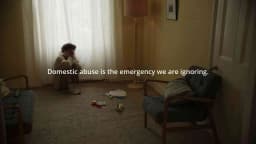
Interval House launched Alternate Endings in Canada in September 2014, a participatory digital campaign by KBS+ inviting users to reshape the narrative around

How Interval House Used Alternate Endings to Reframe Domestic Violence Online
Interval House's Alternate Endings is a participatory digital campaign launched in Canada in September 2014 by agency KBS+, designed to redirect social media conversation away from shock and spectacle toward constructive action on violence against women by inviting users to create and share videos with their own messages about how abuse can end differently, according to Gigcity Ca.
The campaign arrived at a specific cultural inflection point. Public attention across Canada and internationally had sharpened around video evidence of domestic abuse circulating on social networks, generating widespread but often directionless outrage. Interval House, a Canadian organisation dedicated to addressing violence against women, identified that moment as an opportunity not merely to raise awareness but to redirect the narrative. Where most of the public conversation stalled at documentation of harm, Alternate Endings asked a different question: what happens next, and who decides?
The mechanism was deliberately participatory. Rather than presenting a single finished film, the campaign offered users a framework for producing video messages of their own, each articulating an alternate ending to a story of domestic violence. Those videos were designed for distribution across social networks, multiplying the campaign's reach through individual voices rather than a single broadcast. The digital medium was not incidental to the strategy; it was the strategy, exploiting the same social infrastructure that had amplified the original disturbing footage and turning it toward purposeful public interest messaging, according to News Gov Bc Ca.
The campaign was published in September 2014 in Canada and classified under the public interest and public service category. It was produced as a digital medium campaign containing one primary media asset, which anchored the participatory experience. Clapboard has assigned Alternate Endings a Campaign Score of 73 out of 100, reflecting the campaign's structural coherence and its timely alignment with a genuine cultural conversation around the issue of ending violence against women.

Interval House built Alternate Endings on a specific strategic insight: that passive awareness of domestic violence was already high but that social media platforms were accelerating emotional response without channelling it toward action. The agency KBS+ recognised that the viral spread of abuse footage in 2014 had created a moment of heightened public sensitivity in Canada, and that the question was not how to generate attention but how to convert existing attention into something useful.
The broader landscape of violence against women campaigns in 2014 demonstrated both the appetite and the risk inherent in this approach, according to Publications Gc Ca. The NO MORE campaign, launched in the United States in September 2013 and featuring more than 75 celebrities according to nomore.org, had demonstrated that high-profile talent could amplify reach but that celebrity-led PSAs often struggled to sustain engagement beyond initial exposure. In Canada, Interval House had itself explored related digital territory the previous year. The 2013 campaign Every Second Matters, created by agency Union, used a Facebook-connected website, a clock, users' friend photographs, and the message that every second a Canadian woman is abused, according to Clapboard's archive records, establishing a precedent for platform-native participation as a strategic tool for the organisation.
Alternate Endings extended that logic further. By making user-generated video the central mechanic rather than a supplementary sharing option, KBS+ shifted the campaign's centre of gravity from the organisation's voice to the public's. UN Women's 2014 Orange YOUR Neighbourhood initiative, part of the global 16 Days of Activism campaign, similarly positioned community participation as essential to changing norms around violence against women, according to UN Women's own published materials. In Canada specifically, the public interest context gave the campaign room to operate as civic infrastructure rather than advertising, asking Canadians to contribute to a shared narrative rather than consume a finished one, according to Ecf Ca.
Alternate Endings centres its creative logic on the act of rewriting. The campaign's title functions as both instruction and provocation, positioning domestic violence not as an inevitable story but as one whose conclusion remains open and contestable. That framing does significant creative work before a single frame of video is considered, establishing the campaign's emotional and argumentative premise in two words.
The primary media asset anchors the participatory structure by demonstrating what an alternate ending looks and sounds like, providing a template that users can replicate, adapt, or challenge in their own video submissions. This approach requires a founding film that is simultaneously complete enough to be emotionally resonant on its own terms and open enough to invite continuation rather than closure. The creative challenge KBS+ faced was producing something that did not exhaust the subject but instead opened a door, making the audience feel that their own version of the ending was both possible and necessary.
The decision to deploy this as a digital-first campaign in Canada, rather than a television or out-of-home execution, reflects a production philosophy aligned with the platform behaviours the campaign sought to exploit. Social networks reward content that invites response and propagation; a campaign asking users to create and share videos needed to live natively in the environments where that behaviour already occurred. The visual and narrative vocabulary of the seed film therefore needed to be accessible enough to inspire replication without specialist equipment or production knowledge.
Production credits for Alternate Endings are not publicly documented in available sources. The campaign was created by KBS+, the Toronto-based agency, for Interval House, and published in September 2014 as a digital medium work within the public interest category in Canada.
No independently verified performance data for Alternate Endings is publicly available through named third-party measurement sources. The campaign's archive record, as held by Clapboard, references more than two million views, though this figure has not been confirmed by an independent auditor or published in a verifiable media report. It is cited here as an archive claim rather than a verified metric.
Structural analysis of the campaign offers a more reliable basis for assessing its effectiveness. Alternate Endings was designed to succeed on two distinct levels simultaneously: as a single piece of content capable of generating emotional response, and as a participatory platform capable of multiplying that response through user contribution. Campaigns built on this dual architecture are measurably harder to evaluate through conventional view-count metrics because their intended impact is distributed across content the brand does not fully control.
The campaign's public interest classification in Canada also means that its objectives were not framed in commercial terms. The goal was not conversion in a transactional sense but a shift in the quality and direction of public conversation around violence against women. That kind of impact is difficult to quantify but meaningful to assess through the campaign's continued presence in professional archives and its strategic coherence more than a decade after launch.
Clapboard's Campaign Score of 73 out of 100 reflects a judgement that Alternate Endings demonstrates strong conceptual and strategic foundations, with the participatory mechanic and the narrative reframing of domestic violence representing genuine creative intelligence, tempered by limited publicly documented evidence of sustained measurable outcomes.
Alternate Endings is a participatory digital campaign launched in Canada in September 2014 by Interval House, created by agency KBS+. It invited users to create and share videos articulating different outcomes to stories of domestic violence, redirecting social media conversation toward constructive action on ending violence against women.
KBS+, a Toronto-based advertising agency, created Alternate Endings for Interval House in September 2014. The campaign was produced as a digital medium work classified under the public interest category in Canada. Production credits beyond the agency name are not publicly documented in available sources.
KBS+ built Alternate Endings to convert existing public attention into action. In 2014, domestic abuse footage was spreading widely on social networks in Canada. The campaign used the same social infrastructure to redirect that attention, asking users to produce their own alternate ending videos rather than remain passive observers of the issue.
Every Second Matters was a separate Interval House digital campaign launched in October 2013 by agency Union, which used a Facebook-connected website and users' friend photographs to communicate that every second a Canadian woman is abused, according to Clapboard's archive. Alternate Endings extended the organisation's use of participatory digital mechanics the following year.
Clapboard assigned Alternate Endings a Campaign Score of 73 out of 100. The score reflects the campaign's strong conceptual framing and strategic coherence in addressing violence against women through participatory narrative, balanced against limited publicly documented evidence of independently verified measurable outcomes beyond the archive's own view-count reference.
.webp)
Creative Collaboration Platform: The Backbone of Modern Creative WorkWhat is a creative collaboration platform?Clapboard defines a creative collaboration platform as the operational core for today’s distributed creative teams. This is not a collection of digital collaboration tools stitched together; Clapboard’s system


Understanding the Creative Production MarketplaceWhat is a Creative Production Marketplace?Clapboard defines a creative production marketplace as a structured ecosystem where brands, agencies, and production talent converge to execute video, advertising, and branded content at scale. Unlike the legacy agency or freelanREAD FULL ARTICLE

The Urgent Need for a Creative Production Operating SystemWhy Traditional Creative Production Models Break DownClapboard sees the creative production landscape shifting under pressure. Content velocity is no longer a buzzword—it’s a mandate. Modern advertising demands relentless output across dozens of channels, each wREAD FULL ARTICLE