 ARCHIVE
Milestones - Arizona Department of Health Services | Clapboard Ad Archive
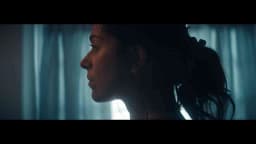
Milestones is a poignant film campaign developed for the Arizona Department of Health Services by...
How Instituto Yduqs and Artplan Exposed Racism in Brazilian Medicine
Black Body is an integrated health campaign created by Artplan for Instituto Yduqs and Idomed, launched in Brazil in April 2025, that uses a short film and an original medical book to expose the systemic neglect of Black patients in Brazilian medicine, winning the Cannes Lions Industry Craft Grand Prix in June 2025, according to Meioemensagem Com Br.
The campaign operates across three registered titles — Corpo Preto in Portuguese, the Latinized Nigrum Corpus, and its English archive designation Black Body — a naming strategy that itself mirrors the clinical distance the work critiques, according to Adnews Com Br. The film premiered on April 1, 2025, at Cinema Estação in Shopping da Gávea, Rio de Janeiro, before its broader release in Brazil in April 2025, as confirmed by contemporaneous coverage and the campaign archive. It portrays a Black man navigating a medical system that literally cannot render him visible: his image remains blurred throughout his search for care, a formal device that dramatises diagnostic neglect rather than merely describing it.
Instituto Yduqs and its medical education subsidiary Idomed sit at the intersection of healthcare and higher education in Brazil, giving the campaign an institutional weight that distinguishes it from conventional health advertising, according to Note. According to corporate information published by Yduqs, Idomed operated 17 medical schools with more than 8,300 students at the time of the campaign's launch. The campaign's dual mandate — confronting structural racism and positioning Instituto Yduqs and Idomed as forces for reform within Brazilian medical education — gives Black Body both social urgency and strategic coherence. Clapboard rates this campaign 66 out of 100, reflecting strong creative ambition and award-validated craft against the inherent difficulty of measuring institutional impact in health advocacy, according to LinkedIn.
Instituto Yduqs and Idomed operate in Brazil's competitive medical education sector, where institutional reputation and social purpose are increasingly inseparable from market position. Brazil's total higher-education market was estimated at approximately US$597.9 million in 2025, with a projected compound annual growth rate of 24.05 percent from 2026 to 2034, according to IMARC Group. Within that expanding landscape, listed companies collectively represented approximately 30 percent of Brazil's operational medical-school seats as of February 2025, according to research published by BTG Pactual, meaning competition for both students and public credibility among private medical educators is structurally intense.
The strategic rationale for Black Body rests on a specific and documented tension in Brazilian healthcare: Black patients are historically underdiagnosed, undertreated, and rendered invisible within clinical frameworks, yet Black bodies have been disproportionately central to the anatomical study that underpins those same frameworks. That tension is not merely rhetorical. It is the campaign's core argument, and it positions Instituto Yduqs and Idomed as institutions willing to name a contradiction that competitors in Brazilian medical education — including other large private-sector groups operating across the country — have largely left unaddressed in their public communications. By anchoring the campaign in the conventions of the medical textbook, Artplan ensured the indictment arrived in the language of the institution being indicted, a choice that sharpened the strategic edge of the creative work considerably and differentiated Black Body from the public-health awareness campaigns more typical of the Brazilian health communications sector.
Artplan's creative execution for Black Body operates on two mutually reinforcing channels: a short documentary-style film and the Nigrum Corpus book, a purpose-built medical reference work whose design subverts the conventions it borrows. Rodrigo Almeida, known professionally as Monte and serving as Chief Creative Officer at Artplan, described the formal logic to Meio & Mensagem on June 17, 2025: the team drew inspiration from the graduation textbooks given to medical students and used those allegorical structures to speak about racism. Within the anatomical illustrations, the creative team inserted colours, butterflies, and flowers specifically to underscore the beauty of the Black body — a deliberate counterweight to the clinical erasure the campaign documents.
Monte also articulated the campaign's central irony to Meio & Mensagem: the Black patient is not seen by the medical system, yet Black bodies are among the most studied by medical students. That contradiction is rendered visually in the film through the blurred-image device, which functions simultaneously as a social-experiment mechanism and a documentary statement. The Nigrum Corpus book incorporates Latinized condition names, patient testimonies, and botanical imagery, creating a hybrid object that sits between medical literature and art publication. As reported by Meio & Mensagem, the work was described by the publication as combining beauty and brutality in its exposure of racism in Brazilian healthcare. The film and the book were released as an integrated campaign across Brazil in April 2025, with the film carrying the experiential and emotional weight and the book providing a durable, institutionally legible artifact. The campaign contains one primary media asset in its archive listing, though its integrated scope extends across film, print, and the physical book object.
Black Body delivered verified, internationally recognised results at the highest level of creative industry evaluation. The Nigrum Corpus initiative won the Industry Craft Grand Prix at Cannes Lions on June 17, 2025, as reported by Meio & Mensagem and confirmed by selfstorming.com. The campaign additionally won a Gold Lion in the Design category for the Nigrum Corpus book and a Gold Lion in the Health & Wellness category, as reported by Meio & Mensagem. Three Lions at Cannes — including the Grand Prix in Industry Craft — represent an exceptional performance for any single Brazilian health campaign, and they validate the integrated strategy of pairing the film with the physical book as a craft decision rather than merely a media one.
No independently verified audience reach figures, viewership data, or patient-outcome metrics for Black Body are publicly available at the time of writing. The campaign's impact is therefore most legibly measured through its award performance and its documented cultural reception. As reported by Meio & Mensagem, the work was positioned as a landmark statement on racism in Brazilian medicine, and its premiere at Cinema Estação in Rio de Janeiro established an institutional context that distinguished it from conventional media launches. In structural terms, the decision to ground the campaign's social-experiment premise in the authoritative format of a medical textbook created a credibility architecture that health advocacy campaigns rarely achieve. For Instituto Yduqs and Idomed, the Cannes recognition translates into reputational capital within both the Brazilian healthcare sector and the competitive medical education market, two audiences for whom the campaign's argument is simultaneously a moral and a professional one.
Black Body is an integrated health campaign created by Artplan for Instituto Yduqs and Idomed in Brazil in April 2025. It uses a short film and a purpose-built medical book called Nigrum Corpus to expose racial neglect in Brazilian healthcare, winning the Cannes Lions Industry Craft Grand Prix in June 2025.
Artplan created the Nigrum Corpus book to expose racism using the language of the institution perpetuating it. Chief Creative Officer Rodrigo Almeida explained to Meio & Mensagem that the team drew on medical graduation textbooks, inserting colour, botanical imagery, and patient testimonies to underscore the beauty and humanity of the Black body within a clinical framework.
The Black Body campaign won three Lions at Cannes in June 2025. It received the Industry Craft Grand Prix for the Nigrum Corpus initiative, a Gold Lion in Design for the book, and a Gold Lion in Health & Wellness, as reported by Meio & Mensagem. These results make it one of Brazil's most decorated health campaigns of 2025.
The film depicts a Black man whose image remains blurred as he seeks medical care in Brazil. This visual device makes diagnostic neglect literal rather than rhetorical, functioning as both a social-experiment mechanism and a documentary statement about the systemic invisibility of Black patients within Brazilian healthcare institutions.
Rodrigo Almeida, known professionally as Monte, served as Chief Creative Officer at Artplan and led the creative direction of Black Body. He articulated the campaign's core irony to Meio & Mensagem: that Black patients are unseen by the medical system, yet Black bodies are among the most studied subjects in medical education across Brazil.
The Black Body film premiered on April 1, 2025, at Cinema Estação in Shopping da Gávea, Rio de Janeiro, before its broader release across Brazil in April 2025. The premiere setting established an institutional cultural context, distinguishing the launch from a standard media release and signalling the campaign's positioning as a serious documentary and social intervention.
.webp)
Creative Collaboration Platform: The Backbone of Modern Creative WorkWhat is a creative collaboration platform?Clapboard defines a creative collaboration platform as the operational core for today’s distributed creative teams. This is not a collection of digital collaboration tools stitched together; Clapboard’s system


Understanding the Creative Production MarketplaceWhat is a Creative Production Marketplace?Clapboard defines a creative production marketplace as a structured ecosystem where brands, agencies, and production talent converge to execute video, advertising, and branded content at scale. Unlike the legacy agency or freelanREAD FULL ARTICLE

The Urgent Need for a Creative Production Operating SystemWhy Traditional Creative Production Models Break DownClapboard sees the creative production landscape shifting under pressure. Content velocity is no longer a buzzword—it’s a mandate. Modern advertising demands relentless output across dozens of channels, each wREAD FULL ARTICLE