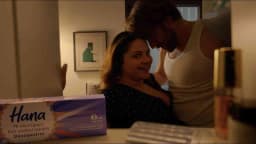
Hey Girls Turns Period Poverty Rage Into a Buy-One-Give-One Movement
Seeing Red is a 2021 film campaign created by adam&eveDDB for UK social enterprise Hey Girls, designed to generate psychologically calibrated anger about period poverty and convert that anger into direct purchasing action through the brand's buy-one-give-one model.
Hey Girls operates on a single foundational promise: for every pack purchased, an equivalent pack is donated free of charge to someone experiencing period poverty. Founded in 2018 by Celia Hodson and her daughters, as noted by dandad.org, the enterprise has pursued one stated aim since its inception — to end period poverty in the United Kingdom entirely. The Seeing Red campaign, launched online on 5 May 2021 according to adsoftheworld.com, marked a decisive shift in how Hey Girls communicated that mission. Where previous efforts had leaned on statistics and sympathy, Seeing Red chose fury.
The campaign's central argument, drawn from its own description on heygirls.co.uk, is stark: period poverty in the UK was already affecting one in ten girls and women before the arrival of COVID-19, and the pandemic pushed that figure to one in three. The film does not ask audiences to feel sorry. It asks them to feel outraged — and then to act. The mechanism is precise: if enough consumers in the United Kingdom switch to Hey Girls products, the buy-one-give-one model means period poverty could, in the brand's own formulation, vanish overnight. Seeing Red earned a Clapboard Score of 76 out of 100, reflecting strong creative and strategic integration across its execution.
Adam&eveDDB grounded the Seeing Red strategy in a deliberate rejection of sympathy as a primary motivator. The agency's proposition, detailed by impact-tank.org, was that years of telling people about period poverty through statistics had not produced the behavioural shift the issue demanded. The new approach was to make people viscerally, motivatingly angry — angry enough to change where they spent money on period products.
The competitive context in the United Kingdom made this positioning strategically necessary. Hey Girls operates in a category dominated by multinational incumbents. Procter and Gamble, owner of Always and Tampax, held an estimated fifteen to twenty-five percent of the global branded menstrual-care market in 2021, according to transparencymarketresearch.com. Essity, the parent company of Bodyform and Libresse — brands with significant presence in the UK market — held an estimated six to ten percent of global share in the same period, per reliablemarketresearch.com. Against that scale, Hey Girls could not compete on distribution or media spend. It could compete on moral urgency.
The strategic architecture, as documented by dandad.org, connected anger directly to the brand's commercial mechanism. Chief Strategy Officer Martin Beverley and Head of Planning Milla McPhee, working alongside planner Beth Mackenzie, structured the brief so that the emotion the film generated was not a destination but a starting point. Anger, the strategy held, needed an outlet — and Hey Girls provided one that was immediate, practical and consequence-bearing. In the United Kingdom, where one in three women and girls was struggling to access period products during the pandemic according to heygirls.co.uk, that outlet carried genuine weight.
Director Margot Bowman shaped every formal element of the Seeing Red film to produce a specific emotional state. The production, handled by Prettybird and documented by shootonline.com and dandad.org, was built around psychological research that informed not just the script but the editing rhythm, colour palette, character depiction and soundtrack — each variable engineered to intensify anger rather than incite passive distress.
Chief Creative Officer Richard Brim and Global Creative Director Laura Rogers led the creative team at adam&eveDDB. Campaign copywriter Miles Carter and art director Helen Balls developed the film's narrative arc, while print creatives Christian Sewell and Andy McAnaey extended the campaign's visual and rhetorical logic into complementary formats. As reported by Campaign US on 3 June 2021, the print executions reproduced hostile or derogatory language historically directed at women in relation to menstruation, reframing that language as evidence of the cultural environment that allows period poverty to persist.
The campaign soundtrack was composed by Esther Joy Lane under the title Grovelling Warts and released as a single on 5 May 2021, the same date the film went live online, according to adsoftheworld.com. The music was not incidental texture — it was a deliberate tonal instrument. Three variations of the film were tested before the final edit was locked, as reported by impact-tank.org, with each variation assessed for its capacity to generate the motivating form of anger the strategy demanded rather than anger that produced paralysis or disengagement. Social Director Rebecca Wilson and producer Paulette Caletti completed the core production team credited across dandad.org and shootonline.com.
The Seeing Red campaign produced measurable psychological outcomes that directly supported its strategic intent. On average, watching the film made participants feel more than three times angrier, according to impact-tank.org. The gender breakdown, reported by adsoftheworld.com, showed women felt four times angrier after viewing and men three times angrier — a differentiation that maps logically onto proximity to the issue of period poverty in the United Kingdom.
The research finding with the most direct commercial implication, as documented by both impact-tank.org and adsoftheworld.com, was the correlation between intensity: the more intensely viewers experienced the film and the angrier they reported feeling, the stronger their stated desire to take action and to purchase Hey Girls products. This is not a generic awareness metric. It links emotional state to purchase intent through the specific commercial mechanism — buy-one-give-one — that the campaign was built to serve.
The Drum included Seeing Red in its selection of ten of the best ads of the week on 12 May 2021, specifically citing the psychological research underpinning the work, as reported by thedrum.com. Campaign US described the film as the angriest film ever made in its 3 June 2021 coverage, per campaignlive.co.uk. No independently audited sales figures for the campaign period are publicly available. What the documented evidence confirms is that Seeing Red achieved its primary objective: it made audiences in the United Kingdom angry, and it made that anger purposeful.
Seeing Red is a 2021 film campaign made by adam&eveDDB for UK social enterprise Hey Girls. It was designed to generate psychologically calibrated anger about period poverty in the United Kingdom and direct that anger toward purchasing Hey Girls products, using the brand's buy-one-give-one model as the mechanism for change.
Margot Bowman directed the Seeing Red film. She worked with production company Prettybird and producer Paulette Caletti. The creative team at adam&eveDDB was led by Chief Creative Officer Richard Brim and Global Creative Director Laura Rogers, with Miles Carter as copywriter and Helen Balls as art director, as documented by dandad.org.
Viewers felt more than three times angrier on average after watching the film, according to impact-tank.org. Women reported feeling four times angrier and men three times angrier, per adsoftheworld.com. Crucially, greater anger correlated directly with stronger stated desire to take action and purchase Hey Girls products, validating the campaign's core strategic premise.
Adam&eveDDB determined that years of communicating period poverty statistics had not produced sufficient behavioural change in the United Kingdom. Anger, unlike sympathy, was identified as a motivating emotion that needed an outlet. Hey Girls' buy-one-give-one model provided that outlet immediately, connecting emotional intensity to a concrete purchasing decision with direct social consequences.
Hey Girls donates one full pack of period products for every pack a consumer purchases. Founded by Celia Hodson in 2018, the enterprise argues that if enough UK consumers switch to Hey Girls, period poverty could end entirely. Seeing Red was built to make that commercial act feel urgent and morally necessary rather than optional or charitable.
The Drum named Seeing Red one of ten best ads of the week on 12 May 2021, specifically citing its psychological research methodology, as reported by thedrum.com. Campaign US described the film as the angriest film ever made in June 2021 coverage, per campaignlive.co.uk. The campaign also appears in the D&AD archive, as documented by dandad.org.
.webp)
Creative Collaboration Platform: The Backbone of Modern Creative WorkWhat is a creative collaboration platform?Clapboard defines a creative collaboration platform as the operational core for today’s distributed creative teams. This is not a collection of digital collaboration tools stitched together; Clapboard’s system


Understanding the Creative Production MarketplaceWhat is a Creative Production Marketplace?Clapboard defines a creative production marketplace as a structured ecosystem where brands, agencies, and production talent converge to execute video, advertising, and branded content at scale. Unlike the legacy agency or freelanREAD FULL ARTICLE

The Urgent Need for a Creative Production Operating SystemWhy Traditional Creative Production Models Break DownClapboard sees the creative production landscape shifting under pressure. Content velocity is no longer a buzzword—it’s a mandate. Modern advertising demands relentless output across dozens of channels, each wREAD FULL ARTICLE