2nd Act's Carry On, Cleveland is a 2023 documentary-style PSA urging communities to carry Naloxone to prevent fatal fentanyl-tainted overdoses, partly funded

How 2nd Act Used Documentary Filmmaking to Fight Fentanyl in Cleveland
Carry On, Cleveland is a 2023 documentary-style short film PSA from Boston-based 2nd Act and agency JaiCG that urges people across the Cleveland area to carry Naloxone as a first-line response to accidental overdoses caused by fentanyl-tainted drugs, framing preparedness as an act of love and community responsibility.
Published on March 2, 2023, the campaign marks the second installment of 2nd Act's ongoing digital Naloxone initiative. The film was partially funded by the Alcohol, Drug Addiction and Mental Health Services Board of Cuyahoga County — known as the ADAHMS Board — giving it a direct institutional mandate within the region. That local funding relationship anchors the campaign firmly in Cuyahoga County, connecting it to the specific public health infrastructure already working on overdose prevention in the Greater Cleveland area. The campaign earns a Clapboard Score of 63 out of 100, reflecting its focused execution and clear public health intent within a narrowly defined geographic and thematic brief.
The campaign's central proposition is both literal and emotional: carry Naloxone, and you give someone the chance to carry on with their life. This dual meaning runs through every element of the work, from its title to its tone. Rather than relying on alarming statistics or clinical instruction, the campaign leans into human connection — the relationships that are preserved when a life is saved. In doing so, 2nd Act positions Naloxone not as a pharmaceutical product but as an expression of care, extending a creative philosophy the organisation has refined across multiple campaign generations since 2020.
 ARCHIVE
2nd Act operates in the public health Naloxone awareness and behaviour-change space, distinct from conventional pharmaceutical advertising. The organisation's work targets individuals who are either personally at risk of a fentanyl-related overdose or likely to witness one — including family members, friends, and community members in affected urban areas like Cleveland. This audience definition shapes every strategic choice the campaign makes, prioritising emotional identification over product information.
The decision to localise the second installment specifically to Cleveland reflects a deliberate community-first approach. Cuyahoga County's ADAHMS Board co-funded the film, signalling a partnership model that embeds the campaign within existing local health infrastructure rather than parachuting in a national message. This model increases the credibility and relevance of the drug safety message for the people most likely to encounter it. In Massachusetts, where 2nd Act is headquartered, overdose-education and Naloxone-distribution programmes distributed 160,800 doses in 2023, according to Mass Gov, illustrating the scale of the public health challenge the campaign addresses. Community nonprofit and public-health affiliates in Massachusetts distributed 104,600 doses in the same year, also per mass.gov, further contextualising the demand for behaviour-change communications of this kind.
The competitive landscape for overdose prevention campaigns in 2023 included branded Naloxone manufacturers, government-funded public health programmes, and nonprofit harm-reduction organisations, all competing for the attention of a population already experiencing crisis fatigue. 2nd Act's strategic differentiation lies in its documentary and social-experiment format, which creates a sense of authentic witness rather than instructional messaging — a posture more likely to reach audiences who have grown resistant to conventional health campaign communications.
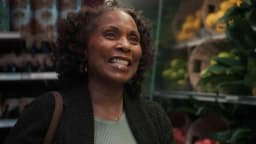
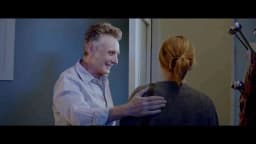
Carry On, Cleveland takes the form of a documentary-style social experiment, using unscripted or semi-scripted real-world scenarios to build an emotionally resonant case for carrying Naloxone. On screen, the film places ordinary people — community members, family figures, individuals connected by relationships rather than clinical roles — in situations that illuminate the human cost of an unwitnessed overdose and the quiet power of being prepared. The film does not dramatise overdose as spectacle; instead, it focuses on what is preserved when intervention is possible: the conversation that continues, the relationship that survives, the life that carries on.
The concept and script were developed by Ana Bess Moyer Bell and Joseph Phommasith, according to weare2ndact.org. Phommasith also served as director of photography and editor, shaping the film's visual and rhythmic identity from production through post. Ana Bess Moyer Bell executive-produced the project, maintaining continuity with the campaign lineage she has helped build since the earliest predecessor work in 2020. The score was composed by Max Richter, whose music brings a quality of measured emotional weight entirely consistent with the film's refusal to sensationalise its subject matter, as documented by weare2ndact.org.
Supporting the core creative team, Karen Snyder served as associate producer, Ryan Beard as casting director, and Matthew Pollock as prop manager, with Morgan Shumway and Joseph Gianfrancesco as production assistants, per weare2ndact.org. The campaign was produced as a single media asset — one short film — distributed across digital and film channels. MMM Online, reviewing the work in April 2023, described the campaign as remarkable, affirming the craft judgement behind its restrained, human-centred approach to fentanyl awareness and overdose prevention.
Carry On, Cleveland recorded 1,644 views and 14 likes across its archived digital distribution, with zero comments logged, as documented in the campaign's archived metrics. These figures reflect the reach of a locally targeted, publicly funded PSA rather than a mass-market advertising campaign, and should be read in that context. The campaign was not designed to generate viral scale; it was designed to reach a defined community in Cuyahoga County with a specific, actionable public health message about Naloxone and fentanyl-related overdose prevention.
The only identified trade review of the campaign appeared in MMM Online on April 18, 2023, according to mmm-online.com, which characterised the work positively. No additional verified performance data — including downstream behaviour change metrics, Naloxone uptake figures attributable to the campaign, or formal effectiveness studies — is publicly available for this specific PSA.
Structurally, the campaign demonstrates several qualities associated with effective health behaviour-change communications. Its use of documentary format lowers audience resistance to the message. Its partial funding through the ADAHMS Board, as noted on ideastream.org, lends institutional credibility. The emotional framing — carry Naloxone so the people you love can carry on — creates a motivational hook tied to identity and relationship rather than fear, which research in public health communication consistently associates with more durable attitude change. As the second installment in a growing campaign series, Carry On, Cleveland also benefits from the narrative equity built by its 2022 predecessor, compounding its impact within the communities already familiar with 2nd Act's overdose prevention work.
Carry On, Cleveland is a 2023 short film PSA created by 2nd Act and agency JaiCG to encourage people to carry Naloxone in case of a fentanyl-related overdose. It is the second installment of 2nd Act's digital Naloxone campaign and was partially funded by the ADAHMS Board of Cuyahoga County.
The Carry On, Cleveland film was partially funded by the Alcohol, Drug Addiction and Mental Health Services Board of Cuyahoga County, known as the ADAHMS Board. This local public health body provided institutional backing that grounded the overdose prevention campaign directly within the Greater Cleveland community it was designed to serve.
Carry On, Cleveland was conceived and scripted by Ana Bess Moyer Bell and Joseph Phommasith, according to weare2ndact.org. Phommasith also served as director of photography and editor. Ana Bess Moyer Bell executive-produced the film. The campaign was produced by 2nd Act in partnership with agency JaiCG, with music composed by Max Richter.
Carry On, Cleveland is the second installment of 2nd Act's digital Naloxone series. The predecessor campaign, Carry On, was released in May 2022, targeting college-aged audiences around fentanyl-tainted party drugs. The lineage traces further back to Naloxone Is an Act of Love, a 2020 pilot campaign targeting 18 to 25-year-olds.
Carry On, Cleveland received a Clapboard Score of 63 out of 100. The score reflects the campaign's focused creative execution and clear public health intent within a locally targeted brief, acknowledging both the specificity of its Naloxone and fentanyl awareness message and the inherent constraints of a community-funded PSA format.
Carry On, Cleveland was produced as a single short film distributed across digital and film channels. The campaign comprises one media asset, using a documentary-style social experiment format. It was published on March 2, 2023, following the film's release on February 15, 2023, as reported by weare2ndact.org and ideastream.org.
.webp)
Creative Collaboration Platform: The Backbone of Modern Creative WorkWhat is a creative collaboration platform?Clapboard defines a creative collaboration platform as the operational core for today’s distributed creative teams. This is not a collection of digital collaboration tools stitched together; Clapboard’s system


Understanding the Creative Production MarketplaceWhat is a Creative Production Marketplace?Clapboard defines a creative production marketplace as a structured ecosystem where brands, agencies, and production talent converge to execute video, advertising, and branded content at scale. Unlike the legacy agency or freelanREAD FULL ARTICLE
The Urgent Need for a Creative Production Operating SystemWhy Traditional Creative Production Models Break DownClapboard sees the creative production landscape shifting under pressure. Content velocity is no longer a buzzword—it’s a mandate. Modern advertising demands relentless output across dozens of channels, each wREAD FULL ARTICLE