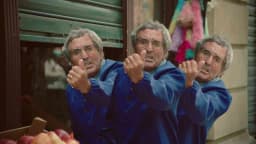
Iceland's Soccer Team and Grey Germany launched Sons of Solidarity in June 2018, replacing player surnames with 'PARKINSON' to raise awareness for Parkinson's

How Iceland's Soccer Team Turned a Shirt Into a Statement for Parkinson's
Sons of Solidarity is a cause-marketing campaign created by Grey Germany for Iceland's national soccer team, launched on 7 June 2018 in Germany, in which Icelandic players replaced their surnames on match jerseys with the word 'PARKINSON' to raise awareness of YouTube.clapboard.com/archive/icm-shakeparkinsonsoff-publicservice">Parkinson's disease ahead of the 2018 FIFA World Cup, according to Themediaonline Co Za.
The campaign launched during Iceland's final international friendly against Ghana before the 2018 FIFA World Cup, as reported by LBBOnline. The occasion was chosen deliberately: Iceland's squad was at the height of its global visibility following a historic run at UEFA Euro 2016, and the pre-tournament moment concentrated maximum press and public attention. On that match day, players stood arm-in-arm with people living with Parkinson's disease during the national anthems, turning a routine pre-match ritual into a visible act of solidarity, according to LBBOnline.
The creative device was rooted in a linguistic fact specific to Icelandic culture, according to Artunews. Icelandic male surnames traditionally end in the suffix '-son,' meaning 'son of.' By substituting each player's individual name with 'PARKINSON,' Grey Germany connected a characteristic of Icelandic identity directly to the name of the disease, making every player's back a unified message rather than a personal identifier. The campaign operated in partnership with the Icelandic Football Association, known as KSÍ, and Parkinsonsamtökin, Iceland's Parkinson's Association, with the stated objectives of generating public awareness and donations for Parkinson's care in Iceland, as documented by Parkinson's Europe. A specially produced trailer was shown in the stadium and on television screens during the match, per LBBOnline, extending the campaign's reach beyond the live audience in Germany. Clapboard scores the campaign 69 out of 100, recognising its creative ingenuity and cause-marketing clarity while noting the limited breadth of its documented public rollout.
Grey Germany identified a convergence of cultural, linguistic, and sporting conditions that made the 'Sons of Solidarity' concept structurally viable in a way no conventional health-awareness campaign could replicate. Iceland's national soccer team carried unusual narrative weight in 2018. The squad had shocked European football by reaching the quarter-finals of UEFA Euro 2016, earning widespread admiration across Germany and the broader continent, as widely reported in European football media. That recognition gave a small nation's team the platform leverage typically reserved for football giants.
The campaign's strategic logic rested on cause-marketing principles that bind a brand's identity to a social purpose in a mutually reinforcing way. Rather than attaching a charity message to Iceland's team from the outside, Grey Germany found the cause inside the team's own cultural DNA. The '-son' suffix in Icelandic surnames is not a stylistic choice but a grammatical and genealogical convention, which meant the wordplay was authentic rather than manufactured. Erna Guðmundsdóttir of Parkinson's Foundation in Iceland described the approach directly, stating that 'the national team is using its worldwide popularity to exclusively support this good cause,' as reported by Parkinson's Europe on 4 July 2018.
In Germany, where the campaign was published and where the match took place, sports-linked cause marketing has a documented tradition of amplifying health awareness beyond what traditional public health communications achieve. The campaign distinguished itself from comparable efforts by rivals in the cause-sports space — including major federations and commercial sports brands that have partnered with charities through jersey auctions or donation codes — by making the cause inseparable from the product itself. The shirt was not a vehicle for the message; the shirt was the message. This structural integration is what separated 'Sons of Solidarity' from more transactional sports philanthropy campaigns seen across the European football landscape in the same period.
Grey Germany built the entire creative execution of 'Sons of Solidarity' around a single, self-explanatory visual: a football shirt reading 'PARKINSON' where a player's surname should appear. The concept required no headline, no voiceover, and no explanatory graphic to communicate its meaning to any viewer familiar with Icelandic names, and it communicated the cause directly to those who were not. That economy of means is one of the campaign's most discussed creative qualities, as noted by LBBOnline in its coverage of the work.
The execution unfolded across several simultaneous channels. The match-day activation — players wearing the modified shirts and standing arm-in-arm with people affected by Parkinson's disease during national anthems — created a live, unrepeatable moment in Germany that was then captured and extended by a specially produced trailer screened both in the stadium and on television, per LBBOnline. The trailer gave the concept a narrative layer, contextualising the shirt swap within the lives of those living with the disease and the Icelandic footballers who volunteered to forgo their own names in solidarity. A microsite accompanied the campaign to capture donations, according to Creativepool, providing a transactional endpoint for awareness generated by the film and live activation.
Dickjan Poppema, CEO of Grey Germany, described the campaign as showing 'that the unifying power of sport knows no bounds,' as reported by LBBOnline on 23 September 2019. Production credits for 'Sons of Solidarity' beyond agency leadership are not publicly documented in available sources. The campaign's creative strength lay not in production complexity but in conceptual precision: by confining the idea to a single linguistic insight and a single garment, Grey Germany ensured the work was reproducible across every broadcast frame, photograph, and social share without dilution. Every image of the Icelandic squad taken that day in Germany became, automatically, campaign collateral.
No verified performance data for the 'Sons of Solidarity' campaign — including donation totals, media reach figures, or audience measurement — is publicly available in independently audited form. What the documented record does establish is the campaign's structural effectiveness across three dimensions that matter in cause-marketing evaluation.
First, the campaign secured international press coverage at the moment of launch, with outlets including LBBOnline, The Drum, and Parkinson's Europe reporting on the initiative, extending its geographic footprint well beyond the Germany match venue. Second, the partnership structure — involving KSÍ, Parkinsonsamtökin, and Grey Germany — gave the campaign institutional credibility that protected it from the reputational risk that often undermines celebrity-driven charity activations. Third, the creative device was inherently shareable: the image of an entire national squad wearing 'PARKINSON' required no caption to communicate across language barriers, which is a structurally significant advantage for a campaign operating across European football audiences in 2018.
Erna Guðmundsdóttir of Parkinson's Foundation in Iceland confirmed that the campaign directed support toward Parkinson's care in Iceland, as reported by Parkinson's Europe, indicating that the downstream cause-delivery mechanism was operational. The campaign was later recognised in advertising industry forums, as documented by LBBOnline, affirming its standing within the creative community. The absence of published metrics does not diminish the campaign's conceptual achievement; it does, however, limit the ability to assess whether awareness translated into sustained behavioural or financial outcomes for Parkinsonsamtökin.
Sons of Solidarity is a cause-marketing campaign created by Grey Germany for Iceland's national soccer team in June 2018. Players replaced their surnames on match jerseys with the word 'PARKINSON,' connecting the Icelandic '-son' surname suffix to the disease's name, to raise awareness and donations for Parkinson's care in Iceland, as reported by LBBOnline.
Icelandic male surnames traditionally end in '-son,' a grammatical convention meaning 'son of.' Grey Germany used this linguistic fact to replace every player's individual name with 'PARKINSON,' making the disease's name fit naturally on the shirt and turning the squad's collective identity into a unified public-health message, according to LBBOnline.
The campaign launched on 7 June 2018 in Germany during Iceland's international friendly against Ghana, their final match before the 2018 FIFA World Cup. A specially produced trailer was screened in the stadium and on television that day, per LBBOnline, extending the campaign's reach beyond the live audience.
Grey Germany, operating under the Grey Sports division, created the campaign. Dickjan Poppema, CEO of Grey Germany, described it as demonstrating that 'the unifying power of sport knows no bounds,' as reported by LBBOnline on 23 September 2019. The Icelandic Football Association and Parkinsonsamtökin were named partners in the initiative.
The campaign was designed to raise public awareness of Parkinson's disease and generate donations for Parkinson's care in Iceland. Erna Guðmundsdóttir of Parkinson's Foundation in Iceland confirmed the team was using its worldwide popularity exclusively for this cause, as reported by Parkinson's Europe on 4 July 2018.
Clapboard assigns Sons of Solidarity a score of 69 out of 100. The score reflects the campaign's genuine creative ingenuity and clear cause-marketing structure, while accounting for the limited publicly documented evidence of its broader rollout and the absence of independently verified performance or donation outcome data.
.webp)
Creative Collaboration Platform: The Backbone of Modern Creative WorkWhat is a creative collaboration platform?Clapboard defines a creative collaboration platform as the operational core for today’s distributed creative teams. This is not a collection of digital collaboration tools stitched together; Clapboard’s system


Understanding the Creative Production MarketplaceWhat is a Creative Production Marketplace?Clapboard defines a creative production marketplace as a structured ecosystem where brands, agencies, and production talent converge to execute video, advertising, and branded content at scale. Unlike the legacy agency or freelanREAD FULL ARTICLE

The Urgent Need for a Creative Production Operating SystemWhy Traditional Creative Production Models Break DownClapboard sees the creative production landscape shifting under pressure. Content velocity is no longer a buzzword—it’s a mandate. Modern advertising demands relentless output across dozens of channels, each wREAD FULL ARTICLE