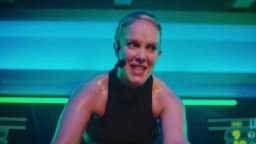
ASICS and Golin launched Movement for the Mind Breaks in 2024, a PSA starring Brian Cox that drove over 2.3 billion earned-media impressions across the UK and

ASICS Enlists Brian Cox to Make the Desk the Villain of Mental Health
ASICS launched Movement for the Mind Breaks in September 2024, a public service announcement campaign developed with PR agency Golin that cast actor Brian Cox as the world's scariest boss to warn office workers across the United Kingdom and United States that prolonged desk sitting poses a measurable threat to mental wellbeing, and that just 15 minutes of daily movement can reverse those effects.
The campaign arrived ahead of World Mental Health Day on 10 October 2024 and was rooted in two interlocking bodies of evidence. ASICS' global State of Mind study, involving 26,000 participants, established a direct link between sedentary behaviour and declining mental wellbeing, according to Corp Asics. A subsequent Desk Break experiment, overseen by Dr Brendon Stubbs of King's College London, demonstrated that after just two hours of continuous desk work, State of Mind scores begin to fall and stress levels rise. After four hours of uninterrupted desk time, workers' stress levels increased by 18%, according to ASICS' own published research cited across golin.com and corp.asics.com.
The experiment then demonstrated the remedy. When office workers added a single 15-minute movement break to their working day, their mental state improved by 22.5%, with overall State of Mind scores rising from 62 out of 100 to 76 out of 100, as reported by The Drum. Stress levels fell by 14.7% over one week, productivity rose by 33.2%, and focus improved by 28.6%, all figures drawn from the Desk Break experiment documented by ASICS and referenced across golin.com and corp.asics.com. The campaign gave these findings a face — Brian Cox, whose screen reputation for portraying figures of institutional authority made him an instinctively credible embodiment of the intimidating workplace. The Clapboard Score for the campaign is 76 out of 100, reflecting strong strategic coherence, cultural timing, and measurable earned-media performance.
ASICS built Movement for the Mind Breaks on a consumer insight that its primary competitors had largely ignored. Nike, which holds approximately 20 to 25 percent of the global athletic footwear market according to Grand View Research, and Adidas, which holds approximately 8 to 12 percent according to the same source, both centre their brand communications on performance, aspiration, and athletic achievement. ASICS, working with Golin, chose a different axis entirely: the mental cost of not moving, experienced not in gyms or on tracks but at office desks during the working day.
This positioning continued a strategic direction ASICS and Golin had been developing together since at least 2021, when the Move Your Mind platform was established, according to golin.com. That multi-year foundation gave the 2024 campaign accumulated credibility rather than the appearance of opportunistic cause marketing. The Desk Break experiment, led by Dr Brendon Stubbs of King's College London, provided independently overseen data that anchored the PSA in verifiable science rather than brand assertion.
The timing was deliberately engineered. Launching on 23 and 24 September 2024, the campaign entered the public conversation several weeks before World Mental Health Day on 10 October, giving media and employers time to engage with the Desk Break proposition before the calendar moment arrived. In the United Kingdom and the United States, where sedentary desk-based working is a structurally embedded feature of the professional economy, the insight carried immediate personal relevance for the audiences ASICS most needed to reach. The finding that 79.2 percent of participants said they would be more loyal to employers who offered regular movement breaks, as documented by ASICS and referenced on golin.com, gave the campaign a direct business case that HR professionals and employers could act on, extending its reach beyond consumer media.
The creative execution of Movement for the Mind Breaks rests on a single, precisely calibrated casting decision. Brian Cox, whose portrayal of Logan Roy in Succession established him as one of contemporary television's definitive images of corporate intimidation, was recruited to play the role of the world's scariest boss — a character whose menace is ultimately revealed to be less frightening than the desk itself. The inversion is the idea: the thing workers genuinely fear in professional life is not the authority figure but the sedentary routine that quietly erodes their mental health.
Hannah Giles, Associate Director at Golin, described the casting response in an interview published by MediaCat UK on 10 October 2024, stating: "As soon as we put the idea in front of Brian, he was on board. He got the message and was really excited to get behind it." Cox himself reflected on the role, saying: "I've played some pretty intimidating characters in my time but who would have thought a desk could be scarier?" He added: "It's great to see ASICS try and do something about this and encourage people to support their mental health through exercise," as quoted on golin.com.
The PSA format was a deliberate creative choice. A public service announcement carries an implicit register of public-interest authority that a standard brand advertisement does not. By framing the film as a PSA rather than a commercial, ASICS and Golin signalled that the Desk Break message was intended as a genuine contribution to public health discourse, not a product pitch. The presence of Dr Brendon Stubbs of King's College London as the experiment's overseer reinforced that register in the campaign's surrounding communications. Production credits beyond the named agency team are not fully documented across available public sources, but the campaign's editorial and scientific architecture reflects considered integration between the film itself, the research evidence, and the talent strategy. The Drum named the campaign Ad of the Day on 23 September 2024, specifically citing the Brian Cox casting as central to its impact, as reported by thedrum.com.
Movement for the Mind Breaks generated results across three distinct dimensions: earned media scale, audience behaviour change, and industry recognition. The campaign produced more than 2.3 billion earned-media impressions, according to golin.com and famouscampaigns.com. The PSA itself exceeded 50 million views, and more than 1.2 million Desk Breaks were reportedly taken by individuals who engaged with the campaign, as documented on corp.asics.com and golin.com.
WARC reported more than 1,300 pieces of earned media coverage generated by the campaign, according to famouscampaigns.com, a volume that reflects the dual appeal of the story to both health and business press in the United Kingdom and the United States. The campaign went on to win Gold at the WARC Awards for Effectiveness in 2025, as reported by famouscampaigns.com, though the specific award category has not been independently verified. The campaign also received recognition at Cannes Lions, the PR Awards, and the British Arrows, as noted by famouscampaigns.com and kodemedia.com, though category level and classification across each of those awards have not been confirmed through official public records.
The behavioural data embedded in the campaign added a further layer of measurable impact. The Desk Break experiment, as covered by TechRadar on 24 September 2024, recorded a 22.5 percent improvement in participants' mental state scores and a 14.7 percent reduction in stress levels over one week, alongside a 33.2 percent rise in self-reported productivity. These figures, drawn from research overseen by Dr Brendon Stubbs of King's College London and published by ASICS, gave the campaign a results narrative that extended well beyond standard advertising metrics and into the territory of demonstrable public health contribution.
Movement for the Mind Breaks is a 2024 public service announcement by ASICS and Golin, starring Brian Cox, launched ahead of World Mental Health Day. It is grounded in ASICS' Desk Break experiment, which found that 15 minutes of daily movement improves mental state scores by 22.5 percent, as documented by ASICS and reported by The Drum.
ASICS cast Brian Cox because his screen reputation for portraying figures of institutional authority made him a credible embodiment of workplace intimidation. Golin Associate Director Hannah Giles stated in MediaCat UK that Cox immediately understood the message and was enthusiastic about supporting the mental health through exercise initiative when the idea was first presented to him.
The Desk Break experiment, overseen by Dr Brendon Stubbs of King's College London, found that 15 minutes of movement improved workers' mental state scores by 22.5 percent. Over one week, stress fell by 14.7 percent, productivity rose by 33.2 percent, and focus improved by 28.6 percent, according to research published by ASICS on corp.asics.com.
The campaign generated more than 2.3 billion earned-media impressions and more than 50 million PSA views, according to golin.com and famouscampaigns.com. WARC reported more than 1,300 pieces of media coverage. More than 1.2 million Desk Breaks were reportedly taken by people who engaged with the campaign across the United Kingdom and United States.
The campaign won Gold at the WARC Awards for Effectiveness in 2025, as reported by famouscampaigns.com. It also received recognition at Cannes Lions, the PR Awards, and the British Arrows, as noted by famouscampaigns.com and kodemedia.com, though specific categories and levels across those awards have not been confirmed through official public documentation.
Movement for the Mind Breaks extends ASICS' Move Your Mind platform, which Golin helped establish from 2021, according to golin.com. Rather than a repositioning, the 2024 campaign represents a continued strategic direction connecting exercise with mental wellbeing, now focused specifically on sedentary desk-based working in the United Kingdom and United States professional workforce.
.webp)
Creative Collaboration Platform: The Backbone of Modern Creative WorkWhat is a creative collaboration platform?Clapboard defines a creative collaboration platform as the operational core for today’s distributed creative teams. This is not a collection of digital collaboration tools stitched together; Clapboard’s system


Understanding the Creative Production MarketplaceWhat is a Creative Production Marketplace?Clapboard defines a creative production marketplace as a structured ecosystem where brands, agencies, and production talent converge to execute video, advertising, and branded content at scale. Unlike the legacy agency or freelanREAD FULL ARTICLE

The Urgent Need for a Creative Production Operating SystemWhy Traditional Creative Production Models Break DownClapboard sees the creative production landscape shifting under pressure. Content velocity is no longer a buzzword—it’s a mandate. Modern advertising demands relentless output across dozens of channels, each wREAD FULL ARTICLE