 ARCHIVE
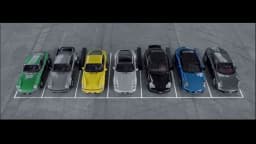
Porsche Plays Happy Birthday With a 911 Engine
How Porsche Turned the 911's Engine Into a Birthday Song for China Porsche's "Birthday Roar" is a...
Honda 45kg Turns a Blood Donation Story Into a Motorcycle Ad
Honda's 45kg is a 2015 Thai film campaign created by Dentsu Plus Bangkok for A.P. Honda — the brand's authorised motorcycle distributor in Thailand — in which a young boy attempts to reach the 45-kilogram minimum body weight required to donate blood, driven by the urgency of his mother's hospitalisation.
The campaign was published in Thailand in September 2015, with Dentsu Plus handling creative duties and Sunshine-etc producing the film. The work belongs to a tradition of purpose-led automotive advertising that uses human storytelling rather than product specification to build brand affinity. Rather than foregrounding motorcycles, Honda and Dentsu Thailand chose to foreground a social cause — blood donation — positioning A.P. Honda as an enabler of community values rather than a transactional vehicle seller. The campaign's single media asset is a short film, a format well suited to emotional narrative in the Thai market, where long-form digital video had become an established vehicle for brand storytelling by 2015. The central premise is deliberately simple and universally legible: a child's love for a parent, made concrete by a measurable physical threshold. The 45-kilogram figure anchors the entire narrative, giving the story its title, its dramatic tension, and its call to action. By making blood donation the subject rather than a footnote, the campaign invites Thai audiences to connect Honda's brand presence with an act of civic generosity, an objective that extends the brand well beyond the category conventions of automotive advertising in Southeast Asia.
A.P. Honda operates as a motorcycle distributor in a market where two-wheelers are primary transportation rather than leisure vehicles. In Thailand, motorcycles represent a dominant share of personal mobility, and the competitive set includes major Japanese rivals such as Yamaha and Kawasaki, both of which maintain strong retail and brand presences across the country. Within this landscape, differentiation on product specifications alone is structurally difficult; displacement figures and fuel-efficiency claims are broadly comparable across leading brands. Dentsu Plus Bangkok identified an alternative axis of differentiation: social purpose, expressed through an emotionally resonant human story rather than through corporate social responsibility messaging.
The strategic insight underpinning 45kg is that Thai audiences respond strongly to family-centred narratives, particularly those involving filial devotion. The campaign's protagonist is a child acting out of love for his mother — a narrative archetype with deep cultural resonance in Thailand and across Southeast Asia more broadly. By choosing a non-celebrity, character-led approach, as reported by shots.net in their September 2015 coverage of the campaign, Dentsu Thailand ensured the emotional weight rested entirely on the story rather than on a recognisable face, making the film more transferable across audience segments. According to focus2move.com, Asia-Pacific accounted for more than half of global passenger-car sales in 2015, underscoring the scale of automotive competition in the region and the commercial stakes of brand-building work in markets like Thailand. Honda itself sold a substantial volume of light vehicles globally in 2015, according to ibtimes.com, operating in a fiercely contested global market where brand perception increasingly influences purchase decisions across all vehicle categories, including motorcycles.
Kumphol Witpiboolrut directed the 45kg film, with production handled by Sunshine-etc. The creative team at Dentsu Plus Bangkok was led by Subun Khow as chief creative officer, who also served as co-copywriter alongside Monchai Visuttinont, the campaign's creative director. Art direction was the responsibility of Tanachai Sutthisereesakul. This compact creative structure — with senior creative leadership directly involved in the writing — is consistent with the precise tonal control the film requires.
The film's craft rests on a single dramatic question: can the boy reach 45 kilograms in time? That constraint functions as both a structural device and a creative discipline, forcing every scene to serve the accumulation of urgency rather than allowing the narrative to diffuse into sentiment. Shots.net published a positive review of the film on September 15, 2015, recognising the work's emotional coherence and its ability to sustain tension through a concept that could easily have collapsed into melodrama. The decision to keep the central character a fictionalized young boy rather than a celebrity or brand spokesperson was a deliberate creative choice, as documented by shots.net and corroborated by Little Black Book's coverage of the campaign. This approach concentrates audience identification on the story's moral stakes — a child's determination — rather than on the charisma of a known figure. The result is a film in which the Honda brand name earns its place through association with human decency rather than through explicit product endorsement, a creative strategy that demands both confidence from the client and discipline from the director. Production credits for the cinematography and editing of 45kg are not publicly documented beyond the directorial and production company attribution confirmed in available records.
No independently verified viewership figures, earned-media reach data, or blood-donation uplift statistics for the 45kg campaign are publicly available through named sources such as shots.net, lbbonline.com, or Marketing Interactive. According to searches across Cannes Lions, Effies, The One Show, D&AD, Clios, Webby Awards, and WARC Awards records, the campaign did not receive documented award recognition at those shows, as confirmed by a review of publicly available records cited by adforum.com and clapboard.com.
In the absence of verified performance metrics, the campaign's structural effectiveness can be assessed on its own terms. The 45kg film achieves a high degree of conceptual clarity: a single, measurable goal drives every beat of the narrative, ensuring that audience engagement and brand recall are mutually reinforcing rather than in competition. The choice of blood donation as the campaign's cause aligns Honda's brand with a social good that is universally understood and impossible to contest — an important quality in purpose-driven advertising, where the authenticity of the cause-brand connection is subject to audience scrutiny. The campaign's Clapboard Score of 67 out of 100 reflects competent execution of a resonant concept within a format — the Thai emotional short film — that was well established by 2015, placing the work in solid rather than exceptional territory relative to the broader archive of purpose-led automotive advertising.
Honda's 45kg is a 2015 Thai short film created by Dentsu Plus Bangkok for A.P. Honda. It follows a boy attempting to reach the 45-kilogram minimum body weight required to donate blood for his hospitalised mother, using the story to encourage blood donation and build Honda's brand purpose in Thailand.
Kumphol Witpiboolrut directed the 45kg film, produced by Sunshine-etc. The creative team at Dentsu Plus Bangkok included Subun Khow as chief creative officer and co-copywriter, Monchai Visuttinont as creative director and co-copywriter, and Tanachai Sutthisereesakul as art director. The film was published in September 2015.
Dentsu Plus Bangkok, part of Dentsu Thailand, created the 45kg campaign for A.P. Honda — Honda's authorised motorcycle distributor in Thailand. The campaign was published in September 2015 as a single film asset designed to encourage blood donation among Thai audiences through an emotionally driven narrative.
No verified award wins for 45kg are publicly documented. A review of publicly available records at Cannes Lions, Effies, The One Show, D&AD, Clios, Webby Awards, and WARC Awards found no listed recognition for the campaign, according to records cited by adforum.com and clapboard.com. The campaign received a Clapboard Score of 67 out of 100.
A.P. Honda and Dentsu Plus Bangkok chose blood donation as the campaign's subject to differentiate the brand on social purpose rather than product specification, a strategically sound approach in a competitive Thai motorcycle market where Yamaha and Kawasaki present comparable product offerings. The filial narrative carried strong cultural resonance for Thai audiences.
.webp)
Creative Collaboration Platform: The Backbone of Modern Creative WorkWhat is a creative collaboration platform?Clapboard defines a creative collaboration platform as the operational core for today’s distributed creative teams. This is not a collection of digital collaboration tools stitched together; Clapboard’s system


Understanding the Creative Production MarketplaceWhat is a Creative Production Marketplace?Clapboard defines a creative production marketplace as a structured ecosystem where brands, agencies, and production talent converge to execute video, advertising, and branded content at scale. Unlike the legacy agency or freelanREAD FULL ARTICLE

The Urgent Need for a Creative Production Operating SystemWhy Traditional Creative Production Models Break DownClapboard sees the creative production landscape shifting under pressure. Content velocity is no longer a buzzword—it’s a mandate. Modern advertising demands relentless output across dozens of channels, each wREAD FULL ARTICLE