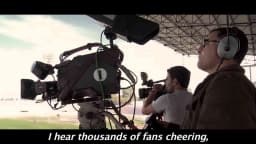
Fab Hotels' When Nothing Clicks, created by Veda Media House in July 2019, uses film to dramatise real travel frustration across the Indian budget hospitality

Fab Hotels Bets on Real Travel Frustration in When Nothing Clicks
When Nothing Clicks is a film campaign created by Veda Media House for Fab Hotels, published in India in July 2019, dramatising the compounding frustrations of travel gone wrong to position Fab Hotels as the reliable constant in an unreliable journey.
Fab Hotels launched When Nothing Clicks as a three-asset film campaign targeting India's growing base of value-conscious travellers who expect standardised, dependable accommodation without the unpredictability that has long defined the budget hospitality segment. The campaign's central premise is elemental: when everything around a traveller falls apart, the hotel stay should not. That single idea drives the creative across all three films, each constructing a scenario in which external chaos — delayed transport, errant itineraries, the ordinary friction of being in transit — collides with the traveller's need for a dependable place to land.
In the Indian hospitality and tourism market of 2019, the proposition carried genuine commercial urgency. Fab Hotels, founded in 2014 by Vaibhav Aggarwal and Adarsh Manpuria according to markhub24.com, had built its business on an asset-light model that brought independent hotels under a standardised brand promise, targeting primarily business travellers who needed reliability above all else. When Nothing Clicks translates that operational philosophy into emotional storytelling, making the brand's functional guarantee feel human rather than transactional. The campaign sits within the broader hospitality and tourism sector and was archived through adsoftheworld.com, where it remains part of the platform's record of Indian advertising from this period. Clapboard.com rates the campaign at 56 out of 100, reflecting a creative execution that communicates a clear brand truth without reaching the upper register of breakthrough craft.
Fab Hotels operated in one of the most contested segments of the Indian travel and leisure economy in 2019.
According to Techcircle In and cnbctv18.com, India had approximately 2.6 million hotel rooms in 2018, with roughly 70 percent sitting in the budget segment — an enormous addressable market that was simultaneously attracting aggressive competition. OYO and Treebo were Fab Hotels' closest direct rivals in the branded budget-hotel space. The scale disparity was stark: OYO reportedly operated approximately 8,500 hotels and around 169,000 rooms on its network at the time, according to cbinsights.com, while Fab Hotels and Treebo each operated approximately 500 properties and 11,000 rooms in early 2019, per techcircle.in. Against OYO's marketing firepower and Treebo's comparable footprint, Fab Hotels needed advertising that did more than announce presence — it needed to articulate why a traveller should choose reliability over the scale of a competitor.
The strategic insight embedded in When Nothing Clicks responds directly to that pressure. Rather than competing on inventory size or price, the campaign stakes its territory on emotional reliability — the promise that even when a journey deteriorates, the hotel holds firm. This is a classic challenger-brand manoeuvre in the Indian hospitality market: cede the volume argument and win the trust argument instead. Fab Hotels had already demonstrated strategic awareness in its partnerships, having aligned with FCM Travel Solutions as a preferred Indian hotel partner in 2016 according to markhub24.com, a move that reinforced its credentials with business travellers. When Nothing Clicks extends that B2B credibility into a B2C emotional register, broadening the brand's resonance within India's leisure and tourism audience without abandoning its core promise of standardised, dependable accommodation.
Director Jay Bhansali leads the creative execution of When Nothing Clicks, working from a script built to find comedy and pathos in the ordinary disasters of Indian travel.
The campaign was art directed by Akash Gautam and written by copywriter Baani Anand, with Jay Bhansali serving as both director and director of photography and Qayam Khan credited as executive producer, according to the campaign's listing on adsoftheworld.com. Costume styling was handled by Suchita Golecha and Sanoori Jain, and the cast features Pranay Manchanda and Errol Peters Marks. That combination of defined craft roles signals a production with genuine intentionality behind its visual and narrative choices, even within the constraints of a campaign operating in the budget hospitality category.
The film medium was the deliberate choice for this campaign, and that choice matters. In India's digital landscape of 2019, film allowed Fab Hotels to construct and sustain the kind of narrative tension that the central insight demanded. A static or print-led execution could name the problem; only film could show the traveller living through it, making the relief of a reliable hotel room feel earned rather than stated. The three-asset structure — three separate films rather than a single hero piece — suggests a strategy of sustained presence across platforms rather than a single burst of reach, giving Veda Media House room to explore different manifestations of the core tension. The tonal register Bhansali pursues appears calibrated to the recognisable rather than the heightened, grounding the frustration scenarios in the everyday travel experiences of an Indian audience rather than in amplified comic exaggeration. That grounding is the campaign's primary creative asset: it earns credibility with the audience by refusing to make the problem feel foreign to their own lives.
No verified performance data for When Nothing Clicks is publicly available.
No campaign-specific sales lift, bookings increase, revenue data, brand-awareness shift, or return on advertising spend has been documented in publicly accessible sources. When Nothing Clicks was not found in the award records of Cannes Lions, the Effie Awards, The One Show, D&AD, Clio Awards, The Webby Awards, or WARC Awards at the time of writing, and no trade-press reviews from Campaign, Ad Age, Adweek, The Drum, or Contagious have been identified.
In the absence of verified metrics, the campaign's structural effectiveness can be read against its strategic brief. When Nothing Clicks performs its core function clearly: it names an emotional truth about Indian travel, attaches Fab Hotels to the resolution of that truth, and does so through a film format capable of sustaining narrative empathy. For a brand competing against OYO's dominant market presence in India, the decision to fight on emotional terrain rather than transactional comparison is structurally sound. The three-film format amplifies frequency without simply repeating the same message, a construction that would serve brand recall in a crowded hospitality market. Where the campaign earns its limitations in Clapboard's assessment — a score of 56 out of 100 — is in the distance between a well-executed brand truth and a genuinely unexpected creative expression of it. The insight is real; the execution is competent and grounded. What the campaign does not appear to reach is the level of craft or conceptual surprise that would separate it from the broader category of well-intentioned challenger-brand film work in the Indian travel and leisure space.
When Nothing Clicks is a film campaign created by Veda Media House for Fab Hotels in July 2019 in India. It uses three short films to dramatise common travel frustrations, positioning Fab Hotels as the reliable constant when every other part of a journey goes wrong across India's budget hospitality market.
Veda Media House created When Nothing Clicks for Fab Hotels. The campaign was art directed by Akash Gautam, written by Baani Anand, directed and shot by Jay Bhansali, and executive produced by Qayam Khan, according to the campaign's listing on adsoftheworld.com. Cast members include Pranay Manchanda and Errol Peters Marks.
Fab Hotels' closest direct competitors in India's branded budget-hotel segment are OYO and Treebo. Around early 2019, Fab Hotels and Treebo each operated approximately 500 properties and 11,000 rooms, according to techcircle.in, while OYO operated approximately 8,500 hotels — illustrating the significant scale gap Fab Hotels faced.
When Nothing Clicks has no verified award recognition. The campaign does not appear in the records of Cannes Lions, the Effie Awards, The One Show, D&AD, Clio Awards, The Webby Awards, or WARC Awards, based on publicly available information at the time of this analysis, as noted by clapboard.com.
Clapboard.com rates When Nothing Clicks at 56 out of 100. The score reflects a campaign that communicates a genuine brand truth through competent, grounded film craft but does not reach the level of conceptual surprise or executional distinction that would place it in the upper register of Indian travel advertising.
Fab Hotels chose film because the campaign's core insight — travel frustration resolved by a reliable hotel — required sustained narrative tension that only moving image could deliver. The three-asset structure allowed Veda Media House to explore different expressions of that tension, supporting brand recall across India's digital platforms throughout 2019.
.webp)
Creative Collaboration Platform: The Backbone of Modern Creative WorkWhat is a creative collaboration platform?Clapboard defines a creative collaboration platform as the operational core for today’s distributed creative teams. This is not a collection of digital collaboration tools stitched together; Clapboard’s system


Understanding the Creative Production MarketplaceWhat is a Creative Production Marketplace?Clapboard defines a creative production marketplace as a structured ecosystem where brands, agencies, and production talent converge to execute video, advertising, and branded content at scale. Unlike the legacy agency or freelanREAD FULL ARTICLE

The Urgent Need for a Creative Production Operating SystemWhy Traditional Creative Production Models Break DownClapboard sees the creative production landscape shifting under pressure. Content velocity is no longer a buzzword—it’s a mandate. Modern advertising demands relentless output across dozens of channels, each wREAD FULL ARTICLE