 ARCHIVE
City Gross Rewrites Fairy Tales to Sell Real Food
How City Gross Used Snow White and Fairy Tales to Argue for Real Food City Gross's "Snow White...
Empik Sends Polish Readers Back to Books with Ambient Storytelling
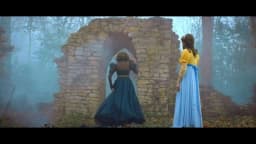
Empik's 2015 ambient campaign, In Search of Lost Reader, is a single-asset narrative work created by Change, Warsaw, designed to reconnect Polish consumers with the habit of reading by positioning Empik stores as cultural destinations rather than conventional retail outlets.
Published in February 2015 in Poland, the campaign operates within the retail services category and deploys an ambient format to reach audiences in contexts removed from traditional advertising environments. Rather than promoting a product line or seasonal offer, the work addresses a behavioural challenge: a measurable decline in reading among Polish consumers at a moment when the broader book market was contracting. The campaign's singular focus on the lost reader as a cultural archetype gives it an unusually literary quality for retail advertising, one that reflects both the brand's identity as Poland's leading cultural retailer and the strategic brief handed to Change, Warsaw by Empik.
Empik operates as a broad cultural and entertainment retailer across Poland, with approximately 200 outlets in early 2015 according to data cited by Publishing Perspectives. That physical footprint made ambient placement a tactically coherent choice: messages could surface in and around spaces where readers already move. The campaign carries production credits spanning Creative Director Jan Majle, Senior Art Director Rafał Nagiecki, Senior Copywriter Zuzanna Wrońska, client service leads Jola Mazurek and Michał Tyburcy, media coordination by Małgorzata Majewska of Value Media, postproduction by Rio de Post, and sound by Studio Ucho. Clapboard assigns the campaign a score of 63 out of 100, reflecting its creative coherence and cultural relevance while noting the absence of verified performance data and the limited single-asset scope of the documented execution.
Poland's book retail sector contracted visibly in the years surrounding the campaign's release. According to Instytut Książki, the number of bookshops in Poland fell from 2,140 in 2013 to 1,930 in 2015, a decline that removed more than two hundred specialist retail points from the market within two years. At the same time, Instytut Książki data indicate that internet sales accounted for approximately 41 percent of book distribution in Poland, with physical bookshops responsible for around 31 percent, supermarkets at 16 percent, book clubs at 10 percent, and door-to-door at 1 percent. These figures establish the competitive pressure Empik faced: digital channels were capturing the dominant share of book transactions while traditional retail formats lost ground.
Empik's principal domestic competitor, Matras, operated approximately 180 stores in 2016 according to Publishing Perspectives, making the two chains together responsible for more than 400 outlets and the clear leaders in Polish bricks-and-mortar book retail. Against that landscape, Empik's decision to anchor its advertising in a literacy narrative rather than a price or range argument represents a deliberate strategic distinction. Where a competitor might compete on assortment or convenience, Empik positions itself as a custodian of reading culture, a posture that ambient format amplifies by meeting audiences outside the transactional context of a store visit.
The choice of ambient as a medium in 2015 also reflects awareness of a Polish consumer environment in which digital disruption was reshaping book discovery. As Trendhunter has documented in its coverage of reading-revival trends, campaigns that embed reading as a social and emotional behaviour tend to generate stronger cultural resonance than those that treat books as commodities. Change, Warsaw's brief for Empik appears to have absorbed that insight, constructing a campaign whose emotional logic precedes any commercial ask.
Creative Director Jan Majle led the execution of In Search of Lost Reader for Change, Warsaw, working alongside Senior Art Director Rafał Nagiecki and Senior Copywriter Zuzanna Wrońska. The team's collective decision to treat the campaign as a single cohesive ambient asset rather than a multi-format spread concentrates its expressive weight into one encounter, a formal choice that mirrors the experience of reading itself: sustained, singular, and resistant to fragmentation.
The campaign's title carries a deliberate literary echo. The phrase In Search of Lost Reader inverts the logic of Marcel Proust's In Search of Lost Time, substituting the reader for memory and implying that what has been lost is not the book but the person who once read it. This inversion is both a creative strategy and a cultural provocation, one aimed squarely at Polish consumers who may have drifted from reading without consciously deciding to stop. By naming the lost reader rather than lost books or lost stories, the work places agency and longing on the human side of the relationship, which is the more emotionally generative position for a retail brand to occupy.
Postproduction was handled by Rio de Post, with sound by Studio Ucho, indicating that the single asset carries audiovisual components rather than functioning purely as print or outdoor placement. The involvement of a dedicated sound studio suggests the ambient execution was designed to be encountered in motion — experienced rather than simply viewed — which is consistent with how effective ambient retail-services advertising operates in high-footfall urban environments. Media planning and placement were coordinated by Małgorzata Majewska of Value Media, ensuring the asset reached audiences in contextually appropriate locations across Poland. The result is a campaign whose craft ambitions exceed the compressed single-asset format, using literary reference, sound design, and precise placement to do work that a larger campaign might distribute across many touchpoints.
No verified performance data for In Search of Lost Reader is publicly available. No campaign-attributable sales figures, brand-tracking results, media reach statistics, or audience engagement metrics have been documented in trade sources including Campaign, Ad Age, Adweek, The Drum, or Contagious, and no verified awards appear across Cannes Lions, Effie, One Show, D&AD, Clio, Webby, or WARC records. That absence of measurable outcomes is not unusual for ambient campaigns of this period, particularly those operating as culturally positioned single assets within a retail-services context rather than as performance-driven response campaigns.
Structurally, the campaign's effectiveness argument rests on strategic alignment rather than reported metrics. Empik deployed an emotionally resonant creative platform at a moment when Polish bookshop numbers were contracting and digital distribution was reshaping book retail, according to Instytut Książki data. By using ambient format and a literary narrative frame, the campaign speaks to lapsed readers in environments where a conventional retail advertisement would be ignored. The single-asset constraint, while limiting reach, sharpens impact at the point of encounter and reduces the risk of dilution across inconsistent executions.
Change, Warsaw's decision to invest in sound design through Studio Ucho and postproduction through Rio de Post signals a quality commitment that prioritises depth of impression over breadth of distribution. For a brand like Empik, whose competitive positioning depends on cultural authority rather than price leadership, that is a defensible trade-off. Whether the work moved measurable retail-services metrics in Poland in 2015 remains undocumented, but its creative logic remains legible and coherent a decade on.
In Search of Lost Reader is a 2015 ambient campaign created for Empik by Change, Warsaw. It uses a single media asset and a literary narrative frame to address declining reading habits among Polish consumers, positioning Empik as a cultural destination rather than a conventional retail outlet in the retail services category.
Creative Director Jan Majle led the campaign at Change, Warsaw. He worked alongside Senior Art Director Rafał Nagiecki and Senior Copywriter Zuzanna Wrońska. Postproduction was handled by Rio de Post and sound by Studio Ucho, reflecting the audiovisual nature of the single ambient asset.
Empik operated approximately 200 stores across Poland in early 2015, according to Publishing Perspectives. Ambient placement allowed the campaign to intercept lapsed readers outside transactional contexts, reinforcing the brand's cultural authority at a moment when Polish bookshop numbers were falling, per Instytut Książki data.
Matras is Empik's principal domestic competitor in Polish book retail. According to Publishing Perspectives, Matras operated approximately 180 stores in 2016, while Empik operated around 228, making the two chains the dominant physical book retailers in Poland with more than 400 combined outlets.
No verified awards for In Search of Lost Reader appear across Cannes Lions, Effie, One Show, D&AD, Clio, Webby, or WARC records. No trade-press reviews were found in Campaign, Ad Age, Adweek, The Drum, or Contagious. Clapboard assigns the campaign a score of 63 out of 100.
Poland's bookshop count fell from 2,140 in 2013 to 1,930 in 2015, according to Instytut Książki. Internet sales led book distribution at approximately 41 percent, per the same source, while physical bookshops accounted for around 31 percent, establishing the contracting retail environment that shaped Empik's 2015 strategy.
.webp)
Creative Collaboration Platform: The Backbone of Modern Creative WorkWhat is a creative collaboration platform?Clapboard defines a creative collaboration platform as the operational core for today’s distributed creative teams. This is not a collection of digital collaboration tools stitched together; Clapboard’s system


Understanding the Creative Production MarketplaceWhat is a Creative Production Marketplace?Clapboard defines a creative production marketplace as a structured ecosystem where brands, agencies, and production talent converge to execute video, advertising, and branded content at scale. Unlike the legacy agency or freelanREAD FULL ARTICLE

The Urgent Need for a Creative Production Operating SystemWhy Traditional Creative Production Models Break DownClapboard sees the creative production landscape shifting under pressure. Content velocity is no longer a buzzword—it’s a mandate. Modern advertising demands relentless output across dozens of channels, each wREAD FULL ARTICLE