 ARCHIVE
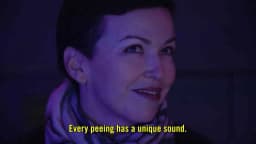
Hornbach Builds a Cathedral to Digestion in Berlin
How Hornbach Made a Public Toilet a Monument Against Silence in 2018 Hornbach's 'A Monument Against...
How EDEKA and Jung von Matt Made a Boy Fly on a Healthy Diet
Eatkarus is a 2017 online film created for German grocery retailer EDEKA by Hamburg agency Jung von Matt, built around a fable in which an overweight boy transforms his diet from monotonous processed food to fresh produce and ultimately learns to fly, delivering the central message that audiences should eat like the person they want to be.
Published in Germany in February 2017, the campaign extends the film into a broader content ecosystem. Accompanying materials include recipes, dietary guidance, and a body-mass-index calculator, anchoring a fictional narrative to practical retail utility. The campaign hashtag #issso invited participation across social platforms, connecting the emotional arc of the film to everyday purchasing decisions at EDEKA stores across Germany.
The title itself encodes the campaign's creative logic. Eatkarus fuses the English verb "eat" with Icarus, the mythological figure whose ambition carried him toward the sun, according to the classical Greek tradition. That combination positions food not merely as sustenance but as the mechanism of aspiration and self-determination. In the German retail context, where EDEKA's long-standing brand positioning centres on the declaration "Wir lieben Lebensmittel" — "We love food" — the campaign translates that love into a coming-of-age allegory accessible to both children and adults.
Eatkarus sits within a deliberate sequence of culturally ambitious EDEKA film campaigns developed with Jung von Matt, each using online video as a primary channel rather than conventional broadcast as its lead medium. The 2017 campaign carries a Clapboard Score of 79 out of 100, reflecting strong creative coherence and cultural resonance within the German retail advertising landscape.
EDEKA held an estimated market share of approximately 20.3% in the German grocery sector in 2017, according to data published by Eda Org Ge, making it the dominant single retail group in a highly competitive market. That position required maintenance as much as growth, and Eatkarus addresses a specific consumer anxiety — the gap between how people eat and how they wish to eat — rather than promoting price or range in conventional retail terms.
The German grocery market in 2017 was characterised by intense structural competition. Germany's 30 largest grocery retailers generated approximately €247 billion in gross sales that year, representing roughly 90% of the total market, according to eda.org.ge. Within that landscape, the Schwarz Group, operating Lidl and Kaufland, held an estimated 14.5% market share with approximately €39.8 billion in sales, per eda.org.ge, while REWE Group held approximately 14.0% with roughly €38.5 billion. Both competitors competed on price efficiency and scale. EDEKA's strategic response, developed with Jung von Matt, was to compete on emotional meaning rather than promotional mechanics.
The insight underpinning Eatkarus is that healthy eating is rarely a knowledge problem. Most consumers understand the difference between processed and fresh food. The campaign reframes the barrier as one of imagination and identity rather than information. By presenting a boy who cannot fly until he changes what he eats, Jung von Matt translates the abstract aspiration of better health into a visual, emotionally legible event. The message — eat like the person that you want to be — does not reference EDEKA's prices, range, or store network. It positions EDEKA fresh produce as the material means by which personal transformation becomes physically possible. In the German retail market of 2017, where rivals competed aggressively on value, that emotional differentiation represented a deliberate and structurally distinct strategic choice.
Director Alex Feil leads the creative execution of Eatkarus, working with director of photography Carlo Jelavic to construct a visual world that operates simultaneously as live-action fable and emotionally grounded character study. Feil had previously directed EDEKA's 2015 Christmas campaign for Jung von Matt, establishing a working relationship oriented toward cinematic storytelling within retail advertising. The production was carried out by Tempomedia Filmproduktion, and the film was officially uploaded to YouTube on February 15, 2017.
The narrative follows a boy whose diet consists entirely of repetitive, beige, processed food. His world is flat, ordinary, and earthbound. As he begins eating fresh fruit and vegetables — produce identifiable as the kind stocked across EDEKA's retail network in Germany — the film builds toward a sequence in which he achieves flight. The tonal register is fairy tale rather than health advertisement. There are no nutritional claims, no supermarket aisles, and no promotional pricing. The EDEKA brand enters at the conclusion, allowing the emotional logic of the story to carry without commercial interruption until the final moments.
Executive Creative Director Jens Pfau oversaw the campaign at Jung von Matt/Alster in Hamburg. Creative Directors Anna Lichnog and Sebastian Schnell shaped the narrative concept. Copywriters Heiner Twenhäfel and Dany Rothemund developed the language of the campaign, including the central line. Art Director Pia Mader defined the visual identity of the film's world. Editor Sabine Panek assembled the final cut, controlling the pacing that carries the fable's emotional arc. Agency Producer Jankel Huppertz managed production alongside Project Managers Florian Laufenberg and Annika Burchert. Adweek, writing on February 21, 2017, described the spot as "strange" and noted its unusual combination of fairy tale register, obesity imagery, and the Icarus mythological reference, characterising the protagonist as an "Augustus Gloop-looking" boy — a cultural comparison that underscores how deliberately the creative team designed a protagonist who defies conventional advertising aesthetics.
No verified third-party performance data for Eatkarus in the form of sales uplift, brand tracking shifts, or formal effectiveness awards is publicly available at the time of this analysis. What is documented is the film's initial distribution velocity, which provides a structural measure of resonance. According to Deutsche Welle, reporting on February 21, 2017, the video reached more than 8 million views across social platforms within 48 hours of publication. That figure, reported independently by Deutsche Welle, places Eatkarus within a category of German advertising films that achieve organic circulation at a scale typically associated with entertainment content rather than branded retail communication.
The speed of that distribution reflects several structural factors. The film operates without overt product promotion in its first several minutes, meaning it circulates on the same terms as editorial or entertainment video. The mythological framework of the Icarus narrative provides a culturally legible hook for international sharing, extending the film's reach beyond the German domestic market where EDEKA operates its retail network. The campaign hashtag #issso gave German-speaking audiences a participation mechanism that connected personal expression around food to the campaign's identity.
Structurally, Eatkarus demonstrates the effectiveness of a strategy EDEKA and Jung von Matt had developed across multiple campaigns since the Supergeil online film of 2014 — using cinematic ambition and cultural reference to generate earned media reach that supplements paid distribution. Within the German retail sector, where category advertising is dominated by price communication, the campaign's refusal to compete on promotional terms represents a calculated bet on long-term brand equity over short-term conversion. The Clapboard Score of 79 out of 100 reflects that structural coherence and the creative confidence required to sustain a four-minute fable in a retail advertising context.
Eatkarus is a 2017 online film created for EDEKA by Jung von Matt in Germany. It follows an overweight boy who transforms his diet from processed food to fresh produce and learns to fly, delivering the message that people should eat like the person they want to be. The campaign hashtag was #issso.
The title Eatkarus combines the English word "eat" with Icarus, the figure from Greek mythology associated with flight and ambition. The fusion encodes the campaign's central argument that food choices determine what a person is capable of becoming, positioning fresh produce as the mechanism of personal transformation within the EDEKA retail brand story.
Alex Feil directed Eatkarus for production company Tempomedia Filmproduktion. Feil had previously directed EDEKA's 2015 Christmas campaign for Jung von Matt. The film's creative team at Jung von Matt/Alster in Hamburg included Executive Creative Director Jens Pfau and Creative Directors Anna Lichnog and Sebastian Schnell.
According to Deutsche Welle, reporting in February 2017, Eatkarus reached more than 8 million views across social platforms within 48 hours of its publication on February 15, 2017. That distribution speed placed the film among the fastest-circulating German retail advertising films of the period, driven by organic sharing rather than paid promotion alone.
Eatkarus continues a strategy EDEKA and Jung von Matt established with the Supergeil online film in 2014, using cinematic storytelling and cultural reference to generate organic reach in the German market. Each campaign prioritises emotional brand positioning over price promotion, differentiating EDEKA from competitors including Lidl and REWE in the German grocery sector.
EDEKA held an estimated 20.3% share of the German grocery market in 2017, according to eda.org.ge, making it the leading grocery retailer in Germany by market share. The Eatkarus campaign was released into a market where Germany's 30 largest grocery retailers generated approximately €247 billion in gross sales that year, per eda.org.ge.
.webp)
Creative Collaboration Platform: The Backbone of Modern Creative WorkWhat is a creative collaboration platform?Clapboard defines a creative collaboration platform as the operational core for today’s distributed creative teams. This is not a collection of digital collaboration tools stitched together; Clapboard’s system


Understanding the Creative Production MarketplaceWhat is a Creative Production Marketplace?Clapboard defines a creative production marketplace as a structured ecosystem where brands, agencies, and production talent converge to execute video, advertising, and branded content at scale. Unlike the legacy agency or freelanREAD FULL ARTICLE

The Urgent Need for a Creative Production Operating SystemWhy Traditional Creative Production Models Break DownClapboard sees the creative production landscape shifting under pressure. Content velocity is no longer a buzzword—it’s a mandate. Modern advertising demands relentless output across dozens of channels, each wREAD FULL ARTICLE