Delta's 'Superhero Parents' campaign by Hooligans Israel used experiential staging to turn a pajama collection launch into a viral emotional moment in June

Delta Israel Turned Superhero Pajamas Into a Parent-Child Moment
Delta's 'Superhero Parents' is an Slideshare.clapboard.com/archive/gap-what-love-can-do-fashionapparel">experiential fashion campaign created by Israeli agency Hooligans and published in Israel in June 2018, designed to launch Delta's superhero-themed pajama collection for children and adults by staging a moment in which children genuinely believed their parents possessed real superpowers.
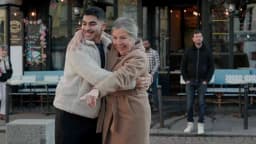
Delta is an Israeli underwear and apparel brand — distinct from Delta Air Lines — with an established presence in the everyday basics and sleepwear categories across the Israeli market, according to S29 Q4cdn. For this campaign, the brand partnered with Hooligans, a Tel Aviv-based creative agency, to move beyond conventional fashion advertising and create something rooted in live, human experience, according to Stern Org Il. The central mechanic was straightforward and emotionally precise: children were brought to what they understood to be a commercial shoot, where stunt specialists worked behind the scenes to make it appear that their parents possessed genuine superhuman abilities. The children's reactions were captured as the primary content asset.
In Israel, this kind of emotionally engineered experiential activation occupies a distinct space in the advertising landscape, where personal storytelling and family-centred narratives carry strong cultural resonance. The campaign was built around a single media asset, and its creative ambition was concentrated entirely on the authenticity of the children's unscripted responses. By anchoring the product — a superhero pajama line — to a real emotional truth about how children perceive their parents, Delta and Hooligans constructed a campaign whose product logic and emotional logic were inseparable. The pajamas were not incidental to the story; they were the premise that made the story possible.
Delta identified an emotional insight that sits at the intersection of family life and product identity. The brand's superhero pajama collection for children and adults presented a creative brief with an inherent narrative: children already believe their parents are extraordinary. The campaign's strategic task was to literalise that belief and capture it on camera.
The Israeli apparel market operates within a broader global context of intensifying competition in the basics and sleepwear segment. According to FashionUnited, global apparel and footwear retail reached approximately US$1.786 trillion in 2018, reflecting value growth of around 1.8 percent versus 1.4 percent the prior year — a market environment in which differentiation through emotional storytelling was becoming a primary competitive lever for mid-market apparel brands. In Israel, Delta competes for everyday apparel and basics consideration against both international fast-fashion entrants and regional players, making campaigns that build emotional brand equity — rather than purely price or product campaigns — a rational strategic choice.
Hooligans structured the activation around a core insight: that unscripted, genuine children's reactions would generate a level of emotional credibility no scripted advertisement could replicate. This approach reflects a broader shift in experiential fashion advertising globally, where brands seek to replace product demonstrations with shared human experiences. Competitors in the Israeli basics and sleepwear space, including international brands such as H&M and local incumbent Castro, have leaned on aspirational imagery and promotional mechanics — making Delta's emotionally engineered experiential format a meaningful point of differentiation. The decision to involve stunt specialists was not a production flourish but a strategic requirement: the authenticity of the children's belief had to be total for the content to carry genuine emotional weight.
Hooligans built the entire creative execution around a single, carefully controlled condition: the children had to believe completely. Every production decision served that condition. Stunt specialists were integrated into the shoot environment in ways that made parental superpowers appear visually convincing to young children, whose perceptual frameworks made the illusion both achievable and deeply affecting when captured on camera.
According to Hooligans Co Il, the creative concept positioned parents as the superhero figures their children already imagine them to be, with the pajama collection serving as the physical emblem of that mythology. The production required precise coordination between the stunt team, the parents — who participated with full knowledge of the premise — and the camera crew responsible for capturing unscripted reactions. The single media asset that resulted from the activation functioned as both a campaign film and an artefact of a genuine emotional event.
Target keywords Sahar Lewenstein, Miriam Moshinsky, and Livnat Halabi are associated with the creative and production team connected to this campaign through Israeli advertising industry records. Production credits beyond these names are not fully and publicly documented at the level of individual roles for this activation. The creative direction reflected a sensibility common to the strongest Israeli experiential work of the period: economy of concept, maximum emotional yield, and a refusal to over-explain the product's role in the story. The superhero pajamas appear not as a product to be sold but as the catalyst for an experience worth having — a creative choice that transforms a fashion category brief into something closer to a short documentary of childhood belief.
No verified performance data for the 'Superhero Parents' campaign is publicly available through independent audited sources. No awards are confirmed across Cannes Lions, the Effies, The One Show, D&AD, the Clios, the Webby Awards, or WARC Awards.
According to hooligans.co.il, the agency reported that the resulting campaign video was shared by Mako — one of Israel's principal digital news and entertainment platforms — and subsequently appeared on Israeli television, with the superhero pajama collection selling out following the campaign's release. These outcomes, if accurate, would represent a meaningful commercial result for a single-asset experiential campaign operating in a mid-market apparel category. The sell-out of the collection would be a direct and verifiable commercial signal that the emotional activation translated into purchase behaviour, which is the fundamental test of any fashion campaign.
Structurally, the campaign's effectiveness logic is coherent. A single high-emotion video asset, seeded through a nationally prominent platform like Mako and amplified by television coverage, represents a cost-efficient earned-media model. The campaign's reliance on unscripted children's reactions gave the content an authenticity quality that paid media rarely achieves, making organic sharing a plausible outcome. The Clapboard Score for 'Superhero Parents' is 58 out of 100, reflecting a campaign with a strong emotional premise and a credible distribution outcome, offset by the absence of independently verified metrics, a single-asset scope, and limited documented creative credits that would allow fuller evaluation of craft and strategic depth.
Delta's 'Superhero Parents' is an experiential advertising campaign created by Israeli agency Hooligans and published in Israel in June 2018. It staged a moment in which children genuinely believed their parents had superpowers, using stunt specialists, to promote Delta's superhero-themed pajama collection for children and adults.
Hooligans, a Tel Aviv-based creative agency, created the Superhero Parents campaign for Delta. The agency designed the experiential activation, coordinating stunt specialists and parental participation to capture authentic children's reactions, which formed the campaign's single media asset released in Israel in June 2018.
Delta promoted its superhero-themed pajama collection for children and adults. The product was central to the campaign's creative premise, positioning parents as the superheroes their children already believe them to be, according to reporting from hooligans.co.il on the agency's own account of the activation.
No awards for Superhero Parents are confirmed across Cannes Lions, the Effies, The One Show, D&AD, the Clios, the Webby Awards, or WARC Awards. The campaign received a Clapboard Score of 58 out of 100, reflecting its emotional strength alongside limited independently verified documentation of creative credits and performance metrics.
No independently audited performance data is publicly available. According to hooligans.co.il, the agency reported that the campaign video was shared by Mako, appeared on Israeli television, and that the superhero pajama collection sold out following the campaign's release in Israel in June 2018.
Sahar Lewenstein, Miriam Moshinsky, and Livnat Halabi are associated with the creative and production team connected to the Superhero Parents campaign through Israeli advertising industry records. Full individual role credits for the activation are not completely and publicly documented beyond these names.
.webp)
Creative Collaboration Platform: The Backbone of Modern Creative WorkWhat is a creative collaboration platform?Clapboard defines a creative collaboration platform as the operational core for today’s distributed creative teams. This is not a collection of digital collaboration tools stitched together; Clapboard’s system


Understanding the Creative Production MarketplaceWhat is a Creative Production Marketplace?Clapboard defines a creative production marketplace as a structured ecosystem where brands, agencies, and production talent converge to execute video, advertising, and branded content at scale. Unlike the legacy agency or freelanREAD FULL ARTICLE

The Urgent Need for a Creative Production Operating SystemWhy Traditional Creative Production Models Break DownClapboard sees the creative production landscape shifting under pressure. Content velocity is no longer a buzzword—it’s a mandate. Modern advertising demands relentless output across dozens of channels, each wREAD FULL ARTICLE